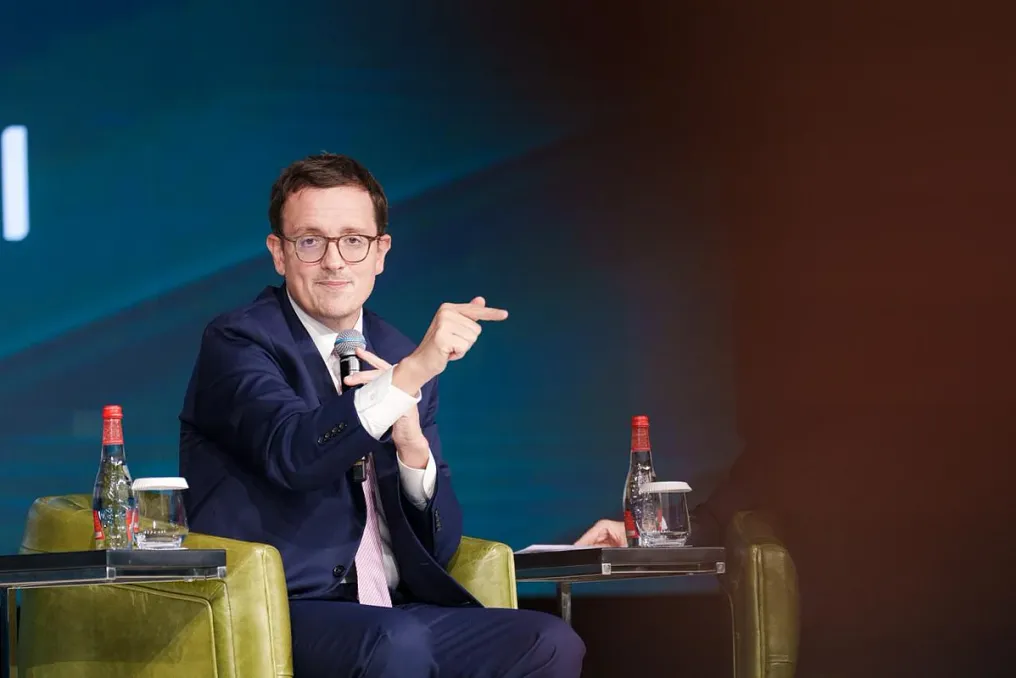
Allianz Chief Economist, Ludovic Subrahm, warned that the monthly costs associated with the regional conflict amount to the equivalent of one percentage point of GDP in deficit for the economies of the Gulf countries. He called on the region to attract international markets to finance growth.
However, Subrahm began his speech at the summit in Dubai with a positive assessment of the region's reaction to the crisis. He noted that even after seven months of conflict, the region has demonstrated its resilience, emphasizing that it is not the height of the buildings but the steadfastness of the people that matters.
International Investors' Requirements
Speaking at the Rise summit in the Dubai World Trade Centre, the chief economist of the €800 billion asset management company stated that international investors expect to see three things before investing additional capital: a clear plan, projects that can be financed by banks, and a partner for investment.
He added that the region offers these conditions through the Vision 2030 program. Furthermore, Subrahm presented a grim warning about the state of world trade, noting that global trade is in recession this year, excluding artificial intelligence. When excluding exports, goods, and services related to AI, the figure drops by four percent.
This figure, he said, demonstrates the high dependence of the world economy on a single sector, indicating that capital expenditures on data centers and the AI economy remain the main driver of growth globally and in the US.
Nevertheless, Subrahm believes that the AI boom is not yet over, as 80 quarters of the AI capital expenditure cycle have passed, whereas historically such cycles for technological breakthroughs last 24 quarters.
State of the US Economy
Subrahm characterized the US economy as operating under martial law. He reported that the US public sector is running a 7% deficit, while the corporate sector is coping well, although the situation in the public sector is not ideal.
Regarding interest rates, Subrahm predicts that the Federal Reserve will be forced to lower rates. He believes the Fed will have to cut rates two or three more times in 2027 to avoid a recessionary zone, setting a new neutral rate around 3%.
He also pointed to growing credit risk outside the AI sector, expressing concern about the emergence of 'fallen angels' and naming Oracle as a company at risk. It is considered highly likely that Oracle will become a 'fallen angel.'
Since the traditional hedging strategy of bonds and stocks has stopped working, Subrahm drew attention to infrastructure and private lending, stating that infrastructure is resilient throughout the entire cycle in both debt and equity terms.
Regarding gold, he admitted a change in his long-held view, noting that gold plays a role in portfolios because China uses it to internationalize the yuan.
Concerning real estate, he saw opportunities in the recent correction in the region, noting that the decline was at least 10% as of September, and suggested that this could be a suitable time to re-enter the market.
His final message to the region was simple: maintain the vision, and capital will follow.