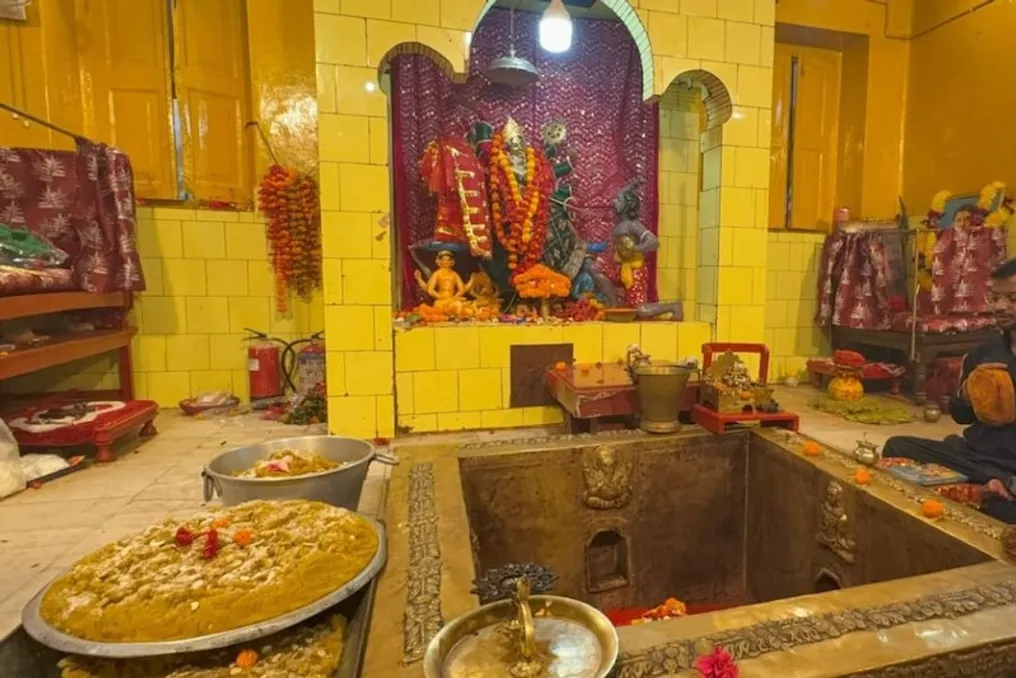
The ancient abode of Maa Bagalamahi Pitambari Siddhipith in Muzaffarpur, Bihar, is estimated to be approximately 250 years old. This shrine is notable for having a Sahastradala Mahayantra installed beneath the main sanctum. Furthermore, the temple houses an eight-armed statue of Maa Bagalamahi made of Ashtadhatu (eight metals). Two worship traditions are mentioned in the temple: Vama Marg and Dakun Marg. According to the priests, devotees travel here from West Bengal and Varanasi.
The reason for the uniqueness of this mahayantra, why Maa Bagalamahi is called Pitambari, and how the temple in Muzaffarpur is connected to Tantric traditions are subjects of interest. According to people associated with the temple, its history spans about two hundred and fifty years. This implies that religious rituals were conducted here even before the advent of electricity and mobile communication.
The foundation of the temple was laid by the ancestor of Mahant Ajita Kumar Prasad, Rupal Prasad. The goddess's statue was created by artisans from Calcutta. Later renovations to give the temple a modern appearance began in 1993–1994. Mahant Deva Raj states that his family has revered the goddess for generations; his grandmother was known for her practice of Tantric meditation, and people traveled from Calcutta to learn from her. Nevertheless, analyzing old documents is necessary for independent confirmation of the temple's two-hundred-and-fifty-year history.
The most unique element of the temple is the Sahastradala Mahayantra under the main sanctum. In Indian religious traditions, a yantra is considered a special symbolic image associated with worship and spiritual practices. The word Sahastradala refers to the concept of a lotus with a thousand petals. According to the chief priest Bacha Baba, the mahayantra installed here holds special significance in the tradition of spiritual practices. However, detailed information regarding the construction of this mahayantra, the time of its installation, and related rituals is not yet provided.
The name Pitambari is explained by the fact that the color yellow is highly valued in the worship of Maa Bagalamahi. Devotees bring turmeric, yogurt, and Dub grass to the temple. People also visit the temple on Thursdays. During Navratri, the atmosphere in the temple becomes more vibrant as devotees gather for prayers and rituals. In religious beliefs, Maa Bagalamahi is counted among the ten Mahavidyas, and her worship is associated with overcoming crises, defeating enemies, and controlling speech.
Chief priest Bacha Baba emphasizes that worship here is conducted through both methods—Vama Marg and Dakun Marg. When Tantrism is mentioned, images of mysterious miracles often arise, but the Tantric tradition is much more diverse. It includes various sects, scriptures, symbols, and methods of practice. Vama Marg and Dakun Marg are viewed as separate branches of this tradition, and their rituals and religious interpretations are not identical.
Despite the fact that rituals are performed in the Muzaffarpur temple within these methods, complete information on exactly which rites are performed is lacking. Nevertheless, the priests link the identification of the temple to ancient traditions of Tantric practice.
Mahant Deva Raj explains why people travel to this temple in Muzaffarpur from other states: pilgrims arrive from West Bengal and Varanasi, as well as from other places. He notes that his family members also traveled here for spiritual practices in the past. For the temple, it is not just the history of an old building; it is a combination of family tradition, continuity of worship, and the trust of pilgrims.
In conclusion, the identity of the temple is determined not only by its age but also by the stories passed down through generations. The history of Maa Bagalamahi Temple in Muzaffarpur demonstrates three aspects: a tradition claimed to be around two hundred and fifty years old; the Sahastradala Mahayantra installed under the sanctum; and beliefs associated with Tantric practice. The answer to how ancient these beliefs are and what the true history of the mahayantra is can only be found by studying old documents and consulting experts.