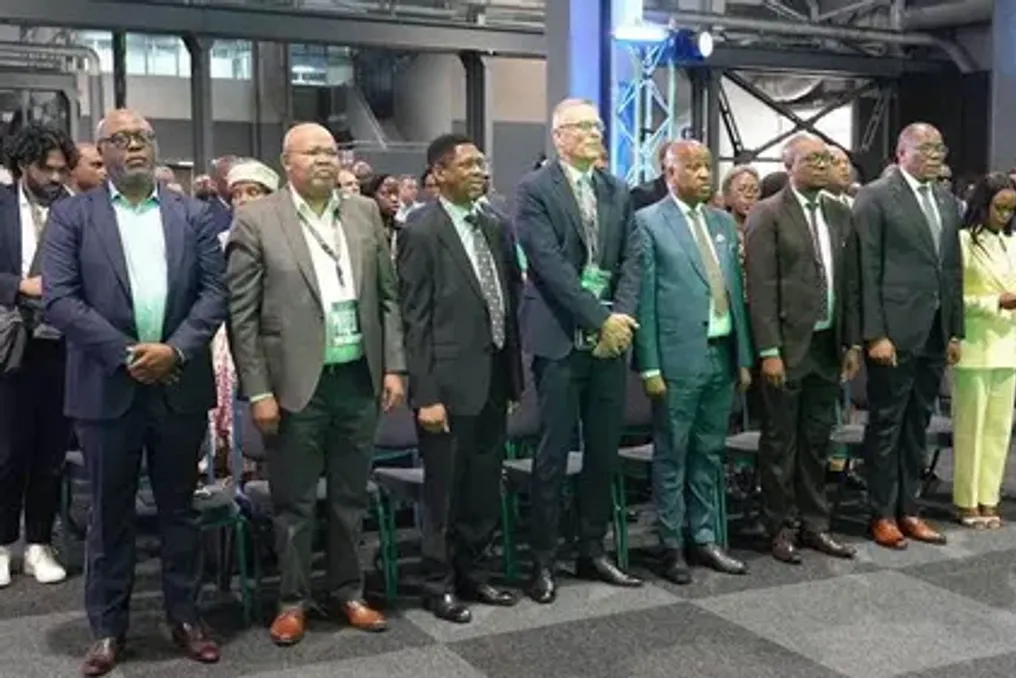
When billions are invested in KwaZulu-Natal, the question arises of how capable local companies secure orders, fulfill them, and receive payment. This question was raised by a speaker at the SA Auto Week event.
As an entrepreneur who secures contracts and is responsible for their execution, she understands that behind every obligation are people dependent on this business. She notes that entrepreneurs are often frustrated by conversations that constantly return to the same problems.
Despite years of discussions on economic integration and enterprise development, there are strategies, seminars, and dialogues that need evaluation regarding how this activity has impacted the lives of people trying to earn a living.
A specific example is Toyota's investment of 10.4 billion rand in a new Hilux program on Prospecton. The production links the vehicle to component suppliers, transport operators, and skilled workers, which interests her and the team of Andrew Kirby, as the investment has a commercial purpose and requires the participation of other businesses for implementation.
The opportunity lies in understanding how one can contribute. A manufacturer might need maintenance services, and a logistics company might need a more efficient way to reduce delays. There are business problems awaiting solutions.
It is necessary to step out of the comfort zone of waiting for the announcement of the next tender. While government contracts are important, ambitions must also extend to private supply chains. It is necessary to understand the needs of large companies and approach them with solutions that are worth purchasing.
This requires preparation: one must understand the problem, calculate the cost of the solution, and demonstrate to the buyer what will improve. A company will not buy an idea that has not been thought through.
She calls on entrepreneurs to advocate for their opportunities, pursue work, and fight for a fair chance to prove their potential, emphasizing that they can contribute to this economy and should do so.
The private sector must also consider how it recognizes this contribution. A business owner should not be required to have a familiar name or influential connection for their compelling proposal to be seriously considered. An entrepreneur whom no one has heard of may understand the problem and possess the ability to solve it.
If the value proposition is strong, it should be given a fair chance to compete. Requirements must be clear, and evaluation must be based on these requirements. Knowing someone should never be valued above the ability to do the job.
Then, obligations must be met. This is where the government must address the damage caused by untimely and unpaid invoices. The National Treasury report for Q3 2025/26 showed that as of the end of December 2025, provincial departments in KwaZulu-Natal had not paid approximately 2.1 billion rand for invoices older than 30 days. These invoices represent money that businesses were waiting to receive.
When payment for duly performed work is delayed, the consequences can spread throughout the business. An employee continues to wait for a salary, and a supplier waits for payment. The owner is forced to explain why obligations cannot be met, negotiate extensions, and try to keep operations going.
A failure in government payments can turn into a reputational crisis for the entrepreneur. Employees may lose trust, and suppliers may withdraw credit lines. The owner's name becomes tied to a broken promise, even if the funds are available with the client.
The government must be accountable for this damage. Payment for completed work is an obligation. Business owners should not constantly send emails demanding money that has already been earned while simultaneously trying to manage the next project.
It is pointless to encourage entrepreneurs to grow and then leave them to finance government delays. Payment discipline must be present in every serious discussion of economic development.
Equally important is the discipline of measuring results. A completed seminar is an activity. Additional proof is needed to show whether the participant gained clients or revenue. It is necessary to establish whether the support has changed anything significant for the people it was intended for.
Activity after activity without demonstrated results or impact cannot be considered a success. If businesses continue to lack access to work or cannot sustain themselves, it is necessary to examine what went wrong and who is responsible for fixing the situation.
Therefore, the author advocates for a Framework for Collaboration for greater impact. It must start with a clearly defined problem, bringing together the buyer, the business, and the partners necessary to implement the solution. A credible order may require financial or technical support. Each partner must know their area of responsibility and deadlines.
The framework also requires defining a starting point and verifying changes. Competing for recognition while maintaining the same unresolved problem wastes the opportunity for collaboration.
For the author, SA Auto Week means an opportunity to link investments with capable businesses and agree on the work they will undertake. The goal is to know after the meeting which opportunities will be pursued and who will promote them. At the next meeting, there must be a report on placed orders, completed work, and payments made so that the people earning from this work have something to report.