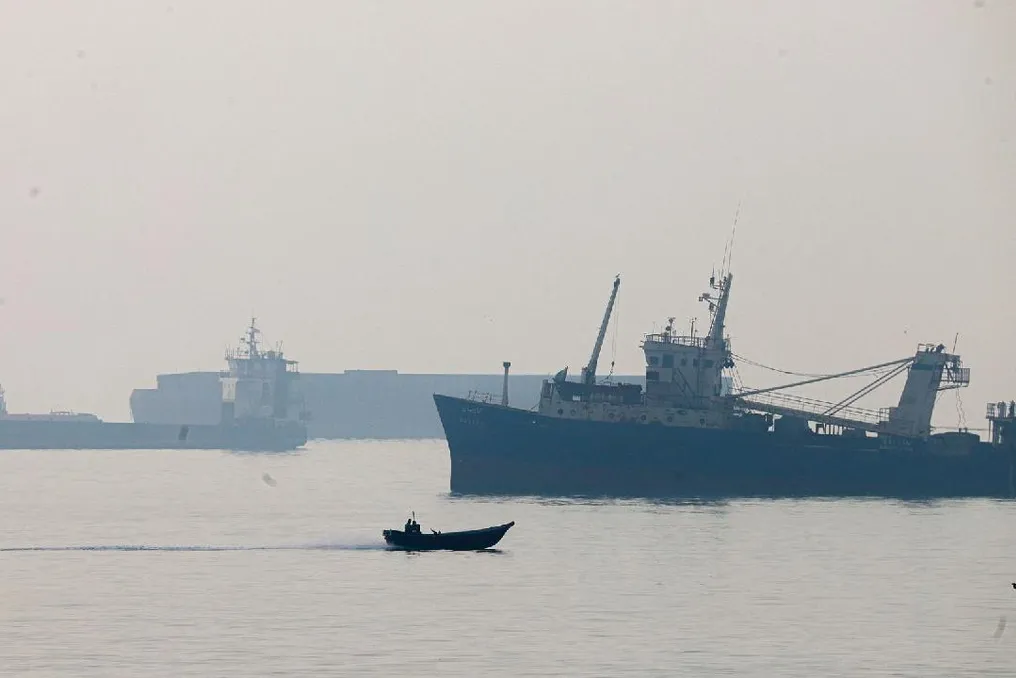
The International Monetary Fund (IMF), in its latest report 'World Economic Outlook' published on Tuesday, October 13, identified several serious threats to the growth and financial stability of the global economy. The main risks cited are rising levels of debt, the protracted conflict in the Middle East, and a potential slowdown in the investment boom in artificial intelligence (AI).
During a meeting between the IMF and the World Bank in Bangkok, IMF Research Department Deputy Director Petya Koeva-Brooks told CGTN that the world economy has shown significant resilience, but he emphasized that this resilience may be reaching its limit and will be tested in the future.
Provided that the Strait of Hormuz opens by next March and AI investments maintain a high pace, the IMF forecasts global growth at 3.1% in 2026 and 3.4% in 2027. Nevertheless, the fund presented several scenarios that could significantly lower these figures.
For instance, a prolonged war in the Middle East could keep oil prices above $130 during the first quarter of 2027, which, according to the IMF, would lead to a half-percentage point reduction in growth that year. Koeva-Brooks noted that the conflict in the Middle East negatively affects most economies.
The report also indicates that a sharp drop in AI investments could trigger a significant decline in asset values, ultimately reducing US GDP by 1.8% and global output by 1.1% by 2028. Experts warn that excessive complacency and dependence on the AI sector pose serious risks, despite the 'AI revolution' leading to record US stock values.
At the Bretton Woods Committee event, IMF Managing Director Kristalina Georgieva drew participants' attention to the fact that the US economy is currently 'standing on one leg—the AI leg,' questioning possible difficulties if it becomes shaky. Koeva-Brooks added that the AI boom also exacerbates disparities between countries, as while AI helps lift some economies, it only affects a small number of nations, making the picture of global stability quite fragile.
Furthermore, the IMF report and conference participants in Bangkok highlighted risks associated with high public debt and rising bond yields driven by inflation. High debt servicing costs are particularly burdensome for developing countries; Chairman of Group 24 Taiwo Ojedele noted that these countries pay $500 billion more for debt than developed economies.
The IMF strongly urges countries to undertake politically difficult steps to reduce borrowing. The fund specifically singled out the United Kingdom as the only major developed economy that has developed plans to reduce public borrowing in the coming years, urging its leadership to continue this course ahead of the publication of the new UK government's budget. However, other countries, according to Atlantic Council Vice President for International Economics Josh Lipskey, are moving in the opposite direction, asserting that France, Germany, and the US need fiscal consolidation.
Koeva-Brooks concluded that the main message for governments is the necessity to move from mere reaction to actual building of resilience and creating reserves to counter any future shocks.