Dubai residents hope autonomous capsules will reduce commute times
Read more
Khaleej Times
www.khaleejtimes.com

Dubai residents hope autonomous capsules will reduce commute times

Dubai residents express hope that the introduction of autonomous capsules will help reduce the time spent on daily commutes. For instance, Ziad M., a resident of Al Barsha and resort manager at Bluewaters Island, faces difficulties after exiting public transport.

Sometimes he has to walk about twenty minutes from the tram station to his workplace, using a pedestrian bridge connecting Bluewaters Island with JBR. Ziad noted that this walk is acceptable in winter, but the heat makes it unbearable in summer.

He added that although he has corporate transport, if it is missed, he has to wait for a bus from the Jebel Ali metro station, sometimes up to thirty minutes, or take a taxi or walk. This is why Ziad eagerly awaits the opportunity to use the autonomous capsules currently being tested at Bluewaters.

The Roads and Transport Authority (RTA) of Dubai launched a four-week test of the Dubai Glydways system at Bluewaters. These small electric autonomous capsules circulate on specially designated routes and are intended to help people complete the last leg of their journey between public transport stops and their home, office, or attraction.

For Hassan, who works in Business Bay, solving the last-mile problem is crucial due to the large number of offices in this area. He believes that buses heading to the Business Bay metro station are often overcrowded, especially during peak hours.

Hassan thinks that if these capsules operate continuously, people will be able to move from point A to point B faster, avoiding waiting for a crowded bus or taking a taxi.

Business Bay is among the areas that RTA is studying for possible future capsule routes, alongside Jumeirah Village Circle, Dubai Festival City, and Mohammed Bin Rashid City. A 2.8 km route project is also being considered, which would connect the National Paints metro station and Bluewaters.

Sameed, a sales manager at a store in Dubai Festival City mall, who lives in Sharjah, usually travels by private car. Missing this transport significantly lengthens his journey. He then takes the metro to Emirates Metro station and gets on a bus to Dubai Festival City. He notes that this takes more time and becomes more complicated. He hopes that in the future, if a metro station appears here and capsules can take him directly to the mall, it will be very useful.

Dubai Festival City plans to receive a metro station as part of the Blue Line, the opening of which is expected in 2029. Until then, the area remains dependent on buses, taxis, and private transport for most of the journey from nearby metro stations.

The RTA stated that the test at Bluewaters will allow an assessment of whether this complex can provide safe and reliable journeys, as well as integrate with Dubai's existing transport network, especially for first and last-mile trips.

For passengers, the advantages are obvious: fewer long walks in the heat, less time spent waiting for a bus, and an easier way to get from the metro to work or home.

Similar stories

Dubai public transport passengers can use QR codes instead of Nol card
Read more
www.khaleejtimes.com

Dubai public transport passengers can use QR codes instead of Nol card

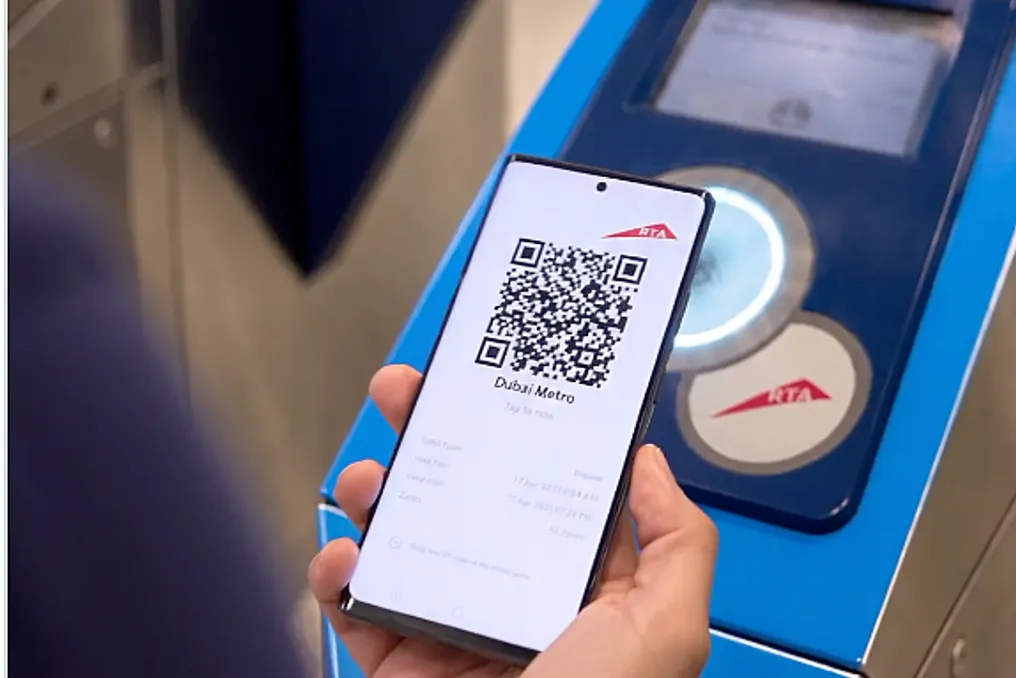
Public transport passengers in Dubai can now use QR codes on their phones to access the metro, trams, and buses, eliminating the need for paper tickets. This was announced by the Roads and Transport Authority (RTA) on Friday, October 9th.

To start a journey, passengers can obtain their QR code through the Nol Pay or S’hail applications and scan it on the blue entry turnstiles. The RTA advised users to obtain the QR code in advance through one of these applications and scan it at the gates before heading to their destination.

The new payment method applies to the red Nol ticket, which is intended for single and occasional trips, with the fare depending on the number of zones crossed. This change provides rare users and visitors with a digital option, simplifying the payment for individual routes within the Dubai public transport network.

Can employees refuse a transfer between emirates if transportation costs are not covered?
Read more
www.khaleejtimes.com

Can employees refuse a transfer between emirates if transportation costs are not covered?

In response to an inquiry about the possibility of refusing a transfer between emirates due to the lack of coverage for transportation expenses, the provisions of UAE labor law and relevant regulations apply.

The employment contract must clearly state the key terms of employment, including information about the employer and employee, position and qualifications, start date, place of work, working hours, salary and benefits, vacation, probationary period, contract duration, notice period, and termination conditions.

This requirement aligns with Article 10 (1) of Cabinet Resolution No. (1) of 2022 on the implementation of Federal Decree-Law No. (33) of 2021 regulating labor relations. This article stipulates that the contract must include the name and address of the employer, the name, nationality, and date of birth of the employee, proof of their identity, qualifications, position or profession, start date, place of work, working hours, days off, probationary period, if any, contract validity period, agreed salary including benefits and allowances, rights to annual leave, notice period, procedures for terminating the employment contract, and any other data established by the Ministry to regulate the relationship between the parties.

Furthermore, Article 12 (3) of Federal Decree-Law No. (33) of 2021 regulating labor relations establishes that if the employee needs to change residence to perform different work, the employer is obliged to cover the associated financial costs, including relocation and living expenses.

It is also stated that if performing work not stipulated in the employment contract requires the employee to change residence, the employer must cover all related financial costs, including the employee's travel and living expenses.

According to the aforementioned legal provisions, if the employment contract explicitly grants the employer the right to assign the employee to another workplace or another emirate, such as Dubai, and the employee has agreed to this condition, they may have no grounds to contest the transfer solely based on increased travel or transportation costs. Nevertheless, the employee has the right to discuss the increase in transportation costs and strive for an amicable resolution of this issue with the employer.

In case of a dispute regarding the employee's contractual rights, they can file a complaint with the Ministry of Human Resources and Emiratisation. This ministry may attempt to settle the dispute amicably, and if an agreement cannot be reached, refer the case to the competent court in accordance with current procedures.

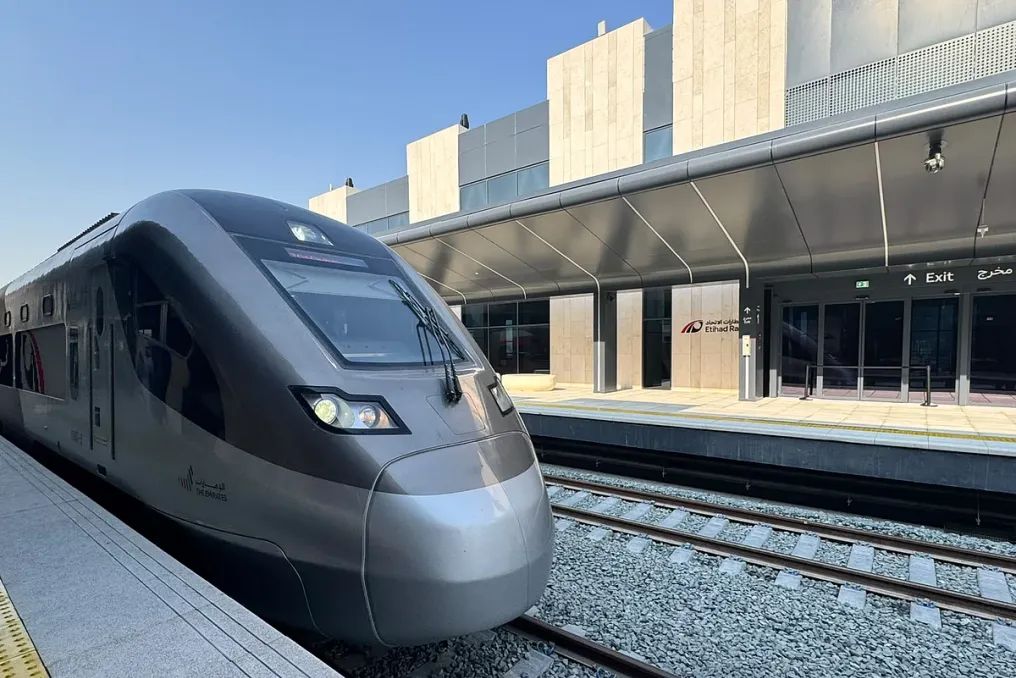
UAE Residents Choose Etihad Rail Train for Trips Between Dubai and Abu Dhabi
Read more
www.khaleejtimes.com

UAE Residents Choose Etihad Rail Train for Trips Between Dubai and Abu Dhabi

Since September 30, Etihad Rail has begun passenger services between Dubai and Abu Dhabi, which has fundamentally changed travel between the Emirates in the UAE. This railway network may soon become the most convenient way for residents to commute daily, helping them save time and money.

Robotics engineer Wasif noted significant savings thanks to the new service. Weekly, he spent over 350 dirhams on a taxi from Abu Dhabi for a single commute to work. On Wednesday, he took the Etihad Rail passenger train at 7:14 AM. He reported taking a taxi to the station, which cost him 134 dirhams, while the train ticket was 39 dirhams.

Previously, one taxi ride cost Wasif over 350 dirhams. Now, the total cost, including travel to the station and the train fare, was 173 dirhams, allowing him to save 177 dirhams. Although he did not specify how he will travel from the station, he has options available: shuttle buses, taxis, and car rentals starting from 10 dirhams.

Wasif emphasized that the train journey was much more comfortable and stated that he will likely use the train weekly. He was among the first residents to test the new passenger service between Dubai and Abu Dhabi, which launched on Wednesday. Ten trips run daily between the two Emirates. The journey takes about an hour and four minutes and connects Al Jalais Station in Dubai with Mohammed Bin Zayed City Station in Abu Dhabi.

For Abhishek, an expatriate from India, the train offers time savings rather than monetary savings. Previously, commuting daily by car between Abu Dhabi and his home in Miridiffe, he used the service at 6:14 AM. He mentioned that the drive to Abu Dhabi takes him about an hour and a half, and the return trip takes 2.5 hours due to heavy traffic towards Sharjah. He is exploring the possibility of using the train, noting that reaching the station was very smooth. He suggested that if the commute to the office remains as problem-free, he will take the train every day, saving him a lot of time and effort.

Daily commutes can be extremely time-consuming, especially following the start of roadworks in the Town area of Sharjah. For residents traveling between Emirates, the return journey during peak hours can take over two hours. The consistent travel time of 64 minutes on the train provides a level of predictability unavailable with road transport.

The service currently includes five direct trains daily from Dubai: 6:14 AM, 7:14 AM, 1:14 PM, 5:14 PM, and 6:14 PM. Return trips from Abu Dhabi depart at 6:43 AM, 7:43 AM, 12:43 PM, 4:43 PM, and 5:43 PM. Comfort Class tickets start from 39 dirhams, and Premium Class tickets are from 109 dirhams.

For Hari Krishna and Akshaj P Viswama, residents of Abu Dhabi, the decision to try the train was based on convenience rather than cost. These colleagues were traveling to Dubai for work-related training and took the very first train from Abu Dhabi. Hari noted that they usually travel by bus, so they decided to use the train when they learned about its launch. They reached Mohammed Bin Zayed City Station by taxi in 15 minutes. Akshaj added that the schedule suited them. They arrived in Dubai by train at 8 AM and plan to continue their journey by metro to the training location in Deira.

The seamless connection between Etihad Rail and the Dubai Metro is a key advantage. Al Jalais Station is connected to Jumeirah Golf Estates Metro Station on the Red Line via a dedicated pedestrian bridge, allowing passengers to continue their journey across Dubai without needing a car.

Popular