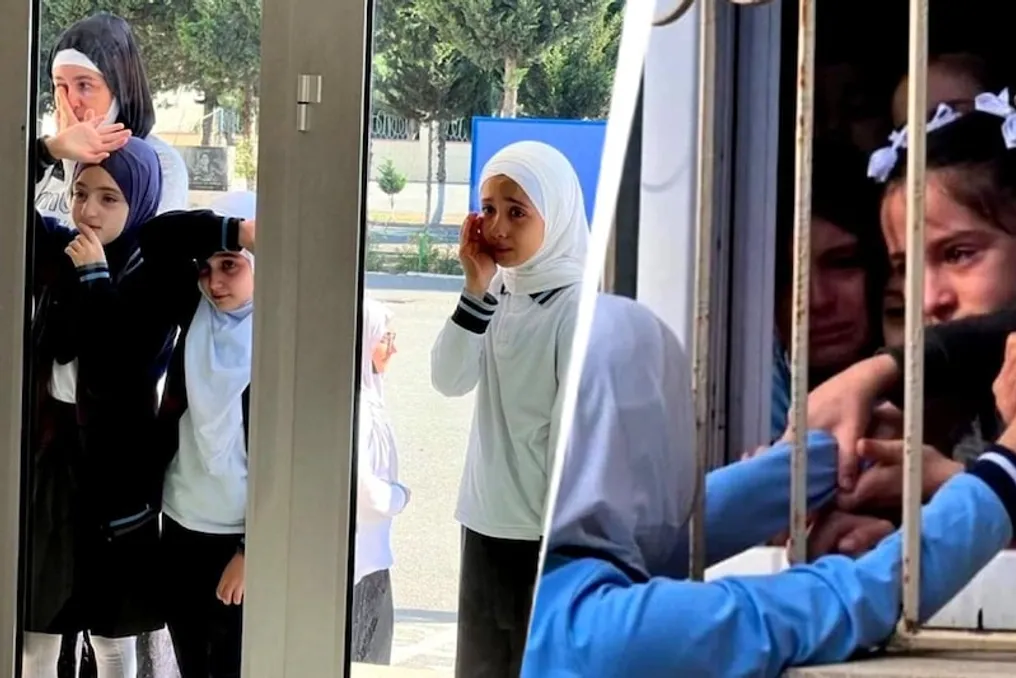
In a country where the Muslim population accounts for 96% and the constitution declares it a secular state, changes have occurred that have caused public resonance. The government of Azerbaijan introduced restrictions on wearing the hijab in classrooms, citing the secular nature of the country.
Despite the fact that about 96% of Azerbaijan's population adheres to Islam, the country's constitution enshrines its secular status and guarantees freedom of religion. However, the government used the secular basis of the state to introduce restrictions on clothing in state schools that does not comply with the established uniform or is considered contrary to the secular character of education. Although the official decree did not explicitly mention the hijab, many schools applied this rule to female students who wore it.
This decision sparked a wave of protests in Azerbaijan. In the Muslim country, the new school dress code caused strong dissatisfaction. Female students who wore the hijab claimed they were denied entry to classrooms, while other students participated in boycotts of classes in support of their peers. Police arrested 37 people in connection with these demonstrations.
The Cabinet of Ministers of Azerbaijan adopted the proposal on September 21. According to a statement from the state press service of Azerbaijan, APA, the goal of changing student uniforms in state institutions was to implement a unified dress code reflecting the 'principles of a secular state.' APA also reported that clothing consistent with the 'history, culture, and national and moral values of the Azerbaijani people' could be permitted after approval by the 'Pedagogical Council' operating under the auspices of the Ministry of Science and Education.
Under this resolution, restrictions were placed on additional clothing that did not conform to the approved uniform or was deemed incompatible with the secular nature of learning. Although the order did not directly mention the hijab, several schools refused to allow female students wearing it into the classrooms.
On October 6, rules for the dress code for teachers were also approved. Following this, reports emerged of pressure on female teachers to remove head coverings. One teacher, Jahra Hasanova, stated that the hijab is her personal choice, and being forced to give it up holds emotional significance for her.
After the introduction of the rules, the atmosphere at the school gates changed. Students wearing hijabs were sent back. Videos circulated on social media showing students crying while hugging teachers. In schools in the capital Baku and the Masalli region, students boycotted classes, starting to study outside and posting signs reading: 'Hijab does not impede education.'
Approximately 96% of Azerbaijan's population are Muslims, with the majority being Shia. Nevertheless, the constitutional structure of the country is based on the principle of separation of religion from state. Article 7 of the Constitution names Azerbaijan a secular republic, while Article 18 specifies that religion is separate from the state, and the state education system must be secular.
On October 12, the Ministry of Internal Affairs of Azerbaijan reported that 37 people were detained during the implementation of rules concerning school uniforms. Officials accused some individuals of clashes with education employees, damaging educational institutions, and obstructing the normal functioning of schools and transport.
Disputes over wearing the hijab in schools have occurred in Azerbaijan before. In December 2010, protests took place after an attempt by the Ministry of Education to introduce a ban on the hijab based on school uniform regulations. At that time, a conflict also arose between religious freedom and secular education.