Researchers have concluded that a microorganism possessing one of the smallest known genomes is forcing scientists to reconsider the boundaries of what defines life. This organism, named Sukunaarchaeum mirabile, contains only 238 thousand base pairs of DNA and has such a simplified genetic structure that it apparently requires another organism for survival.
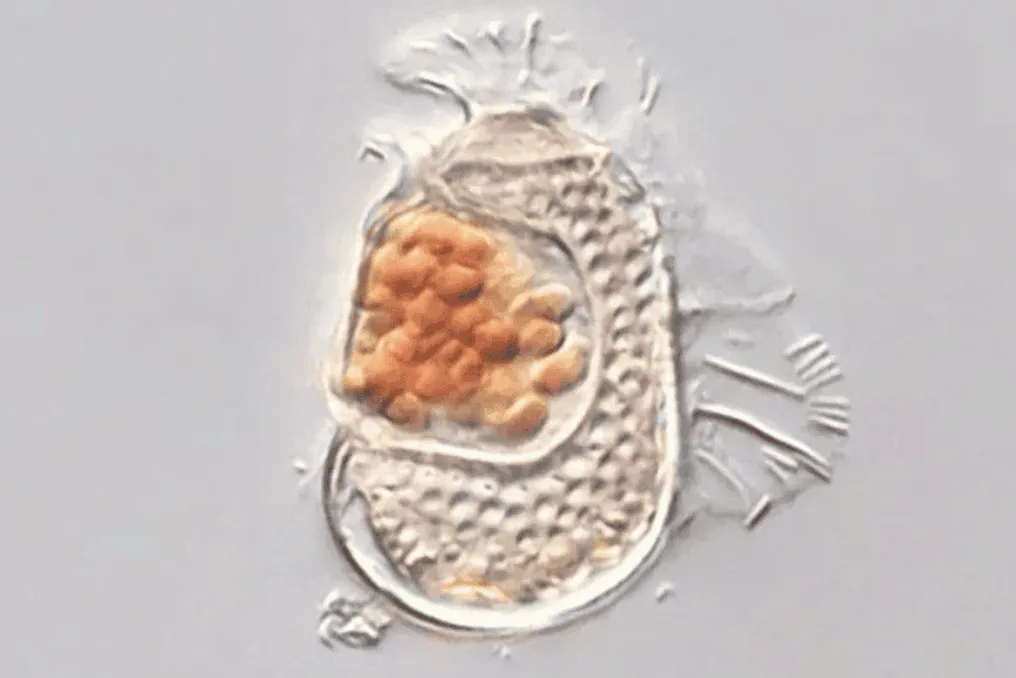
The discovery was made accidentally while studying the unicellular plankton Citharistes regius, which was collected in surface waters off the coast of Shimoda in Japan. Scientists were examining the genetic material of cyanobacteria living in symbiosis with this plankton when they discovered a small circular DNA sequence that caught the team's attention.
The results of this study were published in the scientific journal Current Biology and brought together specialists from the fields of biology and computer science. Sukunaarchaeum mirabile also demonstrates significant limitations: its genome lacks almost all the genes typically necessary for independent metabolic maintenance, meaning it likely cannot produce everything required for its existence on its own.
When preliminary results were presented in 2025, researchers compared its existence to a virus. However, in the final version of the study, this comparison was dropped to avoid confusion in its biological classification.
How the Organism Survives with Such Little Genetic Information
One of the key problems raised by this discovery is how the organism can sustain life with such a limited volume of genetic information. According to the researchers, the microorganism has lost almost all the genes needed to produce nutrients and energy but has retained a significant portion of the mechanisms responsible for copying its own genome and synthesizing proteins from DNA.
This combination suggests that it is close to the minimal threshold of genetic information required for a cell to continue reproducing and maintaining its genetic material. Torsten Allers, a molecular biologist from the University of Nottingham in the UK, emphasizes that the capacity for replication and the degree of autonomy of this process are central questions in defining the concept of life.
In the scientist's view, this discovery provides new insights into how simple a living cell can become while still retaining the ability to reproduce and maintain its genetic information. Among known organisms with smaller amounts of genetic material than Sukunaarchaeum mirabile are bacteria that have become so dependent on symbiotic hosts that they have effectively lost their identity as individual organisms.
Researchers are also considering the possibility that the microorganism is a parasite rather than a beneficial partner to the host organism. One hypothesis is that it is in the process of integrating with the host—a phenomenon that may help understand how complex cells arose during evolution. Mitochondria, structures responsible for most energy production in human cells, serve as an example of such evolutionary interaction; according to scientific explanation, they originated from bacteria that began living inside eukaryotic cells about 1.5 billion years ago and retained their own DNA.
However, in the case of Sukunaarchaeum mirabile, scientists have not found sufficient evidence to conclude that there is a mutually beneficial relationship. Since the organism apparently does not provide a clear metabolic advantage to the host, the team is considering parasitism. Another feature is that approximately a quarter of its genome is dedicated to producing large membrane proteins. Similar proteins have already been found in other parasitic archaea involved in host invasion mechanisms.
Currently, Sukunaarchaeum mirabile is known only by its genome, as researchers have not yet observed it directly under a microscope. Therefore, its lifestyle and relationship with the plankton remain open questions. This research expands knowledge about the limits of genetic reduction and the various strategies organisms can develop for survival, even with an extremely limited set of genes.