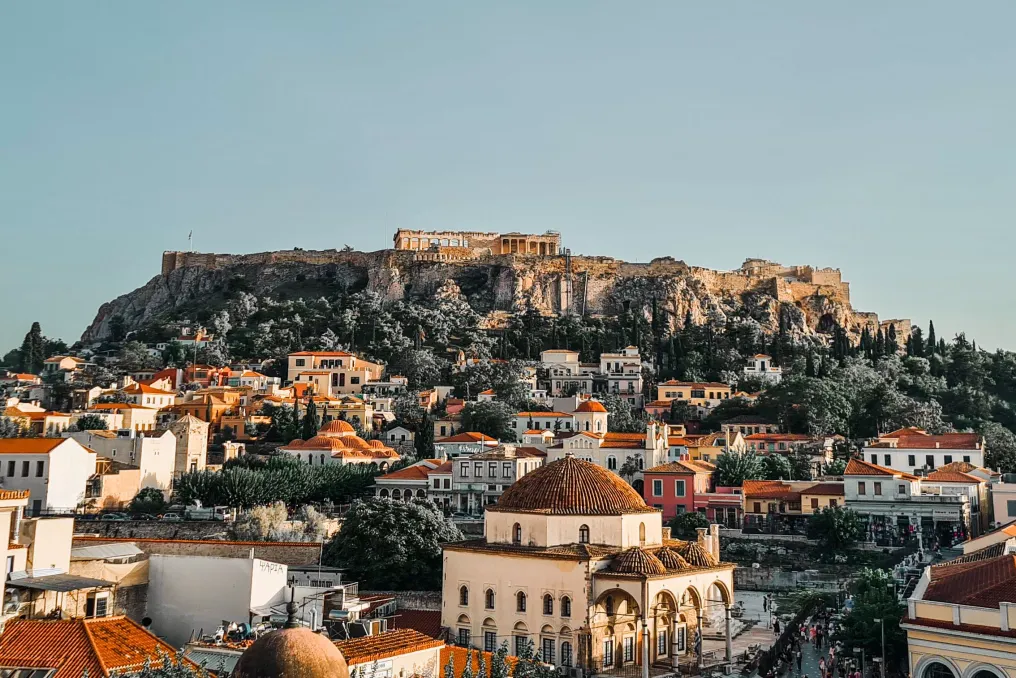
Athens is rich with ancient wonders, but the Greek capital is more than just the Acropolis and the famous Parthenon. If you step away from the ruins, you can discover food markets, street art, local tavernas, and narrow streets where daily life continues against the backdrop of centuries of history.
Three days are enough to see the main attractions and feel the city's atmosphere outside the most photographed spots. The key to success is exploring the city on foot, enjoying good food, and allowing time for unexpected discoveries.
It is best to start in the Monastiraki area, where flea market stalls, independent shops, and historic streets give an insight into Athens. From there, you can walk to the Varvaki Central Market, where locals go for fresh produce, meat, and seafood. Nearby, Evridou Street is famous for its spice shops and traditional grocery stores.
Next, visit Plaka, one of Athens' oldest districts, which features pedestrian avenues and neoclassical buildings beneath the Acropolis. Then, you can climb up to Anafiotika, a small residential quarter with whitewashed houses and narrow staircases, built by masters from the Cycladic island of Anafi in the 19th century.
When the daytime heat subsides, head to Thissio to enjoy views of the Acropolis, and then explore Psiri. With its tavernas, bars, and street art, it is an excellent place for an evening out with Greek cuisine and a leisurely dinner.
Early in the morning, it is recommended to visit the Acropolis to see the Parthenon and the Erechtheion, and also to enjoy views of modern Athens before the intense heat and crowds begin. It is advisable to check the Athens Tickets website and purchase tickets in advance if possible.
At the foot of the hill is the Acropolis Museum, which reveals the history of the site through sculptures and archaeological finds. Time must be allocated to visit the museum before stopping for lunch in nearby Koukaki, known for its cafes and casual restaurants.
Afterward, you can spend the day at the Ancient Agora, which once served as the center of political, commercial, and social life in Athens. There, you can examine the Temple of Hephaestus and the Stoa of Attalos, which houses the Ancient Agora Museum.
The day can conclude in Pangrati, a more residential area with cafes and restaurants. After a day spent among ancient monuments, Pangrati offers a chance to see Athens outside the main tourist routes.
You can begin with koulouri—a ring bread sprinkled with sesame seeds sold in bakeries across Greece—and coffee before exploring Exarchia. This district is known for its street art, independent bookstores, and political history, offering a different view of Athens, distinct from the ancient monuments.
In the afternoon, visitors can visit the National Archaeological Museum, whose collection covers all of Greek antiquity, from prehistoric artifacts to sculpture and ceramics. You should check the National Archaeological Museum's website for opening hours and admission information.
If you prefer outdoor walks, you can stroll through the Commercial Triangle, where traditional shops coexist with independent businesses, cafes, and restaurants.
For a final evening, you can return to a favorite neighborhood, find a taverna, and enjoy a last Greek dinner. There is no need to try and squeeze in another attraction.
The Acropolis might be the reason for your visit to Athens, but it does not have to define your entire trip. The character of the city is revealed in its markets, neighborhood cafes, lively tavernas, and streets where ancient history meets modern life.
By dedicating 72 hours to Athens, you can experience both the monuments that shaped its place in history and the everyday details that make this city worth exploring long after taking the obligatory photograph.