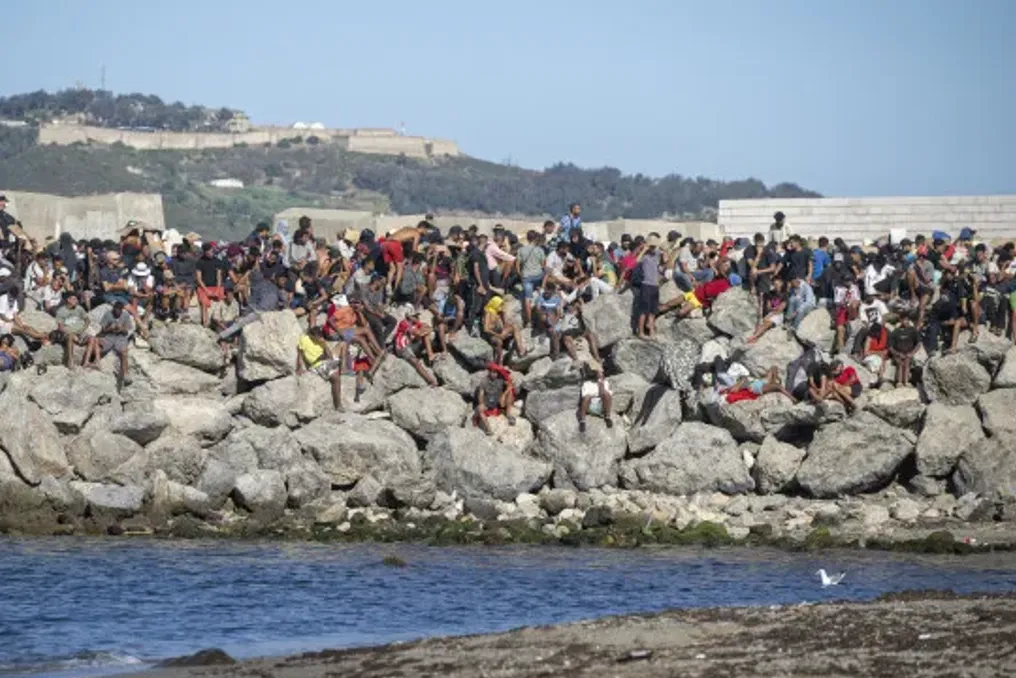
The Spanish Government reported that at the end of July, more than 3,000 foreign minors who entered Ceuta without adult accompaniment are currently in the autonomous city's reception centers and under the supervision of authorities.
Currently, there are 3,019 minors housed in Ceuta. Additionally, 89 of these minors have been reunited with family members residing in Spain, and another 173 have been relocated to reception centers located in other regions of the country, according to updated data provided by the Government's spokesperson, Elma Saiz, during a press conference held in Madrid.
Regarding adults, 4,432 individuals have been registered so far in temporary reception centers, awaiting repatriation procedures or asylum grants. The minister mentioned that the total capacity of these centers is 7,477 adults, but did not specify how many occupy these spaces at the moment.
The Spanish Government also did not disclose the number of people who illegally entered Ceuta on July 30 and 31 and who might remain in the city outside the reception centers, without official registration by the authorities.
After a period exceeding two months, the Government concluded, last weekend, the process of dismantling all illegal camps located in the city, including beach areas and other points near the coast. Despite this, reports and images of groups of migrants circulating through streets, forest areas, or more distant neighborhoods are still observed.
Government estimates indicate that more than 70,000 people illegally entered Ceuta in a single day at the end of July. Most of these people returned to Morocco, the neighboring country and border with this Spanish enclave in North Africa, in the subsequent days and hours.
Subsequently, there has been a continuous voluntary departure from the Spanish autonomous city, totaling 11,661 adults since August 10, according to the executive branch. In parallel, 525 people who were illegally in the city were deported due to criminal offenses.
The executive justifies the increase in voluntary departures in recent weeks by the growing understanding among migrants that the vast majority of processes involving Moroccan citizens will result in judicial and police expulsion orders, which is why they prefer to avoid maintaining such a record in Spain.