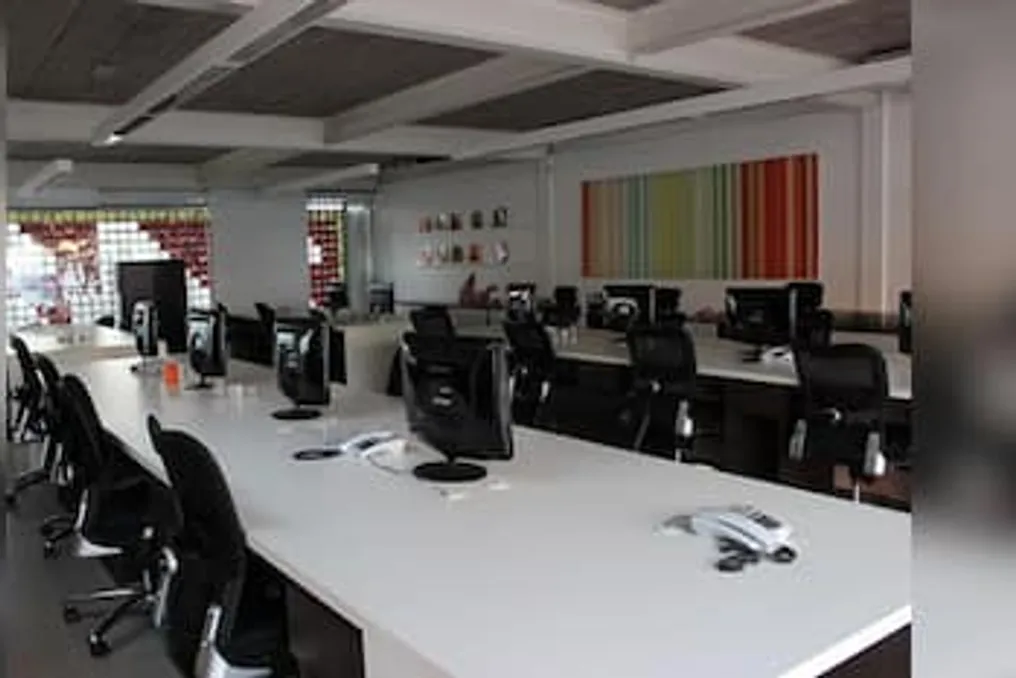
Coworkings Overtake IT/ITeS as Largest Office Space Tenant in India, According to Anarock
Read more
Business Standard
business-standard.com

Coworkings Overtake IT/ITeS as Largest Office Space Tenant in India, According to Anarock

According to a study published on Tuesday by Anarock Research & Advisory, the Indian office space market has undergone changes: for the first time in nine months (January-September 2026), coworking spaces became the largest consumer of office space, surpassing the IT/ITeS sector. This shift highlights companies' growing preference for flexible workspaces.

Piyush Jain, Managing Director of Commercial Leasing and Consulting at Anarock Group, commented on the report's findings, noting that flexible workspaces complement traditional leasing rather than replace it. He pointed to a decisive change in the structure of office space tenants.

Jain added that large tenants, particularly Global Corporate Centers (GCCs), are forming an increasingly mixed portfolio. They use long-term, customized campuses for core teams and flexible spaces for running pilot projects, accelerating processes, and expansion. Furthermore, many flexible space operators also lease entire buildings under standard terms.

The Anarock report showed that the coworking sector led overall demand, accounting for 26 percent during the period, exceeding the IT/ITeS figure of 25 percent, as well as the Banking, Financial Services, and Insurance (BFSI) sector with a share of 21 percent. Previously, according to Anarock data, IT/ITeS traditionally held the leading position.

Among key segments, coworking and BFSI increased their share of total office space demand, reaching 47 percent of total leases in the first nine months of 2026, compared to 41 percent in the same period last year.

Forecasts and Strategic Significance

Amit Ramani, Chairman and Managing Director of Awfis Space Solutions Ltd, noted that the emergence of coworking as the largest tenant in the last nine months confirms a structural shift. This is due to enterprises and GCCs increasingly focusing on speed to market, capital efficiency, and flexibility.

Ramani emphasized that flexibility is no longer just an alternative option or a tool for startups; it has firmly become part of the corporate growth strategy. Harsh Binani, Co-founder of Smartworks, stated that managed workspaces will play an increasingly strategic role in meeting businesses' real estate needs. He specified that the capability will be determined not only by area but also by the ability to provide scalable, institutional-level workspace infrastructure in different cities.

Ramita Arora, Executive Director in Bengaluru and Head of Flex at Cushman & Wakefield, observed that modern flexible offices can support a business at every stage of its real estate needs—from establishing a presence to scaling teams and managing a long-term portfolio. The firm's report, released on Tuesday, indicated that the supply of flexible offices in India reached 88.7 million square feet in the first half of the year and is projected to exceed 100 million square feet this year, growing nearly to 160 million square feet by 2030.

Moreover, the report states that GCCs and multinational corporations are increasingly using flexible spaces to enter new markets and expand in existing ones. Arora added that with the emergence of new demand sources, including AI-based businesses, the opportunities within the flexible sector are becoming both broader and more resilient.

Similar stories

Record number of job vacancies registered in India's technology labor market over 18 months, but positions for experienced specialists predominate
Read more
www.aajtak.in

Record number of job vacancies registered in India's technology labor market over 18 months, but positions for experienced specialists predominate

There are encouraging signs in India's technology labor market: the number of vacancies in the country has reached its highest level in the last eighteen months. According to data, active jobs exceeded the 123 thousand mark in October. However, despite the market growth, it should be noted that this boom may not be as favorable for university graduates as it seems.

According to the latest report by 'Xpheno' on the prospects of active technology vacancies, demand for jobs in October 2026 increased by 5% compared to September and by 17% compared to the same month last year. Nevertheless, this market recovery is unevenly distributed, and most opportunities are available to highly qualified specialists.

Data analysis shows that the highest demand is concentrated in the mid-senior (experienced) segment. This category alone has 68,000 vacancies, accounting for 55% of the total open positions, with an annual growth of 19% observed.

In contrast, the number of vacancies for beginners or entry-level positions was only 15,000. Although this figure is higher than last year (a 15% increase), it decreased by 6% compared to September. This indicates that the market is expanding, but the most valuable positions go to experienced employees.

Details of hiring levels

The distribution of vacancies is as follows: mid-senior — 68,000 (55% of the total, annual growth +19%); entry-level — 15,000 (annual growth +15%, but monthly decrease of 6%); mid-junior — 7,000 (monthly growth +40%, annual growth +17%); and also 2,000 positions for seniors and 31,000 other/unspecified positions.

Companies are actively seeking specific skills. The IT services sector is providing the greatest support to the market recovery, with 66,000 active jobs, which is 57% more than in October of last year. According to 'Xpheno', companies are relying less and less solely on diplomas; huge demand is observed for roles such as AI Engineering, Data Analyst, and Technical Leadership. Data from the top six IT companies shows that the talent pool in these specific areas has grown from 14% to 22% over the last two quarters.

Roles related to core technologies and engineering lead in the total number of jobs, with 61,000 positions. Next are Tech Business Development and Sales (14,000), Tech Consulting (5,000), and IT Project Management (3,000).

In Global Capability Centers (GCCs), 18,000 vacancies are available, which is 64% more than the previous year. However, the most significant change has occurred in the work format. 100,000 jobs (81% of total demand) assume full office work (Work-From-Office, WFO). At the same time, there is a significant drop in the number of remote and hybrid roles: the decline in remote format was 23%, and in hybrid—19%.

Bengaluru remains the largest center for technology vacancies with 31,000 jobs. It is followed by Hyderabad (14,000) and Delhi-NCR (9,000). However, the growth in second and third-tier cities is particularly noteworthy: the number of active technology jobs in smaller towns has increased to 40,000, demonstrating an impressive annual growth of 67%.

Popular