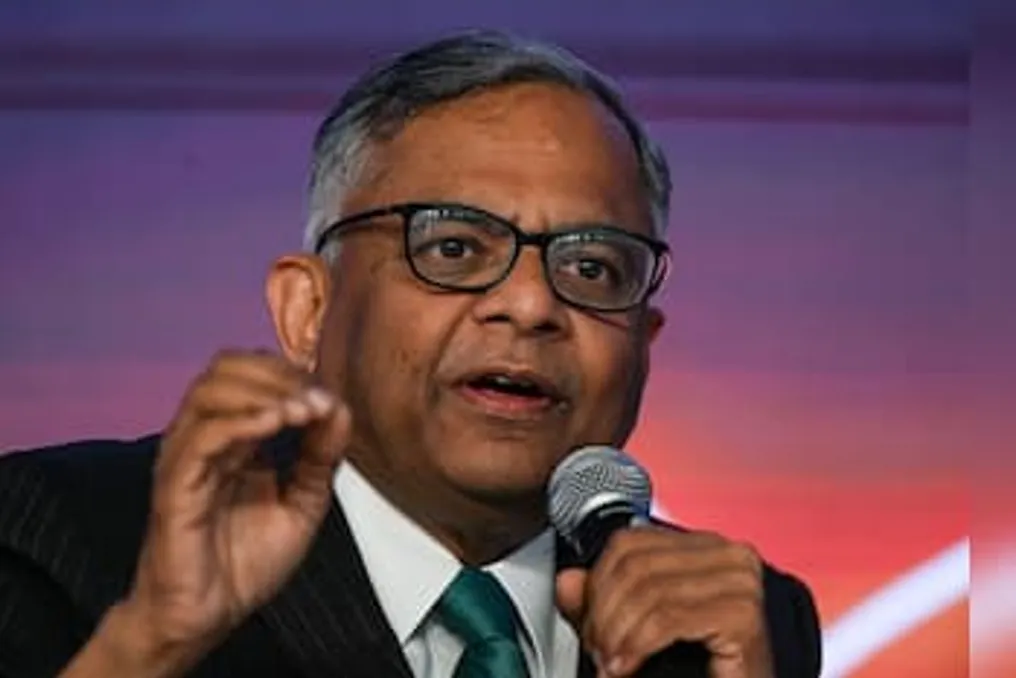
Tata Sons Chairman N. Chandrasekaran emphasized that the group's bets on semiconductors should be viewed in the long term, as companies must strengthen their resilience amid geopolitical and technological upheavals.
According to N. Chandrasekaran, the group's stake in semiconductors is not about achieving specific metrics within two or three years, but about investing in a sector that will become critically important for India's long-term development. He noted that the group's experience has shown that decisions made with the country's needs in mind have consistently proven correct.
Chandrasekaran stated that whether semiconductor chips will be successfully acquired or financial targets met in the coming years is not the main objective; the chips will be fundamentally necessary for domestic consumption. He made these remarks during a panel discussion at the Bloomberg New Economy 2026 forum titled 'The End of Predictability.'
He explained that this investment philosophy prompted the Tata Group to enter the semiconductor and electronics markets. Highlighting India's potential in global manufacturing, he pointed out that the country possesses the necessary talent and domestic market to become a significant player in global supply chains. However, he added that participation in all global supply chains requires partnerships, as they lack all the necessary technologies.
Despite taking risks, Chandrasekaran urged vigilance regarding the company's balance sheet, warning against recklessness and stressing the need to analyze demand. As part of this strategy, Tata Electronics is building a manufacturing plant in Dhola, Gujarat, in collaboration with the Dutch company ASML, and establishing a semiconductor assembly and testing facility in Assam, which is expected to produce 48 million chips daily.
Responding to the question of how current global uncertainty differs from past events, Chandrasekaran noted that this is the first instance of multiple factors occurring simultaneously: geopolitical disruptions, AI-related glitches, and raw material and supply chain issues. He added that combating all these phenomena is unique now because the connected world is trying to disconnect, but never completely shuts down.
He defined technology as a major factor causing short-term disruptions, especially when it falls into the hands of malicious actors, and also mentioned upcoming workforce restructuring. Furthermore, he expressed concern over the war situation, noting that 'we open war in every situation, and nothing closes.'
Chandrasekaran advised businesses to embed resilience into their operational processes instead of focusing solely on efficiency amidst unpredictability. He argued that these two approaches do not exclude each other. In his view, in an extremely unstable and volatile environment, optimization for efficiency is not the right direction, and conversely, designing a system with resilience in an unpredictable setting is effectively optimizing for efficiency.
As examples, he cited the shortage of magnets capable of disrupting vehicle production and a cyberattack affecting Jaguar Land Rover (JLR), which nearly cost the company six weeks of production. The group has also faced an aviation accident and supply chain issues, but it is expected to achieve double-digit growth while maintaining margins. Chandrasekaran instructed group companies to independently define resilience for their respective businesses rather than following a single model.