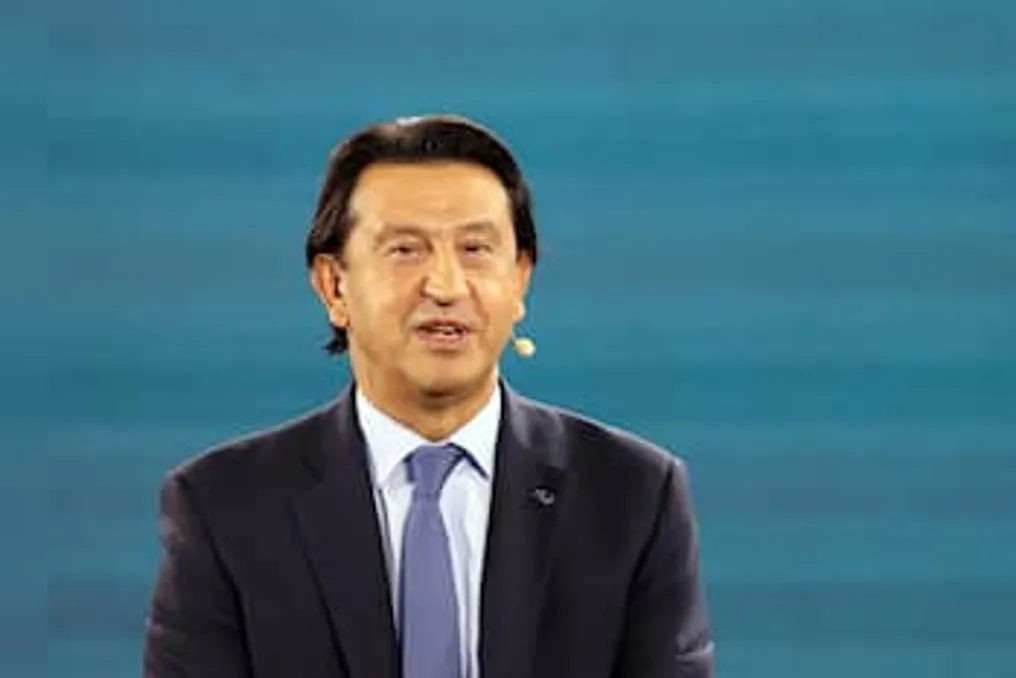
President and CEO of Hyundai Motor Company, Jose Muñoz, announced on Tuesday that the company's operations in India serve as a blueprint for the global market. This experience is based on long-term investments, production localization, and the development of electrification.
Speaking at the Bloomberg New Economy Forum in 2026, Muñoz emphasized that when making decisions about long-term investments, companies should not focus excessively on quarterly results. He noted that Hyundai has continued to implement its electrification strategy while some competitors have revised their plans.
Muñoz explained that unlike some companies overly focused on short-term metrics, Hyundai maintained its course thanks to leadership that always looks to the long term. He added that despite most competitors abandoning electrification, Hyundai found more effective solutions, such as developing robotaxis.
In India, around fifty percent of the company's entire fleet will be electrified by 2030. This goal includes vehicles running on compressed natural gas (CNG), battery electric vehicles (BEV), fuel cell electric vehicles, and hybrids.
Referencing the strategy and investments in India, as well as the presence of a reliable local supply chain in the country, Muñoz stated that they are applying the same model learned in India, turning it into a 'blueprint' for becoming local in all markets.
These comments came amid reports that Hyundai Motor India Limited (HMIL) has shown a consistent year-on-year decline in quarterly net profit. Consolidated net profit fell by 22.2 percent to 1,255.63 crore rupees in the fourth quarter of the 2025-26 fiscal year (Q4FY26) and by 35.1 percent to 888.6 crore rupees in the first quarter of the 2027 fiscal year (FY27).
Muñoz also announced a major unveiling at the new plant in Pune as the company marks 30 years of operation in India. He noted that just a couple of years ago, no one predicted that electric vehicles would become relevant in the Indian market. 'We saw it and invested, and now we will have entry-level EVs, we will get SUV EVs,' he said.
He added that realizing these plans requires a platform and a supply chain ecosystem: 'We will have 26 new cars in India. Who saw that? But if you don't have a platform, you don't have an ecosystem (supply chain), you cannot handle this situation. Now, if anything changes, we will change immediately too.'
Muñoz stressed that the company's long-term strategy is becoming increasingly important amidst disruptions in global operations caused by tariffs, geopolitical conflicts, and changing government policies. He mentioned the impact of US policy, the war in Ukraine, and the conflict with Iran on the company's operations.
To respond to such changes, Hyundai had to plan ahead while maintaining the ability to act quickly. Muñoz described the company's approach using the Korean expression 'pali-pali', meaning to act fast, alongside 'mini-mini', which he used to describe advance planning.
Furthermore, the CEO highlighted the importance of regulatory stability for companies making long-term capital investments. Hyundai operates in 200 countries and must comply with local regulations, noting that frequent policy changes can damage investments planned for decades.