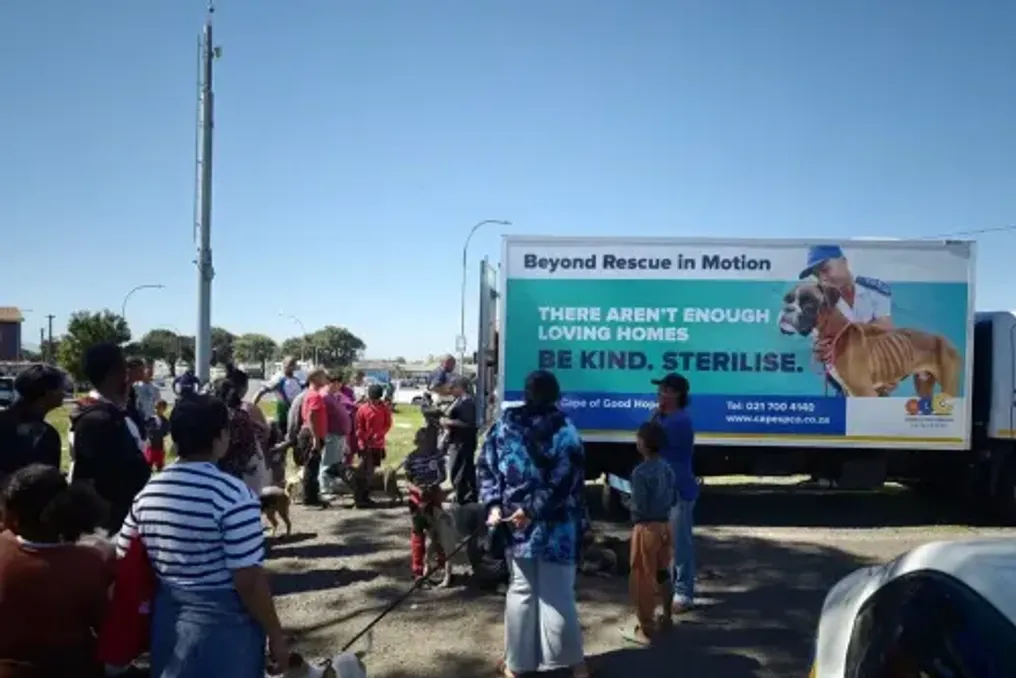
In Cape Town, more and more families are forced to surrender their pets to the Cape of Good Hope SPCA due to growing financial pressure that prevents owners from affording even basic animal care.
During the 2025/26 period, the number of animals handed over to the organization increased by 43.7% compared to the previous year. The total number of stray, surrendered, and seized animals under their care rose by 12.3%, reaching 27,181 animals.
The pressure is also felt at the SPCA Veterinary Hospital, where the number of owner visits seeking affordable veterinary treatment jumped from 35,332 to 53,686, representing an increase of 51.9%.
According to community animal welfare workers, these figures reflect the intensifying struggle of families who wish to care for their pets but can no longer afford it.
Katya Mobitz from Happy Tails Langa reported observing an increase in residents seeking food for dogs, shelter, and assistance with veterinary expenses. She noted that most of them can no longer afford this, and dogs often subsist on porridge or leftovers because people lack the means to provide proper housing.
Mobitz emphasized that during community visits, she notices growing signs of unemployment and financial hardship. These problems extend to veterinary care. She recounted that people come to the clinic, find out the cost of a consultation, but then take the animal home without treatment because they cannot pay for the services, which causes her regret.
She added that when they see a sick animal, they intervene, but often face the reality that the owner simply cannot afford to bring the animal for a veterinary examination. The situation is described as 'being between a rock and a hard place'; veterinary care cannot be free for everyone, as it is unknown who will be able to pay for it, although she wishes it were so.
This crisis occurs against the backdrop of warnings from the SPCA that merely increasing animal intake capacity will not solve the fundamental problem. The CEO of Cape of Good Hope SPCA, Mkabuko Moyo Ndukvana, stated that if 27,181 animals arrive at their doors, and the demand for affordable veterinary care has risen by over 50% in a year, improving animal intake cannot be the answer.
He insists on the necessity of implementing a 'top-level strategy' today to change the conditions that will determine how many animals they need tomorrow.
One key area of intervention is sterilization, aimed at preventing unwanted offspring and reducing the number of animals that will eventually end up on the streets or in shelters.
Last month, the SPCA launched specialized animal transport in Elsies River capable of carrying 20 animals. This transport is intended for collecting animals from communities for sterilization, microchipping, and vaccination, after which they are returned home after recovery. This initiative is part of a plan to sterilize 10,000 animals.
The City of Cape Town allocated R850,000 for mass sterilization in Sub-Councils 4 and 6, which cover significant parts of Cape Flats. Nevertheless, the need remains very high: in Langa, 89.6% of domestic animals are still not sterilized.
Mobitz believes that sterilization is vital to prevent future suffering, especially among puppies born into families already struggling to provide for themselves. She argues that sterilization is the way to reduce the number of unwanted puppies and animals that no one can keep, which then become homeless and sick dogs of the future.
In 2025/26, the SPCA conducted 7,053 sterilizations, which is 11.5% more than the previous year. The organization is now aiming for 10,000 sterilizations in 2026 and has already sterilized nearly 6,500 animals this year, leaving three months to reach the goal.
According to the National SPCA Council, about four million of South Africa's approximately 18.6 million dogs and cats remain homeless. Of these, approximately 3.4 million roam the streets, and 650,000 are in shelters.