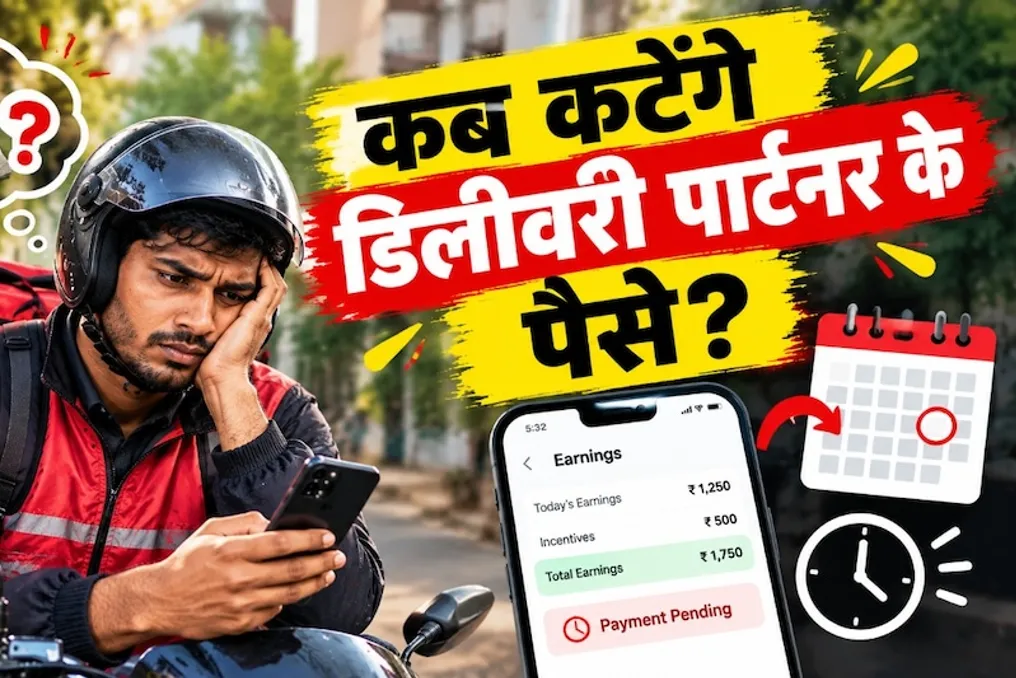
Working and earning through delivery, quick service, cleaning, and courier applications such as Zepto, Rapido, Snabbit, and Pronto may seem simple, but hidden legal and financial risks exist. It is important to understand both the advantages and disadvantages of such cooperation, as well as the conditions provided to workers.
A careful review of the information on these platforms' websites reveals that under the agreement, the worker is assigned the status of an independent service provider, not an employee. Because of this, many obligations fall directly on the worker. Therefore, if you plan to work through these applications, it is crucial to understand five main disadvantages and legal risks.
Firstly, there is no employment status, and the burden of legal compensation lies with the worker. The relationship between the company and the worker is based solely on a 'principal to principal' principle. This means you are not a permanent staff member of the company. According to the agreement terms, an indemnity clause applies: in case of an accident while providing services, damage, or third-party claims, all legal and financial responsibility must be covered by the worker from their own funds. The company bears no responsibility for any legal or judicial costs.
Secondly, companies have the full right to deduct payments for losses, theft, and undelivered items. If money collected from clients is not turned in, the entire amount is retained. Expenses for branded T-shirts, bags, or company equipment that were not returned may also be deducted. Costs for training or background checks may be deducted from your revenue. In case of an order error, damage, or theft of goods, the worker is charged an amount equal to the value of that order.
Thirdly, there is unlimited liability in criminal cases. Under normal circumstances, the limit of damage may be the order value specified by the client. However, if the worker is accused of fraud, theft, system interference, or committing any serious crime, this limit is completely nullified. In such cases, the worker is subject to unlimited financial and legal liability, and legal action may be taken.
Fourthly, the account may be suspended without notice. The company has the right to immediately close or suspend the worker's account without prior or seven-day written notice. If the worker violates the rules, receives customer complaints, or attempts to interfere with the GPS or application systems, they can be fired without any compensation.
Fifthly, personal insurance and medical care costs fall on the worker. In addition to vehicle insurance, several agreements clearly state that the worker is obliged to purchase personal accident insurance and medical insurance at their own expense. In case of illness or injury during work, the company is not obligated to directly cover medical expenses.
Before starting work as a platform worker, one should not just look at the potential income but also carefully study the agreement terms, safety rules, and risks associated with loss reimbursement. These five major legal and financial risks reveal the harsh reality of such work.