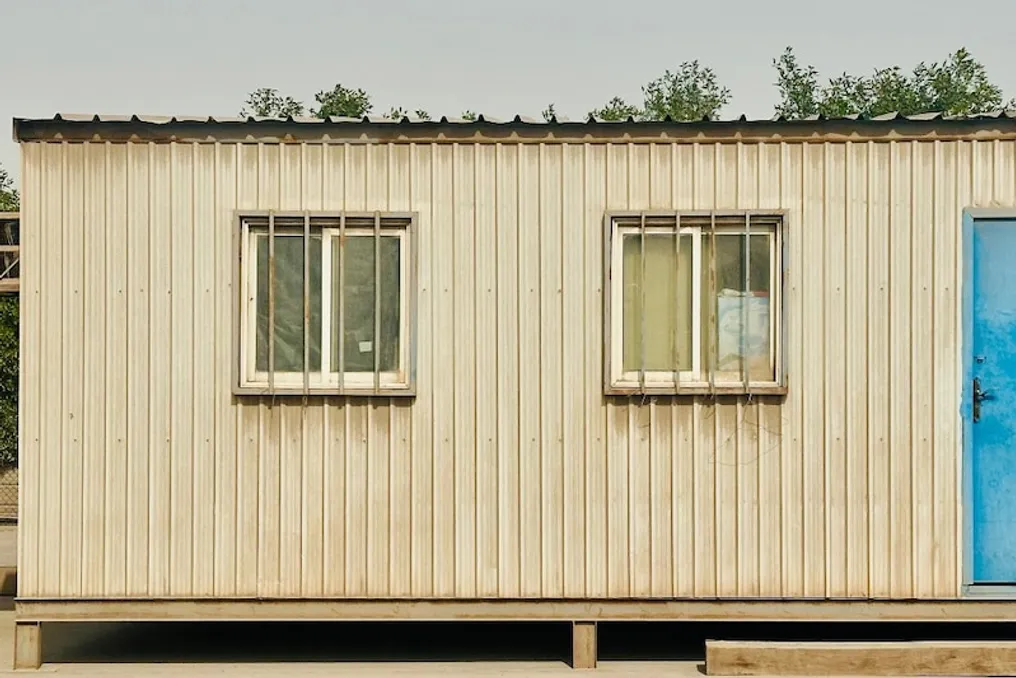
The cost of housing in various cities across the country is becoming increasingly expensive for middle-class families. Even small houses require significant financial investment, prompting people to seek alternative options with lower expenses. In this context, container homes are gaining attention as one possible solution. These homes can be ready quickly and feature modern design along with necessary amenities such as rooms, a kitchen, and a bathroom, tailored to the owner's needs.
Furthermore, such structures may have the ability to be moved from one location to another if required. However, a question arises: are container homes suitable for an ordinary family to live in? What is the cost of their construction, and are they more budget-friendly compared to traditional buildings?
A container home is a dwelling created by modifying cargo steel containers or by using a structure that mimics a container. Doors, windows, flooring, electrical equipment, insulation, as well as a kitchen and bathroom, are installed as needed. It is important to understand the difference: some homes are built from repurposed old transport containers, while others are made from new steel frames and insulated panels. Both types may be called container homes, but their construction, comfort, and price can vary significantly.
The process begins with determining the size and design of the house. Then, spaces for windows and doors are planned within the steel container or frame. The walls and roof are covered with an insulating layer, followed by work on laying the floor, installing electricity, plumbing, sanitary ware, and interior finishing. Most finished modules are manufactured in factories and delivered by truck to the chosen site, where they are placed on a solid foundation and connected to utilities such as electricity and water. Nevertheless, site preparation, transportation, and crane usage may be required for placement.
Yes, ordinary families can live in container homes because they can be equipped with bedrooms, a kitchen, a bathroom, and a living area. However, before using them as permanent residences, several factors must be considered. In India's hot climate, a steel container can heat up significantly, making high-quality insulation, ventilation, and roof protection against heat extremely important. During the rainy season, the structure must be designed to prevent leaks and moisture. When purchasing an old container, it should be inspected for rust, chemicals used in the floor, and overall structural integrity.
Additionally, before placing the house on land, permission for construction must be obtained from local authorities, and zoning regulations must be reviewed. One cannot assume that because the house is movable, no permits will be necessary.
In India, containers and prefabricated houses have traditionally been used for temporary offices and living quarters on construction sites. Currently, similar structures are offered as an option for farmhouses, resorts, vacation homes, and residences in remote areas. Companies specializing in building these homes operate in Karnataka and North India. Some firms also offer container farmhouses and fully finished residential modules. However, there is no reliable public data on which specific city in the country sees the highest demand for this type of housing.
The price of a container home depends on its size, insulation level, internal amenities, and construction quality. According to prices listed on the SAMAN website, a 20x8 ft module costs approximately 4.30 lakh rupees including GST, while a 40x10 ft module will cost around 9.19 lakh rupees. These prices refer to the finished frame provided by the company, not the total cost of the house on the entire plot. Costs for transportation, site preparation, solid foundation, crane rental, water and electricity connection, and additional services may be extra. Therefore, a written estimate of the total cost must be requested from the company before purchase.
Container homes can be built quickly, and the amount of work on the construction site can be less; however, this does not guarantee they will always be cheaper than brick-and-cement houses. After adding measures for heat protection, a bathroom, kitchen, and other amenities, the total cost can increase significantly. Thus, a container home can be a useful alternative for those looking to build a farmhouse, a retreat, or a small modern home. Before deciding on permanent family housing, it is necessary to compare the total cost, the level of living comfort, and local building codes with traditional homes.