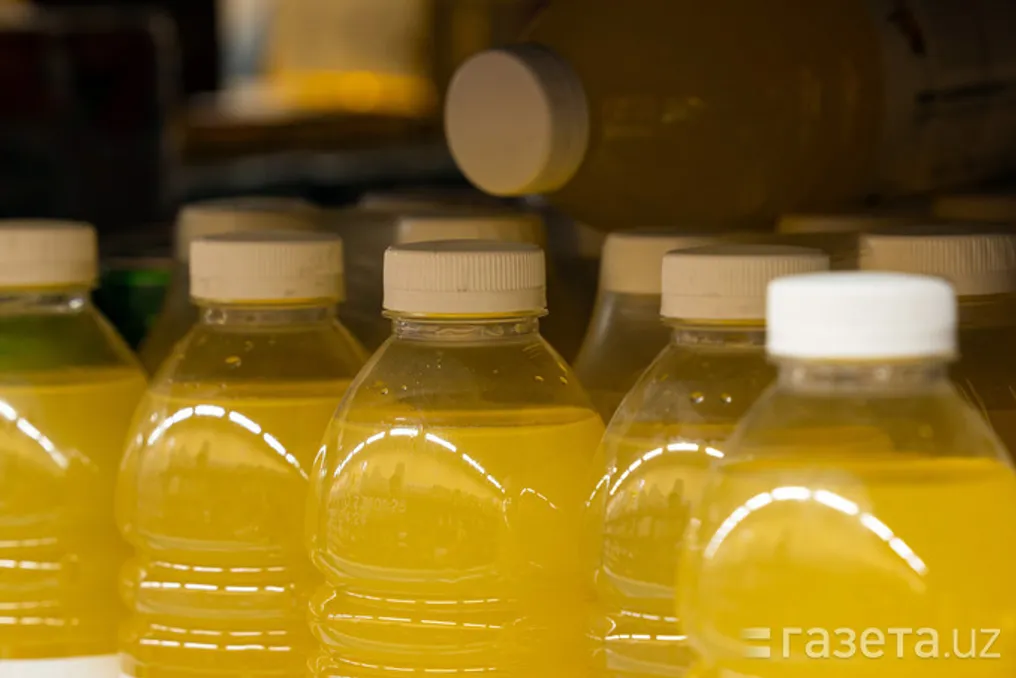
The Ministry of Health of Uzbekistan has presented a draft government decree introducing mandatory color coding for non-alcoholic beverages across the country starting January 1, 2027, based on sugar content levels.
This draft regulates both domestically produced and imported drinks. Three labeling levels are stipulated: for drinks with sugar content between 5 and 8 grams, the inscription 'MEDIUM SUGAR CONTENT' will use black text on a yellow background. If the sugar content is between 8 and 11 grams, the inscription 'HIGH SUGAR CONTENT' will appear in black text on a dark orange background. The strictest category—11 grams and above—will require the warning 'VERY HIGH SUGAR CONTENT—FREQUENT CONSUMPTION IS HARMFUL TO HEALTH' in white text on a red background.
These warnings must be placed on the front face of the packaging, occupying at least 15% of its total area and being easily discernible to the buyer. Furthermore, the packaging must include a QR code with data on composition, caloric value, and daily recommended intake. The draft also provides for the creation of a centralized laboratory control system for monitoring sugar content in non-alcoholic beverages.
The Food Safety Committee has been tasked with approving a unified laboratory analysis methodology by March 1, 2027, and organizing sugar determination in accredited laboratories by September 1 of the same year. The agency is also required to quarterly compile and publish a public registry of beverages exceeding the established sugar limits.
By December 1, 2027, a unified digital platform for monitoring high-sugar drinks must be launched. This platform will serve as a functional module of the national digital marking system Asl Belgisi, managed by CRPT Turon, thereby avoiding data duplication. The system will account for the sugar (carbohydrate) content per 100 ml of the product and the types of sweeteners used, integrating with the Tax Committee via the interdepartmental 'Digital Government' platform. Analysis results will be entered into the system considering risks to identify discrepancies between declared and actual composition, while aggregated information will be available in an open format, adhering to the GS1 Digital Link standard. The development and maintenance of the system will be financed by the state budget.
The Customs Committee is obliged to implement an electronic declaration system for the sugar content in imported beverages by January 1, 2028, and imports that do not comply with the new requirements will be prohibited. Starting January 1, 2027, the sale of such drinks in educational institutions is also planned to be gradually restricted. The Committee for Competition Development and Consumer Protection is instructed to regularly conduct spot checks and inform the media about any violations found.
The Association of Producers of Non-Alcoholic Beverages and Juices of Uzbekistan (UzBev) expressed concern regarding the Ministry of Health's proposal for mandatory labeling. In a comment to 'Gazeta', the organization stated that the new requirements could create additional financial burdens for businesses and should be based on scientific data.
Although UzBev supports the consumer's right to accurate product composition information, they consider the proposed method insufficient in terms of justification. In the association's view, any decisions must be fair, balanced, and scientifically substantiated. The main objection is that the labeling only applies to non-alcoholic beverages, whereas sugar is present in many other products such as confectionery, baked goods, dairy desserts, ice cream, and sauces. The association warns that focusing solely on drinks may mislead consumers about the benefits of other products.
Manufacturers also pointed out issues with timelines: mandatory labeling must take effect on January 1, 2027, while the approval of a unified laboratory analysis methodology is only scheduled for March 1. UzBev called this a 'paradoxical situation,' as businesses must comply with requirements whose criteria have not yet been approved. Questions arise as to how producers should determine sugar content before the official methodology is approved and which results will be considered reliable.
Moreover, it is noted that the technical regulation for food product labeling has not yet been finalized. Changing packaging requires time—the association estimates that preparing a new label takes at least three months, creating risks for companies holding inventory of packaging materials for a year ahead. UzBev also mentioned costs associated with digital labeling and frequent changes in tax burden, which increases uncertainty for producers.
The association insists that a comprehensive study of the nutritional structure of the population of Uzbekistan must be conducted before introducing mandatory warnings. It is necessary to determine the main sources of consumption of sugar, salt, and other dietary elements affecting health. Producers argue that there are no state studies in the country that can clearly identify sugary drinks as the primary source of excess calories.
UzBev also suggests testing the new labeling system among consumers to assess its comprehensibility, its ability to aid in product comparison, and the absence of creating false perceptions. The association calls for completing the labeling reform first, conducting dietary studies, developing a scientific model for product assessment, and discussing the extension of warnings to other food groups. According to industry representatives, achieving goals for consumers, businesses, and the state is possible only if decisions are based on science, dialogue, and equal treatment of all market participants.