Many industries that need to monitor vast territories from the air rely heavily on satellite imagery. However, obtaining such images can be expensive, and their resolution is often not detailed enough for the needs of operators on the ground.
Arctus Aerospace, based in Bengaluru, is creating unmanned aerial vehicles to bridge this gap. These vehicles are designed for stratospheric flights lasting up to 24 hours and will be equipped with optical, infrared, electro-optical, and synthetic aperture radar cameras to capture high-resolution video of specific objects.
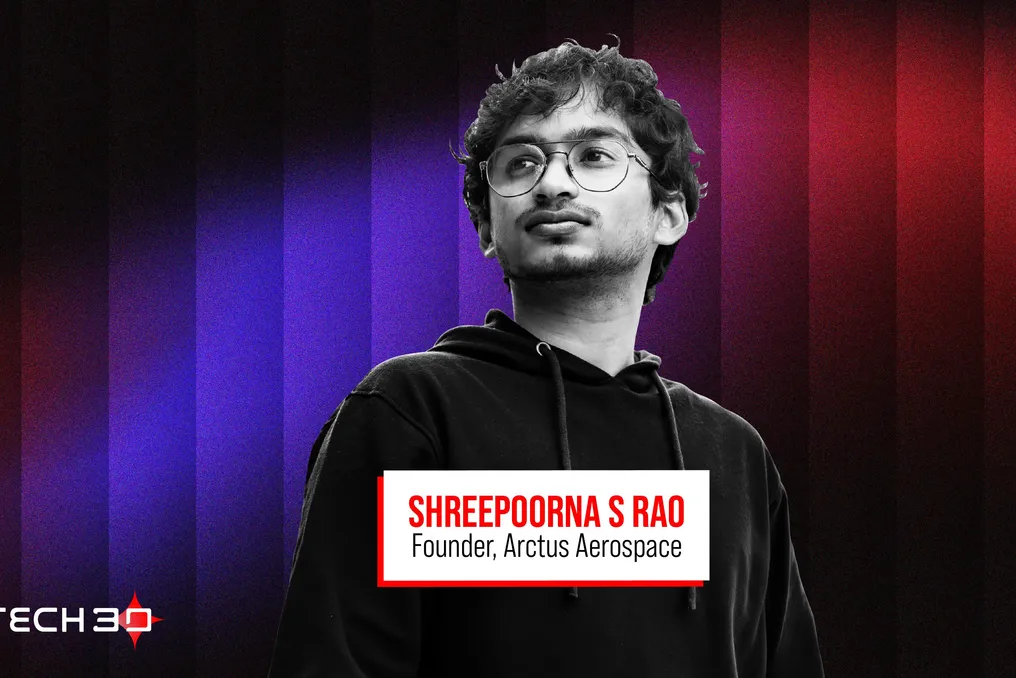
Shripurna S Rao founded Arctus in 2024 after graduating from IIT Madras with a bachelor's degree in civil engineering. He established the company after noticing India's dependence on foreign platforms for continuous monitoring of high-altitude airspace.
The aircraft is rated for a weight of 1 to 1.2 tons, has a wingspan of 20 meters, a payload capacity of 250–300 kg, and a cruising altitude of about 50,000 feet. Arctus independently develops the chassis, braking systems, hydraulics, power plants, avionics, onboard computer, and autonomy software, excluding semiconductors.
Work is conducted at a 25,000 square foot facility in Bengaluru, where raw materials such as carbon fiber, along with blocks of titanium and aluminum, arrive. This site handles laying, machining, manufacturing, and assembly of printed circuit boards, as well as firmware and sensor development. Components are designed for 100,000 takeoffs and landings, and the chassis undergoes testing on an internal stand.
Until now, Arctus has used smaller demonstration vehicles instead of the full-scale platform. These models have completed over 1,000 flights and accumulated 10,000 flight hours at altitudes between 10,000 and 30,000 feet, collecting over 10,000 sq km of video data.
The flights allowed for the collection of data to train the company's autonomy software. The demonstrators recorded the vehicles' behavior in conditions of crosswinds and rain, as well as sensor performance. Arctus used this proprietary data to train its autonomy stack, which combines reinforcement learning and regression models.
The entire onboard autonomy system is developed in-house. Its current capabilities include fully autonomous route planning, collision avoidance, air traffic management, navigation without GPS, and weather-resilient flight planning.
When executing a mission, the operator at the ground control station inputs the required image type, spectrum, and duration. The software then generates the route, performs the survey, and afterward, the aircraft returns and lands. Most test flights depart from the DRDO facility in Chitradurga.
Arctus plans to operate the vehicles itself and sell the resulting data as a service. Clients will receive data through a control panel without needing to interact with the hardware directly. The cost varies depending on whether the client requires a static image or video, and whether it is needed during or after the flight. The company uses an estimated price of around $5 per sq km.
Data is stored both on the aircraft and on an offline server rack at the Bengaluru complex, which is not connected to the public internet. Subsequently, Arctus transfers the data to the client's own systems.
The first industries targeted by the company are the oil and gas industry, mining, and agriculture; logistics and insurance are planned for approximately six months later. Rao notes that object-level data allows clients to verify contractors' adherence to standard operating procedures, reduce insurance costs, and compile incident reports.
Arctus has already conducted two paid pilot projects: one with a Public Sector Undertaking (PSU) and another with the Karnataka government division, which also provided it with the Elevate grant. The startup intends to convert these projects into annual subscriptions.
Arctus raised $2.6 million in a seed round led by Version One Ventures, with participation from South Park Commons and gradCapital, as well as angel investors including Balaji Srinivasan, Srinivas Narayana, and teams from Ather, Boom Supersonic, and Bounce Infinity. An earlier check of $100,000 from gradCapital and Emergent Ventures increased the total funding to $2.7 million. Most of the capital was directed towards R&D and capital expenditures for production, as well as conducting pilot projects.
The next step is the creation of a production prototype aircraft. Rao stated: 'We have been working with technology demonstrators until now, and the plan is to scale that up.'
Arctus has received inquiries from the Middle East and Australia and is also targeting North America. Deployment of aircraft in these regions, client meetings, and base establishment are planned.
Arctus Aerospace is part of the Tech30 cohort from YourStory—a showcase of India's most promising startups in 2026, presented at the TechSparks Bengaluru event.