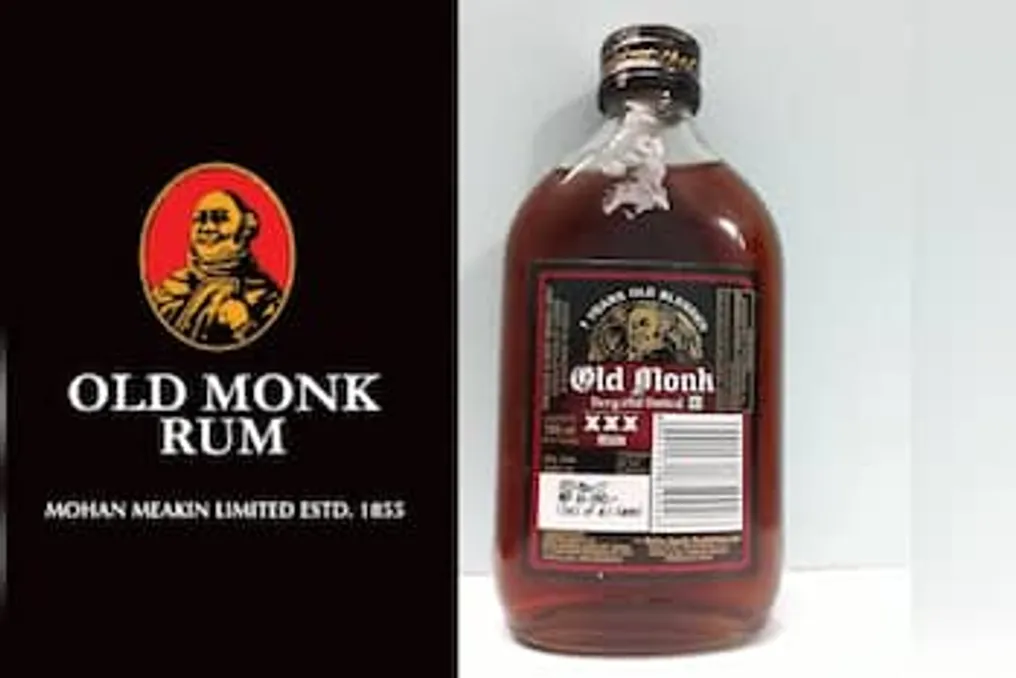
Ban on Old Monk sales cost Maharashtra government 350 crore rupees, and companies 500 crore rupees
Read more
Business Standard
business-standard.com

Ban on Old Monk sales cost Maharashtra government 350 crore rupees, and companies 500 crore rupees

The producer of the alcoholic beverage Old Monk informed the Bombay High Court that the restriction on sales from the manufacturing facility in Maharashtra resulted in company losses exceeding 500 crore rupees, while for the state government, it amounted to a loss of about 350 crore rupees in export revenue.

This statement was made on Monday as the company challenges the prohibitive order issued by the Food Safety and Standards Authority of India (FSSAI) regarding the recipe and labeling of the popular rum.

The producer also noted that the same recipe continues to be sold from other production sites of the company in Maharashtra.

The court is scheduled for its next hearing on October 23.

What did the company state to the court?

Senior Advocate Venkatesh Dond, representing Mohan Rocky Springwater, told the bench presided over by Chief Justice Mahesh Chandra Tripathi and Judge Advait Sethna that the sales restriction led to losses for the company exceeding 500 crore rupees. Dond also emphasized that the state's export revenue lost about 350 crore rupees.

The company added that its other divisions in Maharashtra continue to sell the same rum recipe, while sales from the affected facility remain restricted. The alcohol producer argued that the rules permit the use of approved additives in neutral spirits, and stated that competing brands using similar processes were not subjected to such measures.

Additional Government Solicitor General Anil Singh, speaking on behalf of the authorities, reiterated that sales would be permitted if the producer agreed to change the product description from 'rum' to 'rum-like'.

Previously, the High Court refused an immediate temporary suspension of the ban. Following this, the producer agreed to submit revised labels excluding controversial age descriptions and clearly indicating 'added flavor'. However, the regulator did not approve these modified labels.

Where did the dispute arise?

This case followed an inspection of the company's plant in Hopli, Maharashtra, after which FSSAI raised objections regarding the composition and labeling of the product. The regulator questioned the use of added rum flavoring in spirits sold under the standard product name, as well as descriptions such as '7 years aged in blend' and 'very old barrel'.

Age claims also raised questions about whether consumers might mistakenly believe that the entire mixture was aged for the specified period.

Why does FSSAI insist on labeling Old Monk as 'rum-like'?

The regulator's objection centers on whether alcohol made using neutral spirit and added rum flavoring can simply be sold as rum. According to FSSAI, artificial or natural-like rum flavoring can mask the natural characteristics of the spirit and alter its identity. In FSSAI's view, such products should be designated as flavored spirits, not sold under a standard name without proper disclosure.

FSSAI insists that the product label must accurately reflect its composition and not mislead consumers.

Similar stories

Government tightens control over sugar stockpiling, introduces new storage rules for dealers
Read more
www.aajtak.in

Government tightens control over sugar stockpiling, introduces new storage rules for dealers

The central government has amended sugar storage regulations to ensure consumers have an adequate supply of sugar at a fair price during the holiday season. Under the new provisions, the storage period for sugar dealers has been reduced to 15 days, and the maximum inventory volume is set at 1000 quintals.

These revised norms will be in effect from October 15 to November 30, 2026. However, special concessions have been granted to regions, including Calcutta and its extended agglomeration, as well as Assam, allowing dealers to store up to 2000 quintals of sugar.

According to the new rules, any sugar dealer cannot hold stock for longer than 15 days from receipt. Furthermore, in most regions of the country, it is prohibited to store more than 1000 quintals of sugar at any time and in any location.

The government explains these measures as necessary to prevent unnecessary accumulation of sugar in the supply chain, as well as to stop speculation and hoarding. The goal is also to ensure the uninterrupted supply of sugar from sugar mills to end consumers through dealers.

Reduction in retail prices

The government reported that the average retail price of sugar has decreased by approximately 15 percent compared to the highest level recorded in August. Meanwhile, ex-mill sugar prices have dropped by almost 28 percent. For the last three weeks, mill prices have remained stable. The government hopes that this drop in mill prices will be passed on to consumers throughout the supply chain and urges wholesale and retail sellers to immediately pass this benefit on to buyers.

Recommendations for sugar mills to begin crushing

The new sugar crushing season began on October 1. The government advised sugar mills to commence the crushing process according to the agro-climatic conditions of the respective regions. State bodies were also instructed to take appropriate measures regarding the crushing process, taking into account the condition of local fields.

The government stated that it will continue to monitor the impact of uneven and low rainfall on sugarcane due to the El Niño phenomenon in some sugar production areas. It will also take necessary steps to maintain a balance between the needs of the domestic market, consumer interests, and the interests of sugarcane farmers.

The government emphasized that sugarcane farmers and consumers are the two main pillars of the country's sugar policy. The government's priority is establishing fair remuneration for farmers, while maintaining an adequate supply of sugar nationwide and protecting consumers from unjustified price increases are also goals.

Popular