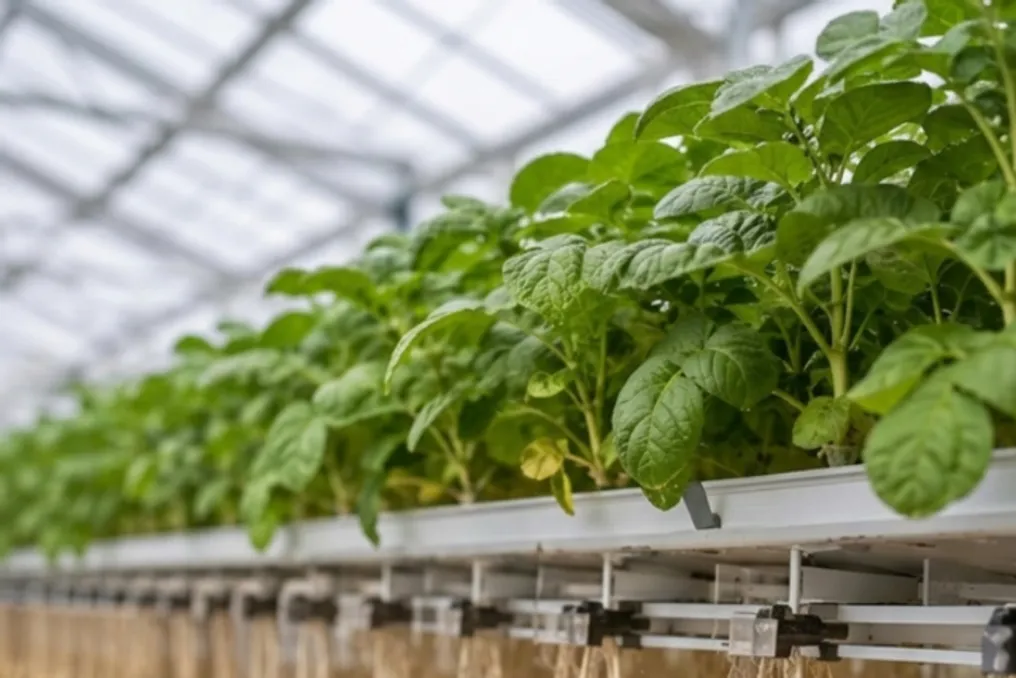
The possibility of growing plants whose roots hang freely in the air is realized through aeroponics. This method uses a fine mist saturated with nutrients, which distinguishes it from traditional agriculture because the plants grow without soil.
In an aeroponic system, the roots are located inside a closed chamber where water and nutrients are supplied as a mist. Plants are secured through small holes in panels or lids, leaving the roots suspended in a dark space, which provides them room to grow.
Special nozzles, pumped by a pump, spray nutrient-rich water into tiny droplets. These droplets cover the exposed roots with all the necessary elements for development. The mist delivers water and dissolved nutrients, including nitrogen, phosphorus, and potassium, which the roots absorb to support growth, whether it is new leaves or forming tubers.
In soil conditions, roots need to find air pockets for oxygen access. In aeroponics, however, the exposed roots have abundant access to oxygen, which promotes their respiration and nutrient absorption. The roots receive mist at specific intervals, rather than remaining constantly submerged in water; the feeding schedule depends on the type of crop, system design, and growing conditions.
In many setups, excess nutrient solution drains into a reservoir and is reused, significantly reducing water consumption compared to soil farming. Process automation is achieved using timers for spraying and sensors that monitor acidity (pH) and nutrient concentration, helping farmers maintain optimal conditions for specific crops.
There is a risk: if the spraying system fails, the exposed roots can quickly dry out, so pumps, power sources, and monitoring systems are critically important for maintaining plant health. Aeroponics is suitable for growing crops such as lettuce, spinach, herbs, and strawberries, and is also used for producing seed potatoes in controlled environments.
In India, aeroponics is used to obtain mini potato tubers under controlled conditions. Starting with high-quality planting material helps obtain a purer seed stock. Since plants can be arranged vertically, aeroponics allows for efficient use of limited floor space, making it particularly suitable for urban and controlled agriculture. Thus, aeroponics replaces soil with a carefully managed root environment, offering an alternative cultivation method with less water and space consumption through the combination of mist, nutrients, oxygen, and automation.