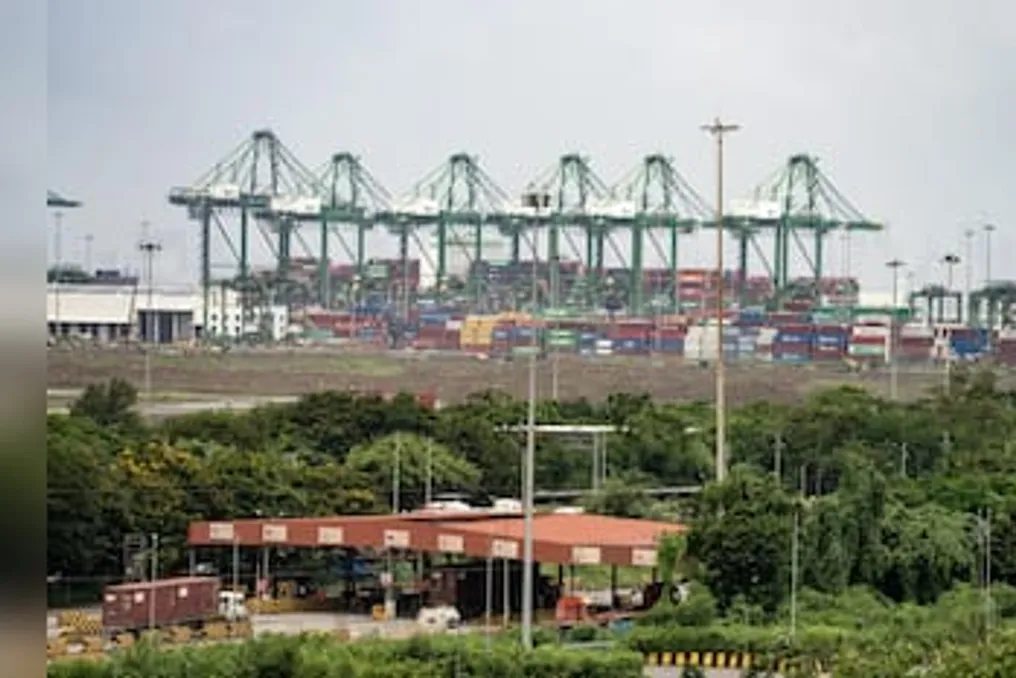
Potentially more protectionist US policies could turn out to be an unexpected stimulus for the Indian economy. As countries restructure supply chains around reliable partners and seek preferential market access, New Delhi has abandoned years of caution and is actively expanding its free trade network.
Using a large-scale global economy model developed by the World Trade Organization, researchers calculated that these agreements could add about $140 billion to India's GDP by 2035. This would occur through opening new markets, reducing import costs, stimulating foreign direct investment, and increasing productivity.
Two scenarios are also being considered that could enhance this growth: achieving further productivity gains through a decade-long reform to strengthen manufacturing competitiveness, and adopting measures to help underemployed agricultural workers transition into the manufacturing and service sectors.
The Great Redrawing of Global Trade Maps
Rising tariffs in the US since President Donald Trump returned to the White House in January 2025 have led to changes in global trade relations. After 19 months of significant fluctuations, the average US tariff rate in August was 10.7%, higher than the 2.3% recorded in 2024. These tariffs are sectoral, mainly affecting automobiles and metals, as well as specific levies for countries set at around 10–12.5% under Section 301 related to forced labor. Tariffs of this level could reduce imports into the US by approximately 15% compared to the previous regime, while threats and investigations point to a possible further increase in rates.
Other nations are responding to this situation by diversifying trade ties and accelerating negotiations with new partners. Since early 2025, the European Union has concluded new or updated agreements with MERCOSUR and Mexico, and has finalized talks with Indonesia, India, and Australia. The Association of Southeast Asian Nations and China signed an updated free trade agreement in October 2025. Canada signed a series of agreements in 2025–2026 and plans to launch, accelerate, or renew others.
India is also participating in this trend. Between 2025 and 2026, agreements came into force with the European Free Trade Association, the United Kingdom, and Oman, supplementing deals with Australia and the United Arab Emirates that began in 2022. Furthermore, India signed an FTA with New Zealand and is negotiating with the EU. Additionally, New Delhi is engaging with other partners, including the Eurasian Economic Union, and is seeking an agreement with the Gulf Cooperation Council.
Simultaneously, India is deepening trade ties with the US after Trump and Prime Minister Narendra Modi announced plans for a bilateral agreement in February 2025. These relations had been strained. In the second half of 2025, India faced some of the highest additional tariffs among major US trading partners after Washington imposed a reciprocal tariff of 25% and an additional duty of 25% linked to Russian oil purchases.
The tension has since eased. Although sectoral tariffs remain in effect, the US removed the 25% Russia-related tariff and reduced reciprocal rates for India to 18% in February. Moreover, under Section 301 on forced labor, India was assigned a rate of 10%, which is lower than the 12.5% imposed on many other partners. This paves the way for a temporary agreement, although reaching a more comprehensive deal may prove difficult.
What Trade Reshuffling Means for the Indian Economy
Using a computable general equilibrium model, researchers estimate how India's trade agreements could change its economy over the next decade. The analysis begins by assessing the impact of US tariffs at the August level relative to 2024 duties. It is calculated that the average tariff on Indian goods sold in the US rose to 11.6% from 2.4% in 2024. By 2035, tariffs are projected to reduce exports of Indian goods to the US by about one-fifth, but the blow to the Indian economy should be limited, as less than 2% of its output depends on US markets, and stronger exports in other regions should mitigate the consequences. The impact on GDP is expected to be negligible.
Next, FTAs that have already been concluded or are in negotiation are modeled through three channels:
- First, bilateral tariffs are adjusted using a stylized schedule reflecting key elements of the deals. India's partners eliminate all tariffs on Indian goods in the first year. India eliminates tariffs on industrial goods and halves them on agricultural goods, implementing half the reduction in the first year and the rest by the tenth year.
- Second, based on the work of Metivier et al. (2023), a gradual reduction in the cost of non-tariff measures on goods and services by 25% over 15 years is assumed, with an additional reduction in non-tariff measures for services to account for lower uncertainty from bilateral agreements.
- Third, using the work of Prasad et al. (2008), a productivity gain is added due to increased foreign direct investment in line with deal commitments: $100 billion over 15 years for EFTA (approximately $35 billion of which is expected to be additional) and $20 billion for New Zealand (almost all additional).
In the ongoing negotiations between the US and India, a temporary agreement is modeled whereby India grants the US a tariff reduction similar to what it offers in its other deals. The US reduces sectoral duties on automotive products to 15% (including Most Favored Nation tariffs) but maintains metallurgical tariffs at 50% and Section 301 tariffs at 10% on most covered products—similar to the terms offered to other partners such as the EU or Japan. Nevertheless, this agreement is expected to reduce tension and uncertainty, and ensure the same reduction in non-tariff barriers as other Indian FTAs.
The analysis shows that existing FTAs should increase India's GDP by 1.2% by 2035 relative to the baseline, and if agreements with the EU and New Zealand are implemented from 2027, this figure will rise to 1.7%, representing an increase of about $140 billion in constant 2025 US dollars. The agreement with the US will add another 0.2 percentage points. If negotiations with the EAEU, GCC, and Israel are completed in the coming years, the growth could increase by another 0.2 percentage points, bringing GDP to 2.1% higher (about $170 billion) by 2035.
Trade volumes are expected to grow even faster. By 2035, Indian exports could exceed the baseline by nearly 10% if all agreements are implemented. Imports will also rise as households and businesses gain access to new goods and services, and producers become more integrated into global value chains.
How Domestic Trends Could Compound the Boost
Signing FTAs is only the first step. To fully capitalize on the benefits, India must maintain the pace of reforms. Key aspects include effective implementation, reliable access to energy and critical minerals and advanced technologies, and unlocking the potential of India's vast workforce.
A growth scenario is modeled where two domestic trends amplify the effect: reduction in production costs. India has cut corporate taxes, introduced subsidies, increased infrastructure investments to lower logistics costs, and funded worker upskilling incentives. Regardless of trade changes, some of these benefits have likely already materialized. In this optimistic scenario, further efficiency gains in manufacturers are assumed, modeled as approximately a 2% reduction in production costs. This could add about 1 percentage point to export growth and 0.5 percentage points to GDP growth by 2035.
Another factor is the utilization of India's agricultural labor potential. Over 40% of India's workforce remains in agriculture, a figure that has changed little over the last decade, with a high degree of underemployment. In comparison, in rapidly industrializing Vietnam, the share has dropped from over 40% to about 25%, and agricultural output per worker has grown rapidly, now exceeding India's figures by almost 60%. A similar productivity gain in India is modeled, phased in over the decade, allowing workers to transition to manufacturing and service expansion. This adds slightly more than 1 percentage point to export growth and about 2 percentage points to GDP growth.
India combines an ambitious industrial strategy with an equally ambitious trade agenda. If it manages to align these directions correctly, it could become a powerful new engine for long-term growth. US tariffs are a brake. However, the right response could bring development gains for both India and the world.