Economic ties between China and Botswana deepen through development cooperation
Read more
CGTN
cgtn.com

Economic ties between China and Botswana deepen through development cooperation

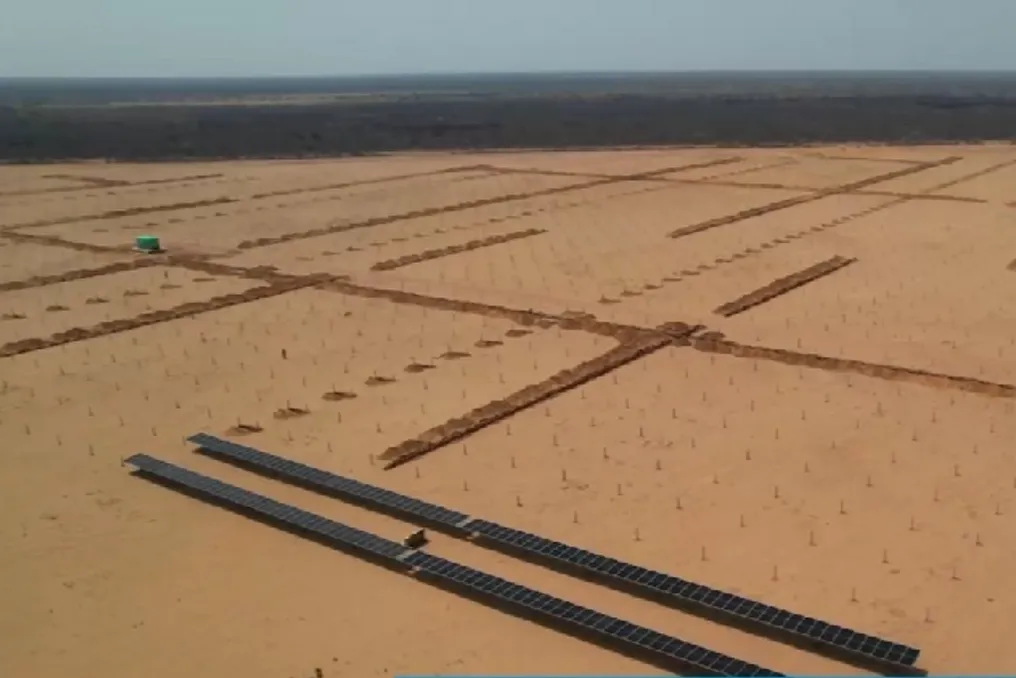
In the Jwaneng region of Botswana, rows of solar panels are visible. The Jwaneng Solar Power Station, the country's first large-scale centralized photovoltaic facility with a capacity of 100 megawatts, was built by China Harbor Engineering Company as part of a China-Botswana consortium.

This project serves as a clear example of how Chinese investment and technological expertise support Botswana's energy transition under the Belt and Road Initiative (BRI). In 2025, trade between China and Botswana reached $1.222 billion, an increase of 21.3% compared to the previous year. Currently, both countries are expanding cooperation in trade, investment, and technology, implementing practical projects that bring mutual benefits and stimulate economic and social development.

Chinese investing companies have maintained consistent interaction with Botswana for many years in sectors such as energy, infrastructure, and mining, bringing tangible benefits to local communities. The Jwaneng Solar Power Station project officially commenced operations at the end of April 2026. This facility is expected to reduce carbon emissions by 240,000 tons annually, equivalent to planting two million trees, helping to address electricity shortages and strengthen the country's energy security.

In addition to contributing to clean energy, the project team hired 20 recent graduates from the Jwaneng Technical College for training, and created jobs in civil construction, solar panel installation, and electrical commissioning during construction. Meanwhile, water infrastructure projects have played a vital role in improving access to essential services across Botswana. The Tune Dam, built by Chinese companies, provides water for both domestic and agricultural use, with its resources feeding into the country's North-South water supply system.

Other initiatives supported by China, including water and sanitation projects in Maun and the Boteti region, also strengthen local water services and improve residents' access to clean water.

Today, cooperation between China and Botswana is increasingly extending to scientific and technological innovations, as well as emerging industries, opening new avenues for bilateral interaction. China's 'Five-Year Plan' for 2026–2030 aims to achieve significant progress in high-quality development with an emphasis on developing new high-quality productive forces. This agenda aligns with Botswana's 12th National Development Plan and the Botswana Economic Transformation Program, which aim to move the economy beyond traditional diamond dependence towards diversification and a knowledge and innovation-based model.

The Digital Delta data center, built by China Jiangxi International Economic and Technical Cooperation Co., Ltd., is a prime example of the growing partnership between the two countries. As Botswana's first national data center, it provides infrastructure for large-scale data storage, processing, and transmission, serving both government agencies and businesses. Previously, much of Botswana's government and business data was stored abroad, leading to slower and less efficient data transfer. With the launch of this center, more data can be stored and processed locally, ensuring faster and more cost-effective data exchange and improving the online experience for users. The facility also contributes to strengthening the country's ICT ecosystem and lays the foundation for the expansion of cloud services and other digital industries.

Economic and trade ties between China and Botswana are mutually beneficial and hold broad prospects. Bilateral business trips and events are becoming increasingly frequent, and exchanges between the two sides continue. On May 1st of this year, China granted zero tariff status to all 53 African countries with which it has diplomatic relations, which has significantly benefited premium Botswana products such as beef and citrus fruits. Moeleti Mokhwas, Minister of Presidential, Defence, and Security Affairs of Botswana, stated: 'This important initiative opens up new opportunities for Botswana to expand its exports, strengthen trade, and deepen our economic cooperation with China.'

According to official statistics, in the first half of 2026, trade between China and Botswana grew by 58.6% to $852 million compared to the same period last year. In January 2021, the two countries signed a Memorandum of Understanding (MoU) on cooperation within the BRI, making Botswana the 46th African partner country in this initiative. In 2025, the countries signed a Memorandum of Understanding on promoting the implementation of the Global Initiative, and Botswana joined the Framework Programme for International Cooperation in Trade and Economy for the Digital Economy and Green Development. These agreements open up new opportunities and prospects for China-Botswana cooperation.

Similar stories

China expands its influence in Africa, creating a maritime Silk Road and challenging world powers
Read more
www.aajtak.in

China expands its influence in Africa, creating a maritime Silk Road and challenging world powers

China's growing presence in global politics and trade has become a subject of widespread discussion worldwide. China is actively developing its strategy on the African continent, establishing a network of over 40 ports in about 32 countries.

As part of this strategy, Beijing is working to form a new maritime Silk Road. The goal of this project is to secure China's own commercial interests and challenge US dominance in the region.

Dialogue between China and the US leads to the creation of a new structure for economic interaction
Read more
cgtn.com

Dialogue between China and the US leads to the creation of a new structure for economic interaction

During meetings of Chinese and US economic representatives held in New York and Washington, D.C., from September 20 to 23, consultations on economic and trade issues held significance beyond merely agreeing on new tariffs. These negotiations resulted in several concrete outcomes, including the establishment of the China-US Trade Council, progress in creating a system for mutual tariff reduction amounting to about $30 billion in imports from each side, the creation of an Investment Council, and the development of new dialogue channels on agriculture, finance, and artificial intelligence.

The importance of these consultations lies not only in the listed results but also in the fact that they demonstrate an evolving model of economic cooperation between China and the US. After many years of tension marked by disputes over tariffs, supply chain adjustments, and policy uncertainty, the September discussions indicate both sides' desire for a more structured approach to managing disagreements while preserving areas for cooperation.

Another form of economic dialogue

To understand the significance of the September consultations, it is necessary to view them within the broader context of previous rounds of economic negotiations between China and the US. In recent years, bilateral talks have often taken place under the pressure of escalating trade tensions. The agenda has regularly been dominated by issues of tariffs, export controls, market access, and investment problems, with discussions primarily focused on resolving current disputes and preventing further deterioration of the situation.

However, the September consultations reflected a different dynamic. Despite persistent significant differences between China and the United States, the focus shifted towards forming mechanisms, maintaining communication, and enhancing political stability. The establishment of the China-US Trade Council is a notable step in this direction. This council is intended to serve as a platform for discussing agreements that optimize bilateral trade and resolve trade-related issues. Within this council, specialized groups, including an agricultural working group, will ensure more targeted channels for addressing specific issues.

This institutional approach is important because the economic relationship between China and the US is too vast and interconnected to be managed solely through ad hoc negotiations. Trade between these two countries involves thousands of goods, millions of enterprises, and complex supply chains. A stable communication mechanism can help both sides identify problems earlier, refine policies, and reduce misunderstandings.

Tariff Reduction: A Pragmatic Step Towards Stability

One of the most tangible results of the consultations was the agreement on a system of mutual tariff reduction in a '30 billion versus 30 billion' format. According to the Chinese Ministry of Commerce, both sides agreed to provide mutual tariff reductions on imports valued at approximately $30 billion, with over 90% of the covered goods receiving the most-favored-nation tariff treatment after internal procedures.

The structure of this agreement reflects a pragmatic approach from both sides. Instead of trying to resolve all trade disputes simultaneously, China and the United States focused on specific areas where tariff adjustments could bring immediate economic benefits. The categories of goods affected by this agreement also highlight the complementary nature of bilateral trade. The United States will lower tariffs on Chinese imports, including toys, home appliances, children's goods, kitchen and bathroom accessories, and holiday items. China, in turn, will lower tariffs on selected American imports, such as agricultural products, personal hygiene items, medical equipment, and coal.

Despite ongoing competition, China and the United States remain deeply economically intertwined. American consumers and businesses benefit from stable access to goods produced in China, while American agricultural producers, energy suppliers, and service providers continue to view China as a vital market. Thus, the tariff agreement is not just a trade adjustment but also a measure to build trust, creating a more predictable environment for bilateral economic exchanges.

Resolving Key Issues Through Dialogue

Another important feature of the September negotiations is the effort to resolve each side's key economic challenges through specialized mechanisms. For China, long-term issues remain market access in agriculture and regulatory matters. The creation of an agricultural working group within the Trade Council provides a specialized channel for discussing market access, standards, and trade-related issues.

For the United States, the main priorities remain investment opportunities, market conditions, and the operating environment for American companies in China. The establishment of the China-US Investment Council offers a platform to discuss investment opportunities and obstacles while improving communication and policy transparency within the legal and regulatory frameworks of each country. Discussions on financial services also reflect the changing nature of bilateral economic ties. As services become increasingly important in global trade, financial cooperation and regulatory transparency emerge as key elements of economic interaction.

The decision to establish a dialogue on artificial intelligence is particularly noteworthy. AI has ceased to be merely a technological issue; it increasingly influences economic development, industrial competitiveness, and global governance. The dedicated communication channel allows both sides to exchange views on the risks and opportunities associated with AI and helps prevent misunderstandings in this evolving field.

Comparing with previous rounds shows that the September negotiations demonstrate both continuity and change. Continuity lies in the fact that fundamental differences persist. Issues concerning technological policy, industrial competition, investment rules, and economic governance will continue to require careful discussion. However, the change lies in how the two sides seek to manage these differences. Previously, consultations often focused on crisis management, whereas the latest round paid more attention to maintaining communication channels and establishing procedures for future problem-solving. The discussion on extending previous consultative agreements also reflects a preference for maintaining dialogue and creating space for further negotiations. This approach acknowledges an important reality: competition between China and the United States may continue, but instability serves no economic interest to either side.

Looking Ahead

The long-term significance of the September negotiations will ultimately depend on how effectively the newly established mechanisms function. The Trade Council, the Investment Council, the agricultural working group, and the AI dialogue together form a broader framework for future economic interaction. These platforms can provide regular communication channels, help resolve disputes before they escalate, and create opportunities for cooperation in areas of common interest.

For the global economy, stable economic relations between China and the US have broader implications. Both countries remain closely linked through trade, investment, and supply chains, and their economic interaction affects global markets and business confidence. The shift from negotiations driven by immediate pressure to dialogue supported by long-term mechanisms could be one of the most significant events in China-US economic diplomacy in recent years. By creating channels for continuous interaction, both countries have opened up new possibilities for managing differences and achieving mutually beneficial cooperation in the future.

Popular