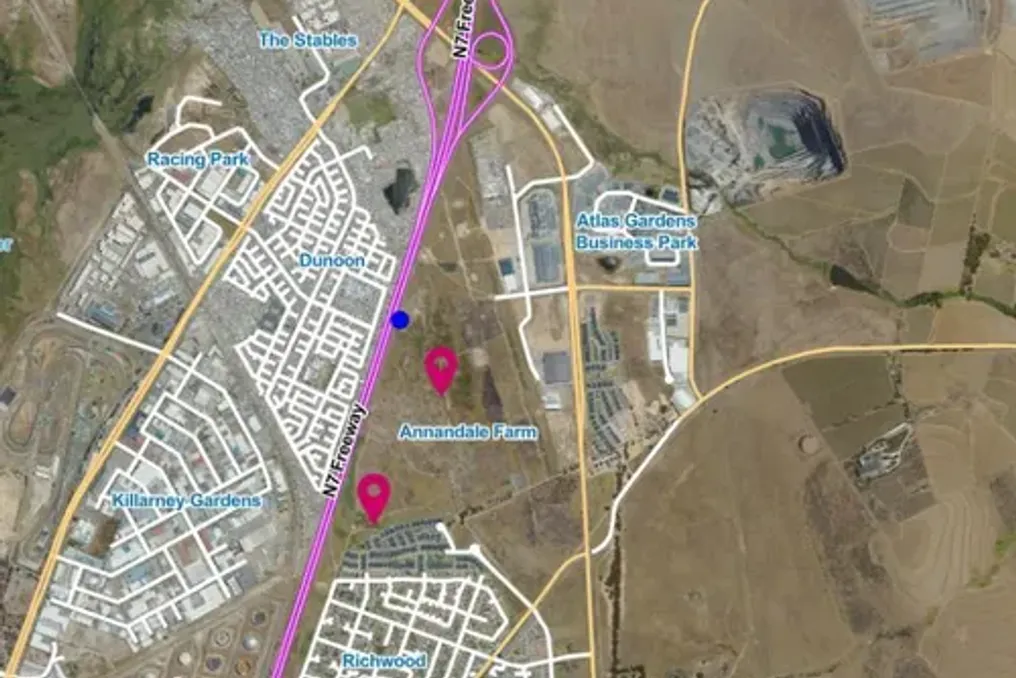
The GOOD Party has appealed to the national Minister and the Director-General of the Department of Human Settlements, demanding an investigation into the legality of the sale of the Annandale plot in Cape Town. This plot was purchased using funds designated for providing housing for low-income populations, but no homes have been built on it.
The Department confirmed that this situation is under review. In 2017, while serving as a member of the Cape Town City's Majority Committee for Transport and Urban Development, the author announced the purchase of a 72-hectare land parcel in Milnerton, known as Annandale Farm. The purpose of the purchase was to alleviate housing pressure in the Dununn area.
Dununn is one of the most overcrowded and underserved settlements in the city, and this parcel met the criteria for accessibility, size, and proximity. The land acquisition was financed by R162.6 million from the Urban Settlement Development Grant—a national grant intended to fund infrastructure necessary for accommodating poor citizens.
Dununn remains severely overcrowded
The funds were received from the national government exclusively for the needs of poor people, not for increasing the city's profit. Despite nine years passing, not a single residential house has been built on this territory.
Despite the persistent severe overcrowding in Dununn, the DA-run city is selling this land to a private developer, generating significant profit, without any obligation to build subsidized housing. The sale merely included a reference to the non-binding goal of providing 'affordable housing.' The author argues that Annandale Farm demonstrates the city's rejection of principles of non-racism, equality, and fairness.
This is not a technical error, a budgetary miscalculation, or a justified compromise; it is cruelty disguised under the terms 'social value' and 'strategic land release.' The fact that the city profits from land deals funded by the poor represents a colossal ethical failure. In addition to ethical concerns, the author requested a legal assessment of the situation from the Department of Human Settlements.
The residents of Dununn have waited for nine years for promises of a decent and functional neighbourhood that have not been fulfilled, while the city secretly monetized an asset bought on their behalf and is now set to receive substantial income amounting to tens of millions of rand. The city calls this 'prudent property management.'
Land is one of the few resources that governments cannot create in greater supply. Once land is sold, it disappears forever, not just for the term of council office. There is a legitimate case where a municipality can dispose of land that genuinely has no obvious public purpose, but this is not the case here. Under the leadership of Geordie Hill-Lewis, the DA-run city has shifted from selling unnecessary assets to selling everything that can be sold. It treats public land as a balance sheet for monetization, rather than as a finite, irreplaceable asset held in trust for unborn people.
The council can change bad policy, but it cannot reverse the land sale.
Massive housing deficit
City defenders may argue that the sale includes an affordable housing component (non-binding) and that the city faces a funding crisis for social housing to cover a deficit it did not create. However, the existence of a massive housing deficit and the lack of funds to address it should compel the city to use all received funds partially responsibly to build homes.
The author questions where the residents of slums and shanties in Dununn should move if the city sells the land intended for their accommodation? The truth is, the city does not expect them to move anywhere; it expects them to continue living in Dununn. Furthermore, the answer to 'why didn't you provide housing for the poor on the land you bought for the poor' with the phrase 'we are doing something else, somewhere else, for some of them' is not a valid argument.
Annandale is not an isolated incident. This city constantly sells off public assets belonging to all of us, including: Good Hope Centre, a public event sold entirely; Bellville Velodrome, a sports facility for national athletes leased to a developer for 50–60 years with a complete exclusion of cycling; the operational public library in Camps Bay, slated for sale to a developer who apparently owns the neighboring shopping center; and Gilrey Scout Camp in Grassie Park, where internal city correspondence reveals the city called the site a 'quick win' because interested developers were already present years before the Scouts, who had used the land since the 1950s, notified of a possible departure.
Nevertheless, Annandale is the starkest symptom of the DA's disdain for the poor. This was not just public land; it was land bought with the grant funds of the poor themselves, intended to ease their plight.
The author filed a PAIA appeal against the city's refusal to provide the 2017 approval and valuation report regarding Annandale, and also sent letters to the Minister and the Director-General. He will continue to insist until this land—bought for Dununn, financed for Dununn—is either incorporated into Dununn, or the city publicly explains, under oath if necessary, the exact reason why this has not happened.
Cape Town likes to consider itself a well-managed city. But well-managed cities do not sell land bought for their poorest residents to the highest bidder and call it policy. They build the homes they promised.
3.