The world boasts numerous remarkable coastlines, ranging from remote sandy areas formed by volcanic activity to small coves with unique geological features. Some attract visitors with their striking colors, while others hold fascinating stories of their landscape. Below is a list of 15 of the most unusual beaches in the world that are worth adding to your travel bucket list.
Boulders Beach
This beach near Simon's Town is one of the few places where African penguins can be observed in close proximity to people. It is part of Table Mountain National Park and is characterized by large granite boulders that create sheltered coves along the False Bay coast. The colony of African penguins settled here in 1983. Although penguins are wild animals, visitors should avoid feeding, touching, or attempting to approach them; viewing platforms are provided to protect nesting sites. Furthermore, swimming is possible on this beach near the penguin colony.
Shell Beach
Located in Shark Bay World Heritage Area in Western Australia, this beach is an extensive accumulation of tiny shells, true to its name. It stretches for approximately 70 kilometers and consists of billions of small shells from the Hamelin mollusk (Fragum erugatum). The unusually salty water in Shark Bay contributes to the accumulation of these shells over vast periods, forming a snow-white coastline resembling porcelain. The hypersaline water also facilitates swimming, but visitors must observe standard precautions.
Papakōlea Beach
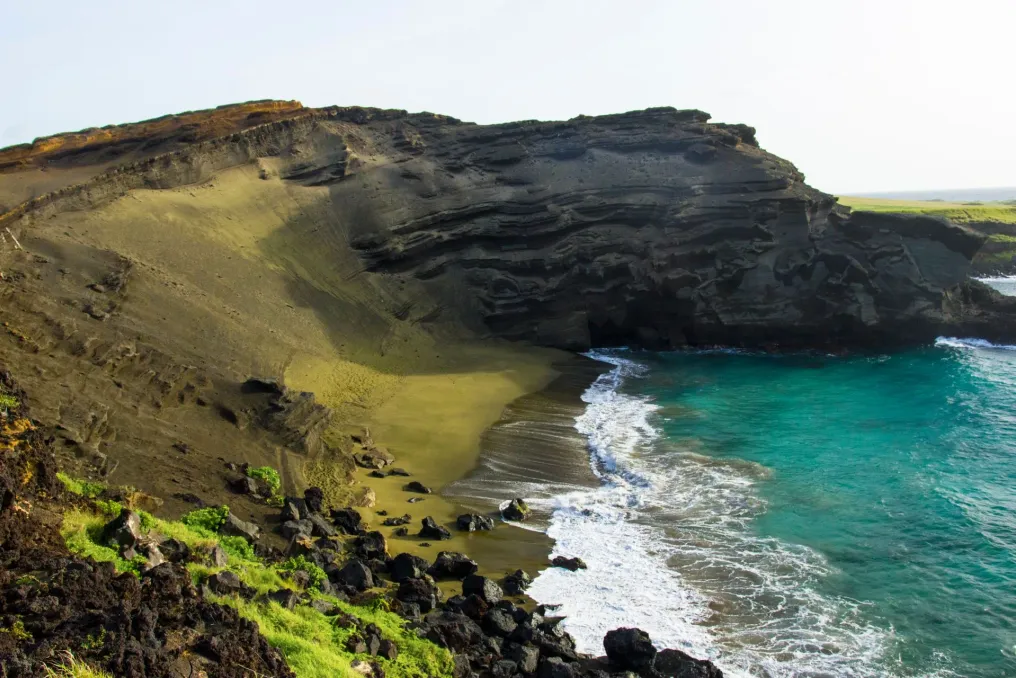
This beach on the Big Island of Hawaii is considered one of the four recognized green sand beaches globally. Its characteristic color is due to olivine—a green mineral found in the volcanic rock of the surrounding cinder cone. The US National Park identifies Papakōlea as one of these four beaches. The beach formed in the remnants of the Puʻu Mahana cinder cone, and erosion has concentrated relatively heavy olivine crystals along the shore. Reaching it is an experience in itself, as the beach is remote and exposed, requiring a trek through volcanic terrain.
Reynisfjara Beach
Situated on the South Coast of Iceland, this beach impresses with a combination of black volcanic sand, massive basalt formations, and the distinctive sea stacks of Reynisfjara, rising above the Atlantic. Despite being frequently photographed, this location requires caution due to powerful 'sneaker waves' that can rise higher than visitors expect. The official Icelandic tourism body warns of the danger and urges people to stay away from the water.
Pink Sands Beach
The beach on Harbour Island in the Bahamas is known for its natural pink hue, which is not an optical effect. The Bahamian tourism authority explains that microscopic marine organisms called foraminifera give it this color. Their reddish or pink shells break down and mix with the sand, coral fragments, and other materials. This beach stretches for more than 3 miles and is wide enough for visitors to appreciate the unusual color.
Gulpiyuri Beach
This beach in Asturias looks as if a small section of the coast has been placed in a green lawn. It is located inland, and seawater reaches it through underground passages in the surrounding limestone. The official Spanish tourism body describes this as a natural phenomenon resulting from the beach's connection to the Cantabrian Sea. Being small (about 40m long and 15m wide), its unique location makes the experience as geological as the beach itself.
Glass Beach
The beach in Fort Bragg has a history different from other beaches on this list. The area was previously used as a landfill where glass, bottles, and other waste were dumped. Over time, waves gradually broke down and polished the glass, leaving smooth, colorful pieces along the shore. The beach is now part of the wider McKercher Reserve. An important rule for visitors is the prohibition of taking glass home, as the remaining sea glass is part of the history and landscape of this place.
Whitehaven Beach
Located on the Whitsunday Islands in Queensland, this beach is famous for its brilliant white sand and swirling patterns where the sand meets the turquoise water. The Queensland government describes the sand as exceptionally pure silica. This siliceous sand has an unusual texture: it is very fine and does not retain heat like dark sands, making it surprisingly comfortable to walk on even in warm weather. The beach is accessible by boat and is part of the protected Whitsunday Islands National Park.
Kaiji Beach
On Taketomi Island in Okinawa, this beach is also known as Star Sand Beach (Hoshizuna no Hama). Upon close inspection of the sand, one can notice tiny star-shaped forms, which are actually microscopic calcareous remains of marine organisms. These shapes are created by the structure of their shells and skeletons, which settle on the beach after the organisms die. Okinawan tourism information highlights the star sand as one of the main attractions.
Sarakiniko
On the Greek island of Milos, this beach is often called the moon beach, and this is easy to understand. Wind and waves have shaped the island's pale volcanic rock into smooth curves, ledges, and depressions. Against the backdrop of the deep blue Aegean Sea, this snow-white landscape resembles another planet. Milos is rich in volcanic landscapes, offering beaches ranging from white and red to black and gold.
Maho Beach
In St. Maarten, this beach can be one of the most unusual places in the world to watch an aircraft landing. The beach is located right next to Princess Juliana International Airport runway, causing arriving planes to fly low over the coastline. The St. Maarten tourism board promotes this area due to the famous plane-watching experience. However, there is a serious safety issue: the jet blast from aircraft can be extremely powerful, and visitors are strictly forbidden from being in restricted zones or intentionally positioning themselves directly behind an aircraft during takeoff.
Chandipur Beach
In Odisha, this beach has earned the nickname 'disappearing beach' due to its exceptional tidal range. During low tide, the sea can recede several kilometers, exposing a wide strip of seabed before returning with the tide. Odisha Tourism reports that under certain conditions, the sea can retreat up to 5 km. The exposed area provides an opportunity to view marine life and coastal ecosystems usually hidden underwater. Visitors must monitor tide times and local advice.
Red Beach
Although Santorini is known for its white villages and blue domes, its coast tells a completely different geological story. Near Akrotiri, Red Beach is framed by stunning red and black volcanic cliffs. These unusual colors are a result of Santorini's volcanic geology, including iron-containing material in the surrounding rocks. The contrast between the dark volcanic landscape and the Aegean Sea makes this beach one of the most distinctive on the island.
Rainbow Beach
The name of this beach is not arbitrary, and the colors behind it are entirely natural. Along the coast of Kulula in Queensland, Rainbow Beach rises above the shore in layers of yellow, orange, red, and brown. Queensland Parks explains that these colors are created by minerals, including iron-rich compounds, in the sand and rock. These cliffs are particularly spectacular when viewed from the beach, where various colors form stripes across the coastal zone.
Benagil Beach
This beach may be one of those featuring dramatic sea caves and limestone cliffs carved into the coastline.