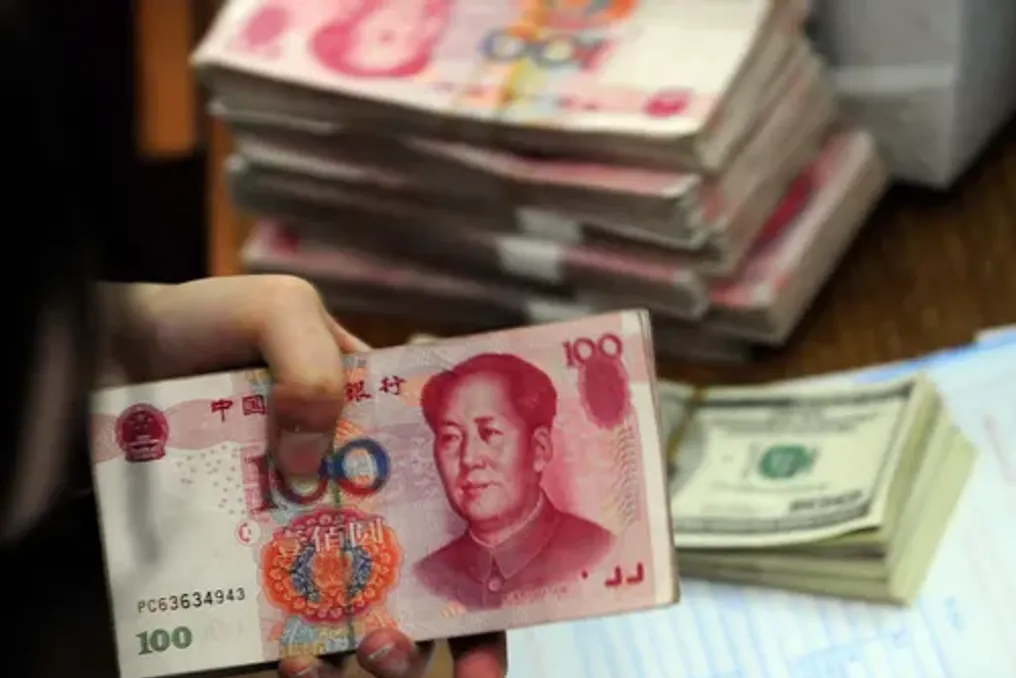
The Central Bank of China has issued an official statement clarifying its position regarding the trajectory of the yuan exchange rate. The Chinese economy operates under a managed float exchange rate regime, which is linked to market supply and demand while tracking a basket of foreign currencies. In this system, market forces play a crucial role in determining the yuan's rate.
As a key financial indicator, the RMB exchange rate attracts significant attention from market participants, politicians, and investors worldwide. On October 8, the People's Bank of China (PBOC) released a comprehensive statement detailing the official view on currency movement.
The statement confirms that China utilizes a managed float exchange rate regime based on market supply and demand, taking into account a basket of foreign currencies. This system is founded on three main principles: firstly, allowing market dynamics to guide the exchange rate movement; secondly, ensuring financial stability by mitigating excessive short-term volatility, especially rapid depreciation; and thirdly, enhancing transparency in monetary and currency decision-making.
Over the past two decades, the yuan has demonstrated resilience and stable performance compared to other major currencies. Since 2010, it has experienced numerous cycles of growth and decline, reflecting increased flexibility and more pronounced bilateral volatility. Since 2025, the currency has continued to fluctuate within a reasonable equilibrium range, maintaining stable bilateral movement with an overall trend of orderly growth.
In the future, the yuan's exchange rate will depend on a complex combination of economic, monetary, and geopolitical factors, as well as ongoing global uncertainty. The PBOC emphasized that China's trade expansion is driven by enhanced industrial competitiveness and supply chain efficiency, not currency manipulation. China does not need nor intend to engage in competitive devaluation, a practice it has never employed.
Historical data also shows that previous appreciation of the yuan did not impede China's trade expansion, nor did depreciation automatically lead to increased export volumes. Notably, China's trade flows are becoming increasingly independent of exchange rate fluctuations—a significant structural shift indicating deepening economic maturity.
As a responsible participant in the global economy, China has consistently rejected the use of competitive currency devaluation to counter external pressure. Furthermore, given the enormous size of the modern global currency market, constant unilateral intervention would be impractical and ineffective.
Exchange rate dynamics are determined by a number of factors, including economic growth, monetary policy, financial markets, geopolitical events, and unforeseen shocks. It is important to note that there is no direct or mechanical correlation between the exchange rate level and the current account balance.
The PBOC noted that the global imbalance is closely related to the changing global division of labor, inherent flaws in the international monetary system, as well as persistently high fiscal deficits and consumption in some countries. Resolving the global imbalance requires collective action from all stakeholders.
Accusing trading partners of lagging in competitiveness, fiscal management, or structural weaknesses merely shifts responsibility and delays necessary domestic reforms. Historically leading industrial nations have always experienced periods of current account surpluses. Maintaining certain deficit patterns within the current monetary structure reflects systemic characteristics, not temporary anomalies.
Decreased trade competitiveness in some countries is most often a result of their own structural problems. Each country must undertake its own work by promoting structural reforms. Deficit countries must consolidate their fiscal positions, increase domestic savings, and strengthen industrial competitiveness, while surplus countries should stimulate consumption and investment.
China has long contributed to the global economic rebalancing. During the 15th Five-Year Plan period (2026–2030), China will maintain its course toward transforming its economic growth model, expanding domestic demand, improving the business environment, deepening high-standard opening-up, and striving for a more open, inclusive, and balanced global economy.