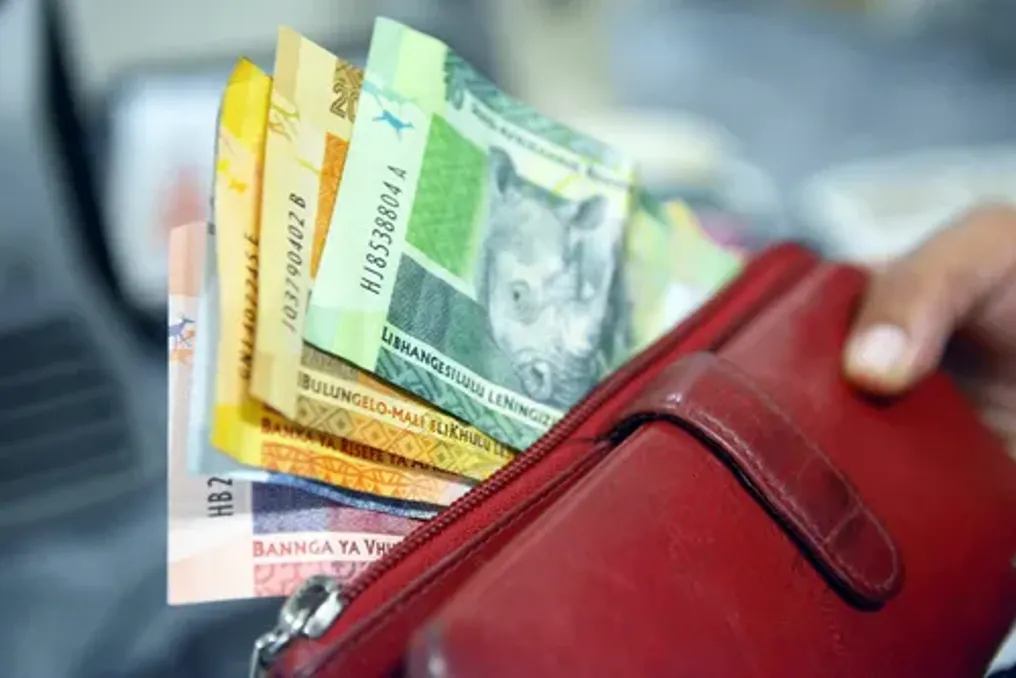
A recent study by the South African Reserve Bank (SARB) uncovers the hidden costs associated with using cash, showing that low-income households bear a disproportionately large financial burden.
Despite the development of digital payment systems, cash still accounts for 56% of consumer transactions by volume in South Africa, according to SARB data. The new SARB study details the expenses South Africans incur related to obtaining and using cash, with these costs extending far beyond standard transaction fees.
Only ATM withdrawal fees are estimated at R17.7 billion annually, and cash deposit fees at R13.3 billion, totaling R31 billion. However, the total annual cost of cash for consumers in South Africa is estimated at R88.5 billion when accounting for other, less obvious expenses.
These additional costs include R27.8 billion spent on time spent accessing cash, R12.5 billion on travel for cash withdrawals, as well as R3.9 billion and R1.3 billion related to retailer expenses and lost interest, respectively. Furthermore, cash-related crime costs consumers R12 billion annually.
Low-income households bear the main burden
The most alarming finding is the uneven distribution of cash-related expenses among low-income populations. People earning less than R1,250 per month spend about 5% of their earnings on cash-related costs. Among those earning between R5,000 and R8,000 per month, this share is approximately 3%, while for recipients earning between R13,000 and R20,000, it drops to 2%, and for individuals earning over R20,000, it is as low as 1%.
The study also showed that 55% of people earning less than R1,250 per month rely entirely on cash, compared to only 1% among those earning R20,000 or more. These figures highlight the issue of financial inclusion: people with the lowest incomes are often forced to rely on a payment method that can consume a significant portion of their earnings. When visiting spaza shops, 66% of buyers prefer to pay with cash.
Cash is king in the informal economy
Cash remains critical for daily operations in the informal economy. According to the study, consumers use cash to pay for 66% of transactions in spaza shops and 65% of taxi fares. Additionally, cash constitutes 45% of mobile top-up purchases and 51% of religious payments.
The cost of accessing cash varies significantly depending on the channel. The study indicates that cash return services from retailers cost 12 cents per R100, whereas ATMs charge up to 68 cents, and bank branches cost R1.53. To reduce costs and improve accessibility, SARB recommends expanding cash return services in retail, promoting shared cash infrastructure and cash recycling, and improving ATM access in underserved areas. The bank also calls for a comprehensive study comparing the costs of cash, cards, and digital payments. The report is based on 2024 data and includes industry cost data, stakeholder interviews, consumer surveys, and economic modeling; some figures, especially those concerning time and other indirect costs, are estimates rather than directly observed expenditures.