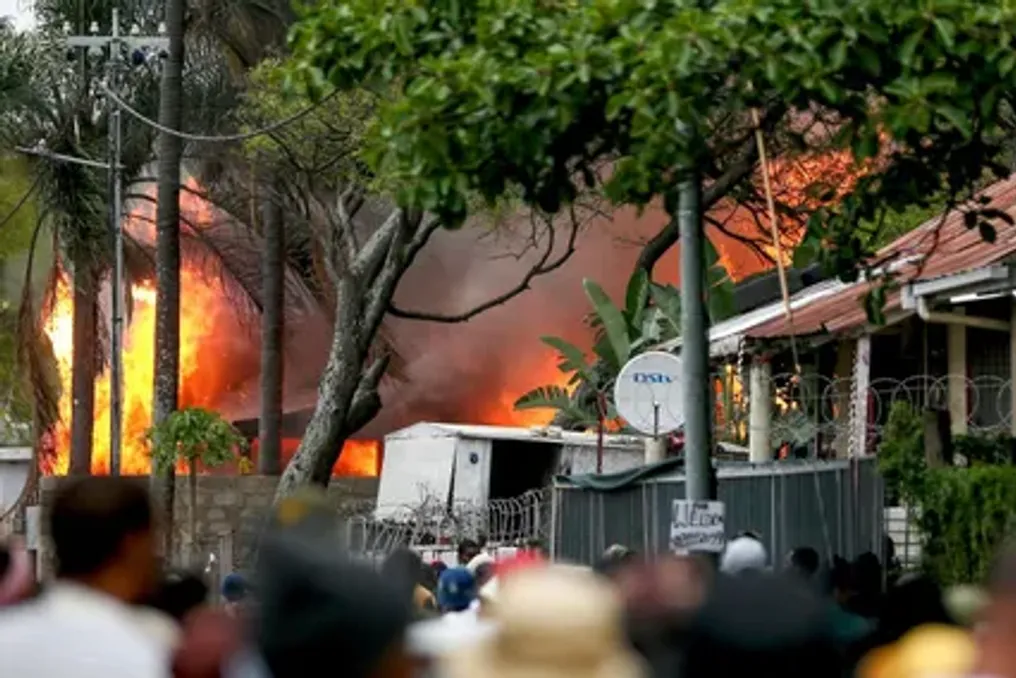
Violent anti-immigrant protests occurred in the city of Durban, resulting in widespread property destruction, store robberies, and the arson of numerous vehicles. These disturbances escalated on Thursday, October 8, 2026, and continued into Friday, October 9.
The outbreak was triggered by tensions related to a recent Constitutional Court ruling concerning asylum seekers and illegal immigration. Despite Durban being known as a melting pot of cultures, celebrated for its openness and kindness, recent scenes of violence have altered its image.
As footage of the violence, disguised as anti-immigrant demonstrations, was broadcast globally, the city's residents and businesses were once again thrown into turmoil. The consequences were immediate: international delegates attending a conference in Durban over the weekend cut short their stay due to safety concerns.
Despite all efforts by the government and tourism stakeholders to alleviate these fears, the destruction of homes and businesses by enraged crowds has ultimately determined the fate of these delegates. One delegate stated: 'I am leaving. I came to study investment opportunities, but after seeing news of the protests in Durban and how stores were destroyed, I do not feel secure. I do not feel safe.'
In the province known as the warm Zulu Kingdom, the city of Durban found itself in a state of tension. The presence of the army on the streets, while perceived as a necessary measure, paradoxically offers no comfort to tourists. The city is beginning to acquire a reputation as an unfriendly and unwelcoming place for visitors.
Durban has long competed with Cape Town for its share of the tourism market, particularly regarding perceptions of safety. Recent acts of violence have once again tipped the scales in favor of Cape Town, putting Durban at a disadvantage.
As a South African patriot, the article's author desires economic growth that benefits South Africans, addressing youth unemployment, and curbing illegal immigration. However, South Africa is not alone in these challenges; across Europe, immigration has become one of the most contentious political topics, raising concerns about jobs, housing, and strain on healthcare systems.
There is a fundamental difference: in functioning democracies, citizens can express their anger and demand change through the ballot box. Although anti-immigrant violence has also occurred in Europe, the democratic response should be political accountability, not mob justice—meaning no burning of homes, no store robberies, and no decisions made by enraged crowds about who belongs and who does not.
For Durban, the epicenter of these violent protests, the deployment of the army achieves little. The damage has already been done. The cost of restoring the city's reputation in tourism and investment will be felt across all sectors, with consequences extending far beyond the immediate destruction.
This is not just about investors, but about ordinary people trying to make a living. It concerns those without a financial safety net to protect them from economic tsunamis. In simple terms, an unstable tourism climate, where visitors feel unsafe, means reduced cash flow into the city's economy: fewer hotel bookings, fewer purchases, fewer restaurant visits, and lower overall spending, which ultimately leads to job losses, business problems, and closures.
The price is paid not by the wealthy, but by those who lack it. These are thousands of young workers from poor rural communities in KwaZulu-Natal, from districts such as uMkhanyakude, Zululand, and uMzinyati, who travel to Durban seeking work. Young men and women working in hotels, restaurants, shops, and businesses send money home monthly to support dependent families. For many, this monthly income is the difference between having food on the table and starvation.
When tourism suffers, when businesses close and jobs disappear, it is ultimately these workers and their families who pay the price. South Africa pays. This is a cruel irony that the self-proclaimed defenders of South Africa seem not to understand or simply do not care about.
In their misguided mission to protect the livelihoods of South Africans, they are destroying the very economic opportunities upon which the lives of South Africans depend. Nevertheless, the country is resilient, and the people of this warm Zulu Kingdom may be even more so. They have overcome the difficulties of the Covid-19 pandemic, the devastation of the July unrest, and the damage inflicted on their economy. They have risen from the ashes of burned businesses across the city.
With broken hearts, they will rise again. The world will see that Durban remains a hospitable city, that its warmth, kindness, and humanity have not disappeared. This city is defined not by those who spread hatred, but by the much larger number of people who love and embrace our shared humanity. Those who want to build bridges outnumber those who intend to tear them down. Durban will rise again. Do not cry, our beloved city.