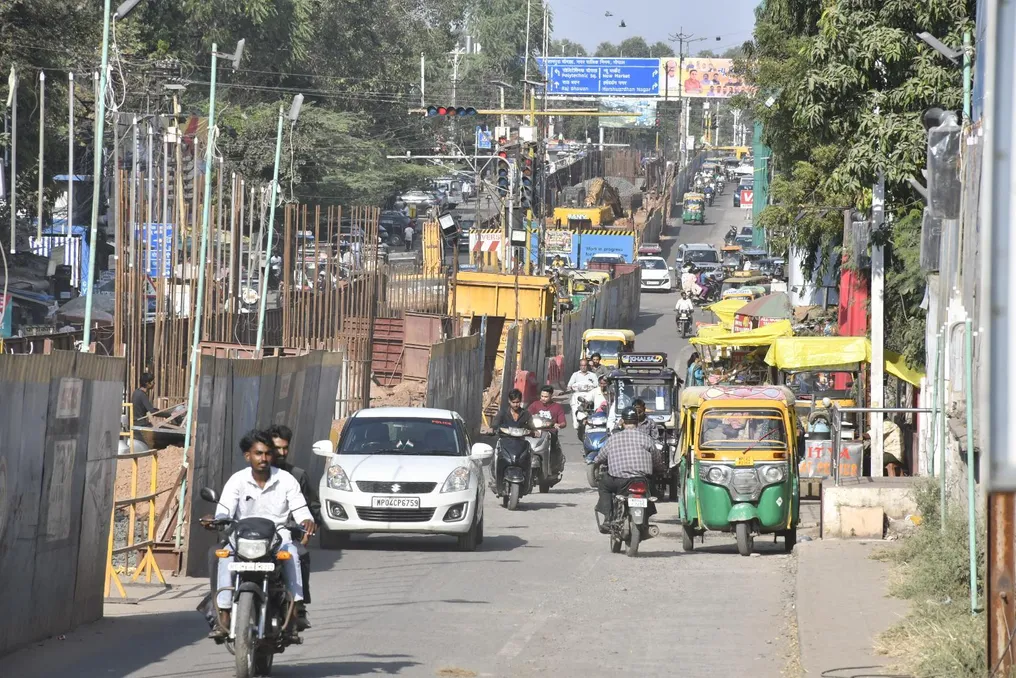
A quarter of a century ago, advertising campaigns presented two-wheeled transport as a symbol of the 'New Image of India'. However, the question remains: is India in 2026 still moving predominantly by two-wheeled bicycles, has it switched to cars, or are more people walking? The answer to this question is largely determined by which states people live in, whether they live in a village or a city, and their gender. These three factors influence the way people travel and how much they pay for it to varying degrees.
According to the National Household Transport Survey of India, in Puducherry, 92.7% of workers use two-wheeled transport as their primary mode of travel. In Nagaland, more than seven out of ten people walk, while West Bengal shows the highest rate of bicycle usage among all published data, Ladakh stands out for its use of buses, and Sikkim for cars.
The survey, conducted from July 2025 to June 2026, covered 492,023 households and 1,844,179 people aged six years and older. Nationally, the image of two-wheeled transport remains relevant, although average figures conceal significant regional differences. Among workers who commute at least 1 km, 42.6% use two-wheeled transport, 28.3% walk, and 10.7% cycle. The average one-way trip to a permanent workplace takes 25 minutes, and travel expenses amount to about 785 rupees per month per worker.
Differences between rural and urban areas
Comparing India and Bharat reveals a substantial change in statistics. In rural areas, workers are distributed almost evenly between two-wheeled vehicles (37.1%) and walking (36.6%). In cities, the situation shifts towards motorized transport, presumably due to longer distances: the share of two-wheeled transport increases to 52.3%, while the share of walking decreases to 13.5%. Cars, buses, and taxis also account for a larger share.
The situation with metros and local trains predominates in urban settings. The 'Train/Monorail/Tram' category, which includes metro and suburban or local trains, is used by 5% of urban workers but only 0.4% of rural workers. In urban Maharashtra, where the Mumbai suburban railway is located, this share is 20.7%. In urban West Bengal, it reaches 16.5%, and in Delhi, known for its metro network, it is 14.4%. The separately accounted category 'Rail Transport' accounts for only 0.2% of workers nationwide, 0.2% in rural India, and 0.3% in urban India.
Students use buses, workers use bicycles
Students and workers travel very differently. In villages, 40.5% of students walk and 18.9% cycle. In cities, buses (33.7%) and auto-rickshaws (14.4%) play a larger role. Nationally, 37% of students walk, 29.5% use buses, and 15.8% cycle, with only 6.7% using two-wheeled transport. Among workers, buses account for only 6.7%, matching the share of two-wheeled transport among students.
The contrast is most noticeable in Kerala, where buses carry 72% of students but only 24.9% of workers. Age also influences the picture: students aged 15 to 29 walk significantly less than those aged 6 to 14 (22.2% versus 47.3%), and cycle more often (21.4% versus 11.9%).
Men drive, women walk
Among workers, 47.1% of men use two-wheeled transport for commuting, while this figure is 18.4% among women. Approximately half of female workers (50.6%) walk, compared to 24.1% of men. Women also use buses much more often (14%) than men (5.3%).
This can easily be attributed to rural India, where more people walk. However, this gap persists in cities. There, 57% of working men use two-wheeled transport, compared to 25.8% of women, while women walk twice as often as men (24% versus 11.6%). The difference in bicycle usage is even more apparent: among workers, 12.3% of men cycle to work, whereas only 1.7% of women do so.
However, gender differences are much less pronounced among students. About 17.7% of male students cycle, compared to 13.4% of female students. Odisha makes this contrast particularly noticeable: female students there cycle almost as often as male students (32.8% versus 34%). But among workers, the gap widens in Odisha: about 25.5% of men cycle to work, compared to 5.8% of women.
Short trips, high urban costs
Most work trips take less than half an hour. About 83.4% of workers heading to a permanent workplace arrive within 30 minutes. Students perform even better: 87.6% reach school or college within half an hour.
Nevertheless, trips in cities cost significantly more. The average city commute to work takes 27 minutes, just four minutes more than in villages, but costs 1,044 rupees per month compared to 612 rupees, which is 71% more expensive. City students also pay approximately 71% more, although their average trip is slightly shorter—22 minutes versus 23 minutes in villages.
Even within cities, there are sharp differences. Workers in urban areas of West Bengal and Delhi spend roughly the same time commuting to work—an average of 36 and 35 minutes, respectively. However, a worker in urban West Bengal spends about 825 rupees per month, while a worker in Delhi spends about 2,081 rupees, which is about two and a half times more. Urban West Bengal also shows a longer tail of long trips: about 13% require a journey of more than an hour, compared to 4.1% across urban India. Consequently, lower monthly costs there do not necessarily mean faster travel.
Work schedule
Across India, 56.5% start work between 8 am and 10 am. In Mizoram and Ladakh, about 97.1% and 95.1% of passengers depart during this time. Evenings change even more drastically: across India, 31.1% leave work at 6 pm or later. In Tamil Nadu, this figure is close to half (48.9%), in Gujarat—45.2%, and in Delhi—44.6%. Men leave late more than twice as often as women (34.1% versus 16%).
Excluding work and study, very few people go out. During the day, 18.7% of people aged six and older traveled at least 1 km for some other reason: 23.8% of men and 13.3% of women. They also travel differently. Among men making such trips, 40.1% use two-wheeled transport, compared to 17.6% of women. Among women, 30.4% use cars or auto-rickshaws, compared to 12.7% of men. For women, cars and auto-rickshaws play the same role as two-wheeled transport for men.
Bus still dominates long-distance travel
In the 28 days preceding the survey, 11.3% of households made a night trip of 50 km or more, keeping a family member away from home for more than 24 hours. More than half of such households, 55.8%, used the bus as their primary mode of transport. The next most popular category is the separately accounted 'Rail Transport' with a rate of 17.7%. Cars account for 15.1%, and two-wheeled transport for 8.8%. Another 3.3% belong to the 'Train/Monorail/Tram' category, and only 0.6% traveled by air.
Some of these trips were not work-related. About 70.2% of households making night trips did so for social, communication, or religious purposes.
How far do people travel? This answer was not provided in the published details. The survey collected data on travel distance, as well as information on driving licenses, household vehicles, and bus or train passes, but none of this is presented in the published evaluation tables. A quarter of a century after the presentation of the 'New India' concept, two-wheeled transport still leads the national picture. However, the survey demonstrates how much this picture conceals reality, and the most crucial missing element is information on travel distance. While there is demand for metro in every second-tier city, and road and rail infrastructure is improving, complete data will help policymakers make more informed decisions about India's transport needs.
3