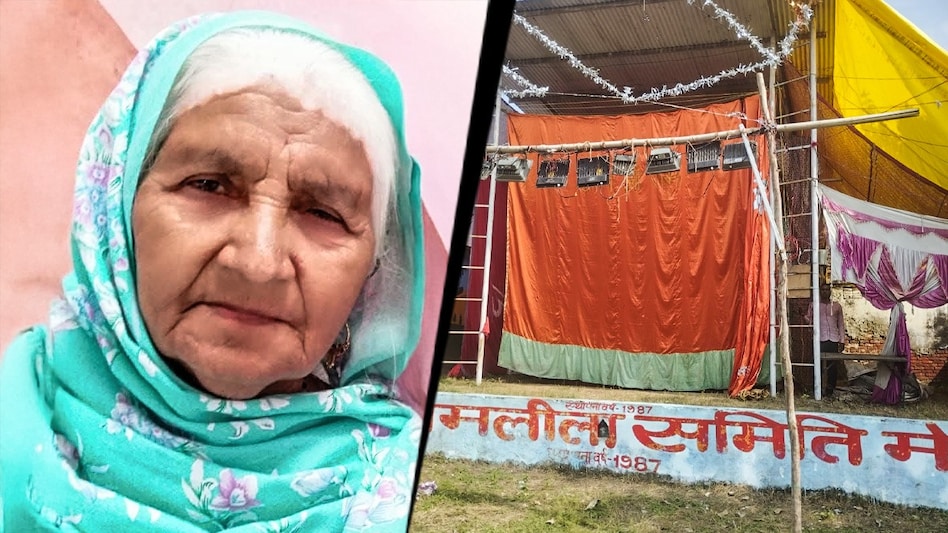
In the village of Mohada, which belongs to the Bijaunar district, an example of brotherhood and mutual understanding was demonstrated. When society tries to build walls of hatred, a small initiative based on mutual love, respect, and brotherhood becomes a ray of hope. Such an example occurred in the village of Mohada, where the staging of Ramleela, which was supposed to begin, was postponed by one day following the death of a local Muslim woman.
Rehearsals and preparations for the Ramleela in Mohada village were completed, and an atmosphere of enthusiasm prevailed among the residents. However, during this time, Gafuran Bi, a resident of the village, passed away. News of her death caused a wave of grief throughout the settlement. The villagers respected Gafuran Bi not just as a Muslim woman, but as a member of their family, and all residents shared the sorrow of her passing.
After Gafuran Bi's death, the residents concluded that holding the festival in the form of Ramleela during a time of mourning in the village would be inappropriate. By mutual agreement, the Ramleela program was postponed for one day. This decision was made not under pressure, but based on the sense of closeness among the villagers and respect for the deceased woman.
The village head, Rishi Kumar, shared the motivation behind this decision, noting that Gafuran Bi was like an aunt to him, and that the villagers treated her as such. He stated: 'How can the body of Gafuran Bi, who was like our aunt, lie there while Ramleela is taking place? There was sadness in the village after her death. Therefore, we postponed the event for one day.'
The statement by the village head emphasizes how important social ties and mutual sympathy are to the villagers. Although religion and traditions have their place, participating in another person's grief is also a collective responsibility of society. The residents of Mohada embodied this spirit in their actions, setting an example to be followed. India's cultural identity lies in its diversity and mutual brotherhood, where people of different religions, traditions, and beliefs have lived together for centuries. This incident from Mohada village is a reminder of this common heritage.
Ramleela is an event associated with the religious and cultural traditions of Hindu society, whereas Gafuran Bi belonged to the Muslim community. Nevertheless, the decision to postpone Ramleela due to her death shows that human relationships know no religious boundaries. To share someone's sorrow, it is not necessary to have the same religious beliefs; it is enough to have a compassionate heart and understand another's pain. The residents of Mohada conveyed the message that a village is not just a collection of houses, but a family built on mutual relationships, trust, and shared responsibilities.
The village of Mohada showed a sign of mutual consent. In the current era, when news of social tension and religious disagreements over trivial matters constantly emerges, this initiative of Mohada village demonstrates that the roots of harmony at the local level remain strong. Brotherhood is supported not only by speeches and slogans but also by small decisions that respect the feelings of others.
The decision to postpone the Ramleela staging by one day after Gafuran Bi's death may seem simple, but the message hidden within it is very profound. The villagers proved that respect for another person's faith, as well as respect for their grief, is an integral part of social cohesion.