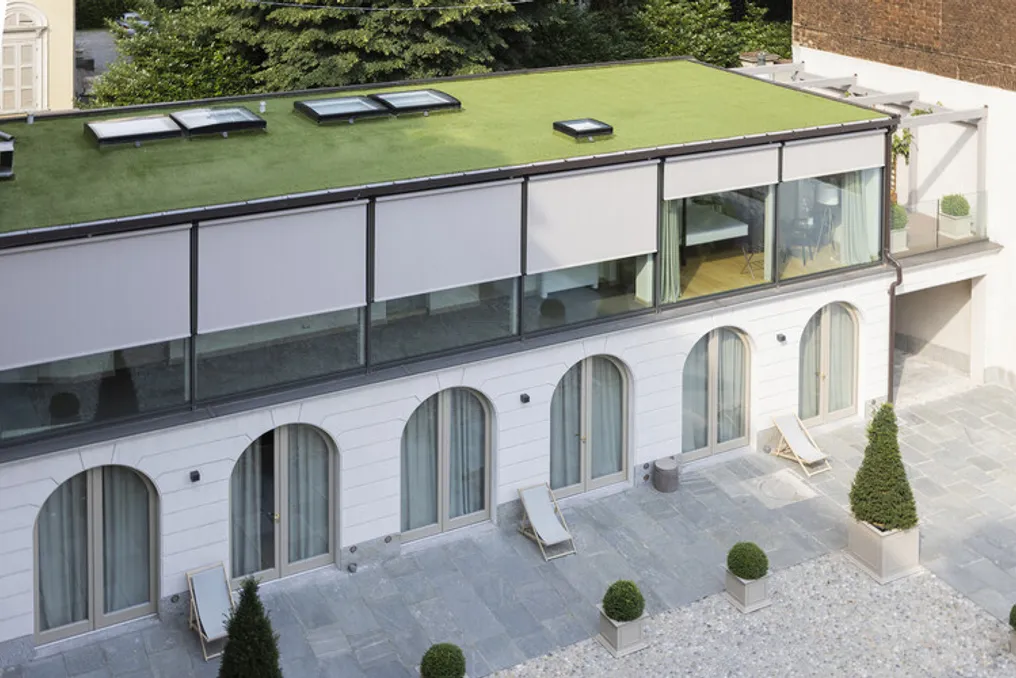
With the increasing frequency of global heatwaves, architects are being forced to rethink the design and conception of building envelopes. The focus has shifted from merely minimizing heat loss during cold months to controlling the amount of heat penetrating structures during periods of intense solar incidence. By viewing solar shading as a design choice, rather than just an aesthetic or internal comfort detail, passive energy efficiency strategies are integrated, benefiting thermal and visual comfort while reducing the need for cooling systems.
Traditionally, decisions regarding the thermal performance of buildings prioritized heat retention in winter. However, the growing occurrence of extreme temperatures is directing attention toward preventing overheating without sacrificing natural light, views, or connection to the external environment. Buildings with extensive glazed areas, for example, require methods to manage solar radiation and prevent excessive heat gain. An office with a west-facing glazed facade can reach its peak cooling demand between 3 PM and 7 PM, when direct sunlight hits the glass. An integrated solar shading strategy can mitigate this heat gain before the air conditioning system needs to intervene.
Solar shading as a design decision
Incorporating solar shading from the initial phases of a project implies going beyond treating it as an accessory to be added after the facade has been defined. By harmonizing solar orientation, the proportion of glazed surfaces, types of glass and facade, selection of fabrics, and system installation, each decision affects the building's energy performance, modifying how it receives, filters, reflects, or transmits solar radiation.
This perspective also transforms the central question of the design. Instead of asking how to remove heat after it enters the building, the primary inquiry becomes how to prevent its entry from the outset. External shading systems block solar radiation before it reaches the glass, reducing the thermal load that the climate control system would otherwise have to compensate for. An energy simulation conducted by Bandalux, using the ESBO software, demonstrated this in a 9 square meter room with a south orientation in Madrid. Using 3.6 square meters of glazed area, Type C glass, Screen 351 Ebony technical fabric, and an external shading system, the simulation recorded a reduction of up to 70% in energy consumption related to air conditioning.
Beyond temperature: designing for comfort
However, solar shading transcends the mere issue of thermal performance. Its effect encompasses visual comfort, glare control, utilization of natural light, visual connection to the outdoors, and the overall quality of interior spaces. Planning a solar prevention strategy requires finding a balance, recognizing that besides external solutions, internal mechanisms also offer advantages. Bandalux analyses indicate that a white internal fabric can reduce air conditioning energy consumption by up to 30%, while a cellular curtain structure improves thermal insulation both in summer and winter.
A fabric with a lower opening factor restricts solar radiation and glare, promoting greater privacy and thermal comfort. Conversely, a higher opening factor allows more natural light to enter, maintaining a more direct visual connection with the surrounding landscape. This choice cannot be separated from the building's orientation, climate, purpose of the space, and the specific characteristics of each facade. Color and reflectance also influence this performance. In external systems, dark fabrics absorb more solar radiation before it reaches the glass, while light fabrics used internally reflect incident radiation better. Furthermore, high reflectance helps decrease absorbed energy and the subsequent heat accumulation within the shading system itself.
Among all these variables, the location of the shading system relative to the glass defines much of its effectiveness. An external system acts as a first defense against the sun, intercepting radiation before it passes through the glass. An internal system comes into action after some of this energy has already penetrated the building, making it less efficient at reducing heat gain, although it may offer other benefits related to comfort and insulation.
Solar protection as an envelope strategy
The effectiveness of a shading system depends on factors beyond the material itself. The technology used, movement control, and minimization of side light gaps directly impact its performance. Solutions based on ZIP systems, constant fabric tension, and greater wind resistance allow for working with larger surfaces and adapting to the particular conditions of each facade.
In this context, external solutions with ZIP guides, such as the Z-Box, Z-Box Secret, and Z-Box Solar lines, can reduce thermal transmission and energy consumption related to air conditioning by up to 70% by intercepting solar radiation before it reaches the glass. Such systems can be seen as integral parts of the building envelope, improving energy performance, enhancing comfort, decreasing cooling demand, and assisting in the construction of buildings better prepared for increasingly severe climates.
Automation expands the possibilities of this tactic. Through sensors and control systems, blinds and curtains can adjust their position according to variables such as solar radiation, external temperature, wind, or usage times. Thus, solar shading ceases to depend solely on manual action and begins to adapt to variable conditions throughout the day. Solar sensors can activate systems as radiation levels rise; temperature sensors can react to overheating situations; wind sensors can automatically retract external systems when certain limits are exceeded; and time programming can consider orientation, time, or season.
Integration with other building systems takes this approach even further. In offices, hotels, hospitals, or schools, motorized curtains can be synchronized with climate control, lighting, and building management systems. A west-facing facade, for example, can automatically trigger its shading during peak solar exposure, while artificial lighting adjusts to the availability of natural light. Bandalux provides Lynx, an application that manages and automates its motorized solar shading solutions. By creating personalized scenarios based on the needs of each project, the tool supports the optimization of performance for residences, offices, and other constructions, reducing human intervention and promoting more efficient energy use.
Given challenging climatic conditions, solar shading raises a broader question that goes beyond the choice of a specific product or system: when should the thermal performance design of a building begin? The answer lies precisely in the earliest decisions regarding the building envelope.
Orientation, glazing, the ratio between windows and walls, fabrics, reflectance, opening, positioning, and automation constitute a sequence of choices that define how a building receives and manages solar energy. Integrating these elements from the beginning makes it possible to treat thermal and visual comfort in a coordinated manner, instead of trying to correct overheating after the architecture is finalized. Designing for heat means recognizing solar radiation as a design factor and transforming the building envelope into a mediating interface between the structure and its surroundings. Automation can make this interface respond dynamically; passive strategies can reduce the energy needed to climate internal spaces; and architecture can resume an active role in environmental regulation.