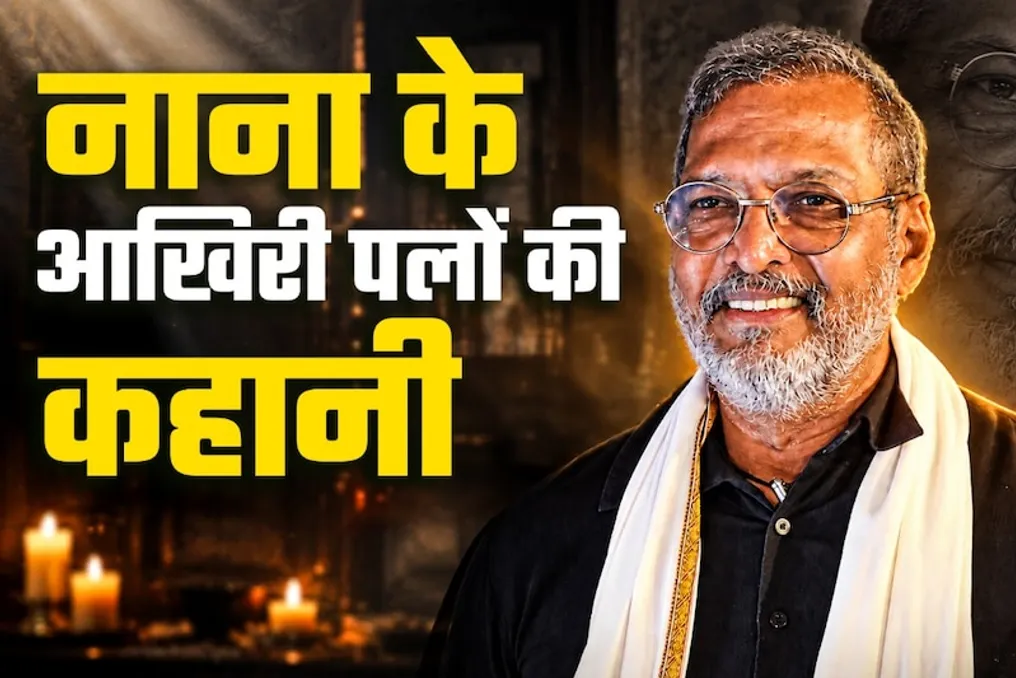
Legendary Bollywood actor Nana Patekar passed away at the age of 75. After his health deteriorated at his home in Goa, he was taken to Manipal Hospital, but despite all medical efforts, he could not be saved.
Dr. Shekhar Salkar, head of the oncology department at Manipal Hospital in Goa, provided detailed information to Aajtak.in regarding the cause of his death and the events of that night.
Dr. Shekhar stated that Nana Patekar had already died before reaching the hospital; his death occurred approximately an hour prior. The medical team received notification about Nana's condition around 4:18–4:20 AM. When they arrived at the scene, Nana was unconscious, and there were no signs of vital response from his body. After being transported to the hospital, he was declared dead, even after CPR was administered for about 45 minutes, as his pulse did not recover. It is presumed that his death occurred around 3:30 AM.
Dr. Salkar explained that according to medical protocols, patients arriving in emergency situations undergo CPR for 45 minutes to give a chance of survival. However, this was unsuccessful in Nana's case. He noted that if the patient had received immediate medical attention and CPR had started right after cardiac arrest, the chances of survival might have been higher.
Dr. Shekhar recounted that Nana's condition began to worsen during the night, between 1:30 and 2:30. He exhibited heavy sweating, sharp chest pain radiating to his left arm, and difficulty breathing—symptoms characteristic of a heart attack. There is a suspicion that Nana died from cardiac arrest caused by a heart attack that occurred at his home. The exact cause will be determined after an autopsy.
He added that heart attacks are often associated with arterial blockages. A severe attack can disrupt the heart's electrical rhythm, leading to cardiac arrest. Although not every heart attack results in cardiac arrest, in Nana's case, it happened due to a severe heart attack. The doctor emphasized that if he had received CPR or been transported to the hospital in time when symptoms appeared, his life could have been saved, but the delay in transport became a critical factor.
When asked how a heart attack could occur in someone who appeared healthy and active, Dr. Shekhar replied that external physical fitness does not guarantee complete heart health. Considering Nana's age—75 years—and his smoking history, diseases could have developed in his body that remained unnoticed for a long time. Heart diseases can exist without obvious symptoms.
Thus, even with good physical condition, the risk of a heart attack or cardiac arrest cannot be completely ruled out. In such situations, it is crucial to seek immediate medical attention upon the appearance of any symptoms. The first hour is decisive.
Nana Patekar's death once again highlights the importance of promptness in cardiac emergencies. If a person suddenly experiences severe or crushing chest pain, shortness of breath, cold sweats, fainting, or sudden loss of consciousness, one should not wait. If a person is unconscious and not breathing normally, emergency help must be called immediately, and CPR should be started.
In Dr. Shekhar's opinion, people need to know the basics of CPR, as the time spent traveling to the hospital after cardiac arrest can be the difference between life and death. He advised that in such emergencies, one should always call relatives or friends to provide accurate information about the victim's condition. The incident of Nana Patekar's death should teach people to go to the hospital at the first sign of a heart attack and to learn CPR skills.