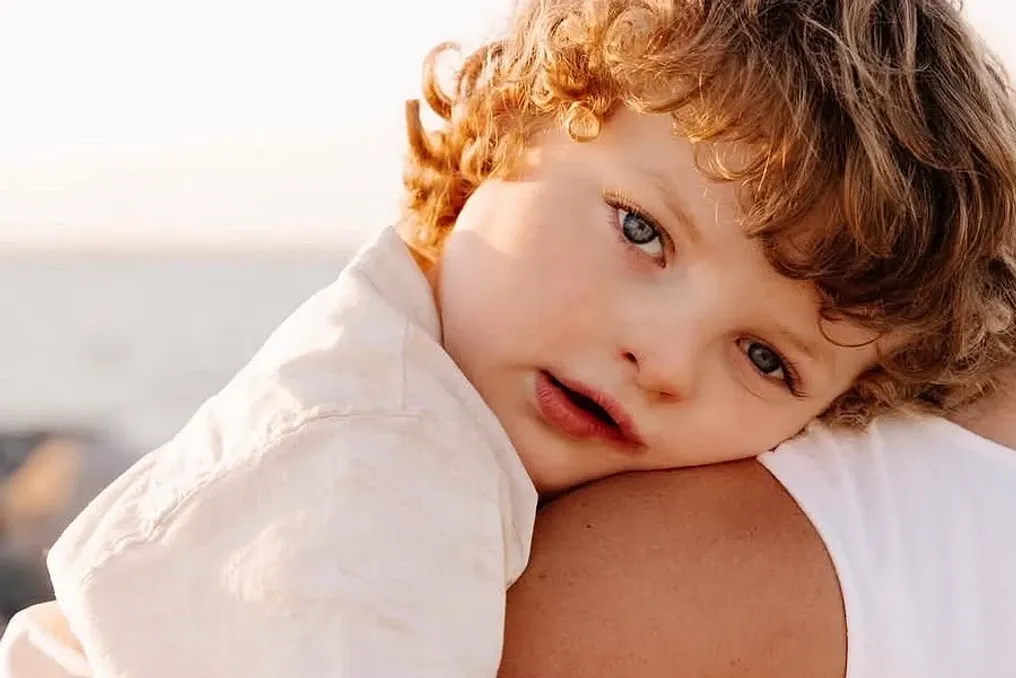
A mother from the United Arab Emirates (UAE) is preparing for a challenging expedition: she plans to cross 150 kilometers of the UAE desert on a camel over 15 days. This initiative is called 'Carried Through the Sand 15 Days for Chromosome 15' and aims to draw public attention to the life of her son, who suffers from Angelman syndrome.
Her son, Samson, six years old, fills the house with laughter despite his medical difficulties. He does not speak, but he loves music, active games, and time spent with his mother. Samson lives with Angelman syndrome—a rare genetic condition that affects development, movement, and communication ability.
Samson has experienced seizures, serious breathing problems, and has been hospitalized 25 times. His mother strives to show people the little boy behind the diagnosis, presenting him as a playful child and the younger brother of Seren.
The first signs of developmental delays in Samson appeared when he was five months old; he had difficulty lying on his stomach and sitting up, and he did not reach for objects. He was able to sit independently around 18 months and started crawling at two and a half years old. Genetic testing confirmed the diagnosis on October 12, 2020, when he was only 10 months old.
His mother recalls that before this, she had never heard of Angelman syndrome. Suddenly, a huge amount of information about possible difficulties appeared, causing fear for the child's future. The diagnosis raised many questions about Samson's capabilities and his future.
Despite the uncertainty, it remained clear to his mother that Samson was still the same child she loved. Although the diagnosis helped explain his needs, it could not tell her everything he would become. Her faith became a source of strength, especially when doctors warned that Samson might never be able to walk. After many years of training, patience, and determination, he finally took his first steps. His mother promised him that if he learned to walk, she would learn to walk on her hands, and she kept her promise.
Samson's achievements have been accompanied by serious health issues, including a month-long stay in intensive care after aspiration pneumonia. His mother discovered that he aspirated breast milk into his lungs. Since then, respiratory infections have become particularly severe, sometimes requiring oxygen support even with a common cold.
One incident in the intensive care unit changed her perspective on everything else: all concerns about her son's future limitations faded into the background, and she only wanted him to be home, in her arms, safe.
Raising Samson, while balancing work and caring for his older sister Seren, requires balancing complex medical needs with daily family responsibilities. She wishes for both children to feel love and support. As a fitness trainer and athlete, the mother is used to measuring progress through speed and results, but her son taught her to appreciate achievements that might otherwise go unnoticed, such as simply turning on a tap or taking a step.
Although Samson does not speak, he communicates through expressions, sounds, movements, and reactions. His mother is learning to give him time to process things, considering his difficulties with vision and perception. She emphasizes that the inability to speak does not mean the child has nothing to say; he has preferences, feelings, and a personality, and he deserves attention and the opportunity to respond.
The idea for the camel expedition arose from a desire to turn her love for Samson into something useful for other families. She had previously visited a camel caravan in 2017, and returning nearly ten years later as a parent of a child with complex needs gave the journey deep personal meaning.
Through the Foundation for Angelman Syndrome Therapeutic Resources (FAST), she found a wider community of families working towards a better future for people with this condition. She hopes the campaign will stimulate interest in research and improve access to clinical trials for families in the country, as well as encourage people to reconsider their attitude towards children with disabilities.