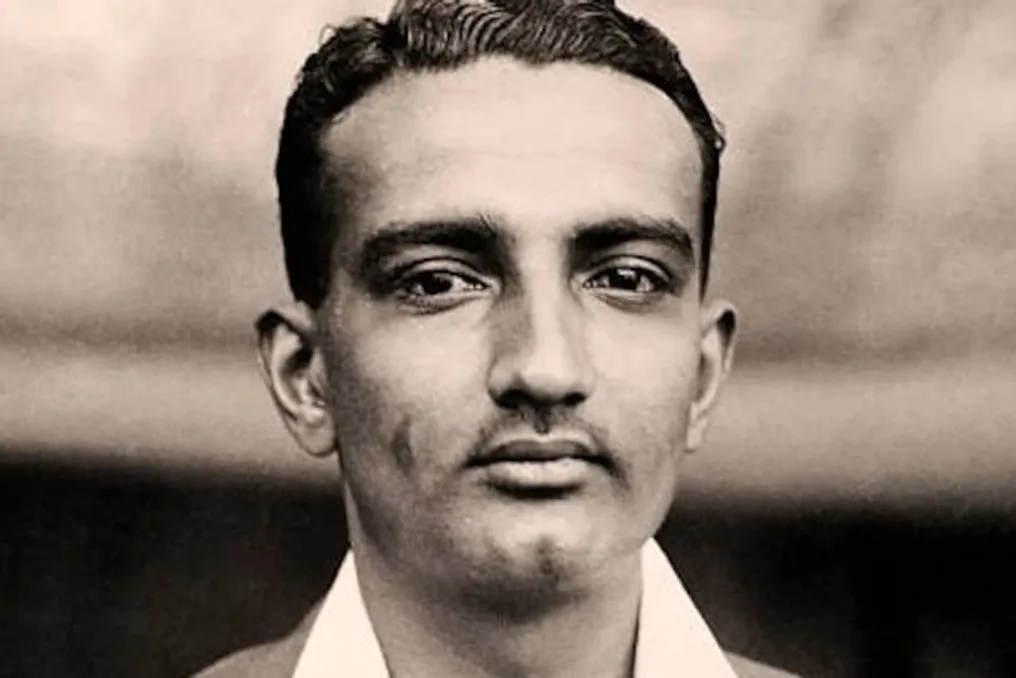
The History of Indian Cricketer Vijay Merchant: His Achievements and Comparison with Don Bradman
Read more
Aaj Tak
www.aajtak.in

The History of Indian Cricketer Vijay Merchant: His Achievements and Comparison with Don Bradman

There have been many players in the history of Indian cricket whose technique and outstanding performances impressed the world. Vijay Merchant is one such legendary sportsman, regarded as one of India's greatest batsmen. His game was characterized by a unique combination of impeccable footwork, precise timing, and technical skill. Despite his height of only 5 feet 7 inches, Merchant reached a level where he began to be compared with the best players after the legendary Don Bradman.

Vijay Madhavji Merchant was born on October 12, 1911, into a wealthy family in Bombay (now Mumbai). He demonstrated his talent even in university cricket, scoring two centuries in a single match at the age of just 15, which attracted the attention of the entire cricketing community. Subsequently, he became one of the most influential players in domestic cricket.

Vijay Merchant's statistics attest to his exceptional play. In first-class matches, he scored runs at an average of 71.64. Only Don Bradman (with an average of 95.14) had a higher average in first-class cricket while playing in at least 50 matches. His performance in the Ranji Trophy tournament was even more impressive: he scored 3639 runs in 47 matches, including 16 centuries, with an average of 98.75.

In his 150-match first-class career, Merchant scored 13470 runs and hit 45 centuries, 11 of which were double centuries. His highest score was an unbeaten 359 runs, which he scored against Maharashtra in Bombay in 1943-44. This innings lasted about 10 hours and 45 minutes, during which he was involved in a sixth-wicket partnership with Ravi Modi, scoring 371 runs, and an eighth-wicket partnership with R.S. Cooper, scoring 210 runs.

His style of play was very attractive. Among his favorite shots were the magnificent cut shot, the drive played by touching the ball to the ground, the elegant glaze, and the late cut. At the beginning of his career, he received no formal training, but he constantly improved his game. He recorded videos of his games and then watched them carefully to correct mistakes.

Upon his first visit to England in 1936, Vijay Merchant scored 1745 runs in first-class matches, with an average of 51.32, becoming the top run-scorer for India. In a Test match in Manchester, he played a brilliant first-wicket partnership with Mushtaq Ali, scoring 114 and 112 runs respectively. His performance impressed the distinguished English cricketer S.B. Fry.

S.B. Fry highly praised his game, stating: 'Let us lighten his skin and take him with us to Australia as an opener.' This comment highlights Merchant's potential and his international influence. During his second visit to England in 1946, Merchant also displayed excellent play, scoring 2385 runs at an average of around 74, and hitting seven centuries. The ability to consistently score runs in the hot English summer was a testament to his technique, patience, and concentration.

Merchant's Test career was not as long as his domestic and first-class matches. He played only 10 matches for India from 1933 to 1951-52, all against England. In these matches, he scored 859 runs at an average of 47.72, with three Test centuries. In 1951-52 in Delhi against England, he achieved his highest Test score—154 runs. In this innings, he played a third-wicket partnership with Indian captain Vijay Hazare, scoring 211 runs, which was his last Test century.

Merchant had to miss important tours due to health problems. Ultimately, after a shoulder injury while diving during a fielding game, he decided to retire from cricket when he was around 40 years old. After leaving the sport, Vijay Merchant contributed to Indian cricket as an administrator, writer, and commentator. He also served as a member of the selection committee and participated in decisions regarding the management of the Indian team. Besides cricket, he was involved in charity work for people with disabilities. He passed away on October 27, 1987, in Bombay from a heart attack at the age of 76.
Similar stories

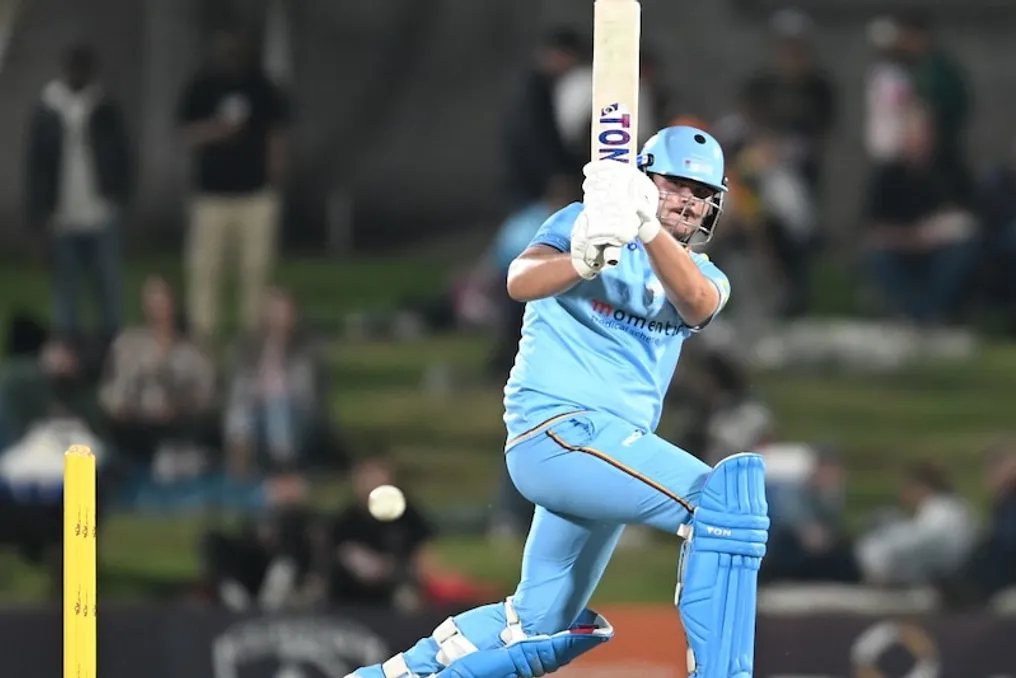
Luan Dre Prietorius sets T20 record, surpassing Chris Gayle's achievement
Read more
www.aajtak.in

Luan Dre Prietorius sets T20 record, surpassing Chris Gayle's achievement

In a match within the CSA T20 Challenge, held on Friday (October 2nd), an incredible display in the world of cricket was demonstrated. A young South African player, Luan Dre Prietorius, created a real storm with the bat, breaking a 13-year record.

During the game at Mangungu Oval in Bloemfontein, playing for the Titans against the Knights, Prietorius scored 188 runs without getting out in just 79 balls. This left-hander hit 15 fours and 13 sixes in his innings. Through boundaries alone, the 20-year-old Luan Dre Prietorius earned 138 runs.

Thanks to this explosive performance, the Titans managed to score a substantial total of 267 runs, losing only 3 batsmen in 20 overs. In response, the Knights managed to score only 143 runs, allowing the Titans to win by a margin of 124 runs.

Luan Dre Prietorius set a new record for the highest score in a single T20 cricket innings. Previously, this record belonged to the explosive West Indian batsman, Chris Gayle. Gayle achieved this feat in 2013 during the Indian Premier League (IPL), playing for Royal Challengers Bengaluru (RCB) against Pune Warriors, where he scored 175 runs without being dismissed.

Now, after 13 years, Prietorius has surpassed this mark. Luan Dre Prietorius is part of the Rajasthan Royals (RR) team in the Indian Premier League, where Vaibhav Suryavanshi also plays, who showed outstanding performance in IPL 2026. Spectators expected Prietorius to score two hundred runs, given his style of play. He constantly hit powerful shots and kept the Knights players under constant pressure.

However, since the 20 overs were completed, and Prietorius did not receive additional balls to reach the 200-run mark, he fell slightly short of achieving a double century in T20 cricket. His game demonstrated not only aggression but also consistency in scoring. The Titans' score of 267 runs in the innings testifies to Prietorius's high level of play. He single-handedly set the pace of the innings, making it extremely unlikely for the opposing bowlers to recover.

This match also holds special significance for Luan Dre Prietorius, as his career has recently suffered due to injuries. Despite this, he continues to show impressive results after returning to the field. Last month, in a T20 friendly match against Namibia, Prietorius also scored a magnificent century, accumulating 101 runs off 53 balls.

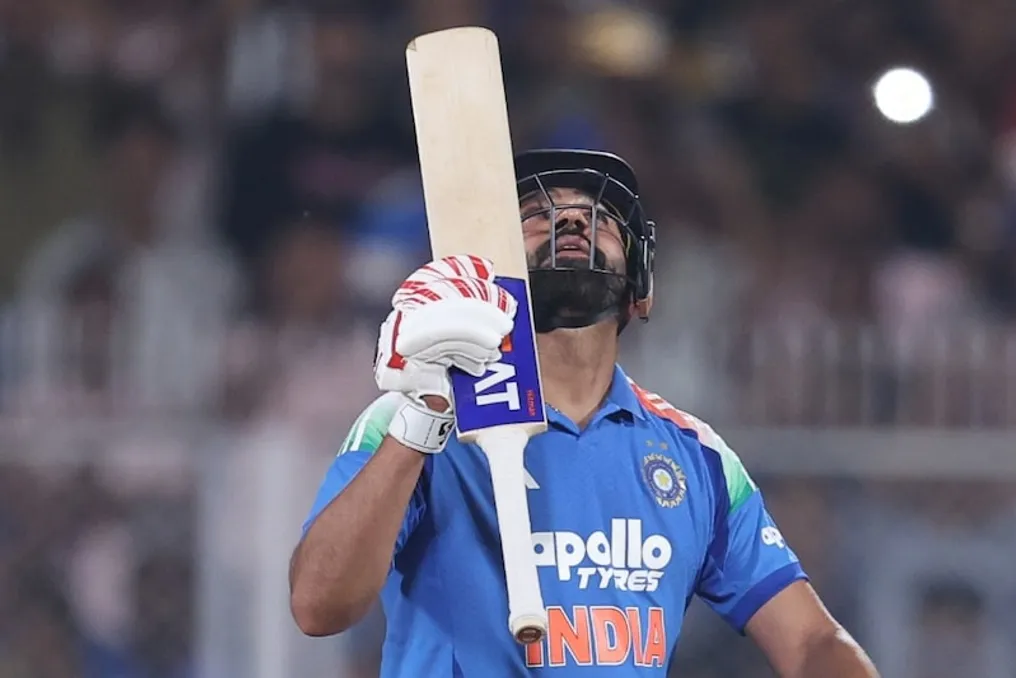
Rohit Sharma joins the club of players with 12 thousand ODI runs, surpassing Sachin Tendulkar's record
Read more
www.aajtak.in

Rohit Sharma joins the club of players with 12 thousand ODI runs, surpassing Sachin Tendulkar's record

During the second ODI match against West Indies in Guwahati, Rohit Sharma set several significant records. Chasing the target of 405 runs, Sharma reached the mark of 12,000 ODI runs, thereby breaking Sachin Tendulkar's record.

This milestone was achieved by him in his 282nd game. Because of this, he became the second fastest player in the world to reach 12,000 ODI runs. Previously, Virat Kohli had surpassed this benchmark, doing so in 242 games, and Sachin Tendulkar reached this figure in 300 games.

Currently, Rohit has only 12,028 runs in 282 games played across 290 matches. Thus, Rohit became the third Indian player to accumulate 12,000 ODI runs, following Sachin Tendulkar and Virat Kohli.

After achieving this feat, Rohit continued to play aggressively against West Indies, scoring his 101st strike for 72 balls. This marked his thirty-fifth century in ODIs. However, his innings ended immediately after reaching this result when Jaden Silas dismissed him via LBW. He scored 101 runs off 75 balls.

Rohit provided the team with a strong start alongside captain Shubman Gill, completing a half-century in 38 balls and accelerating the chase for 405/7 from West Indies.

It is worth noting that in the first ODI played in Tiruvannanthapuram, Rohit scored only 32 runs. His performance in Guwahati was a contrast. In 2026, his form in ODIs attracts attention. Before this match, he had scored 411 runs in 10 ODIs, with an average of 41.10. Among these matches was the game against England at Lord's, where he scored 138 runs. After retiring from Tests and T20 Internationals, Rohit is focusing exclusively on ODIs, and his current form is important for the Indian team ahead of the 2027 World Cup.

Kuldeep Yadav reaches 200 ODI wickets, surpassing Shane Warne in balls bowled
Read more
www.aajtak.in

Kuldeep Yadav reaches 200 ODI wickets, surpassing Shane Warne in balls bowled

In the match between India and West Indies, players from the West Indies demonstrated strong play, dealing a serious blow to the Indian bowlers. John Campbell, Shai Hope, and Amir Jangu each scored a century, bringing the West Indies total to 405 runs. In rainy conditions, Kuldeep Yadav recorded a significant record.

In his 123rd ODI match, Kuldeep Yadav completed his 200th wicket, becoming the second fastest bowler in Indian history to reach this milestone. He is only surpassed by Mohammed Shammi, who took 200 wickets in 104 ODIs. Following him are Ajit Agarkar (133), Zaheer Khan (144), and Anil Kumble/Javagal Srinath (147).

Kuldeep secured his 200th wicket of Kemi Paul, who was caught by Virat Kohli in the long-on region after 45.1 overs. This moment marked Kuldeep's achievement of a double century in ODIs. Furthermore, Kuldeep surpassed Shane Warne in the number of balls required to achieve 200 ODI wickets, completing them in only 6319 deliveries. Among spinners, only Shaklan Mushtaq (5451) and Rashid Khan (5782) achieved this result with fewer balls. Following Kuldeep are Adam Jampa (6385), Adil Rashid (6881), and Shane Warne (6983).

Despite the record attack by the West Indies, Kuldeep remained among the few Indian bowlers who managed to partially contain the pace of the game. In his full quota of 10 overs, he took 2 wickets, conceding 65 runs, resulting in an economy rate of 6.50.

Before the West Indies reached 405 runs, Campbell scored 101 runs off 68 balls, Hope scored 104 runs off 94 balls, and Jangu scored 114 runs off just 77 balls. This was a rare sight in one ODI match where three batsmen score a century.

Popular