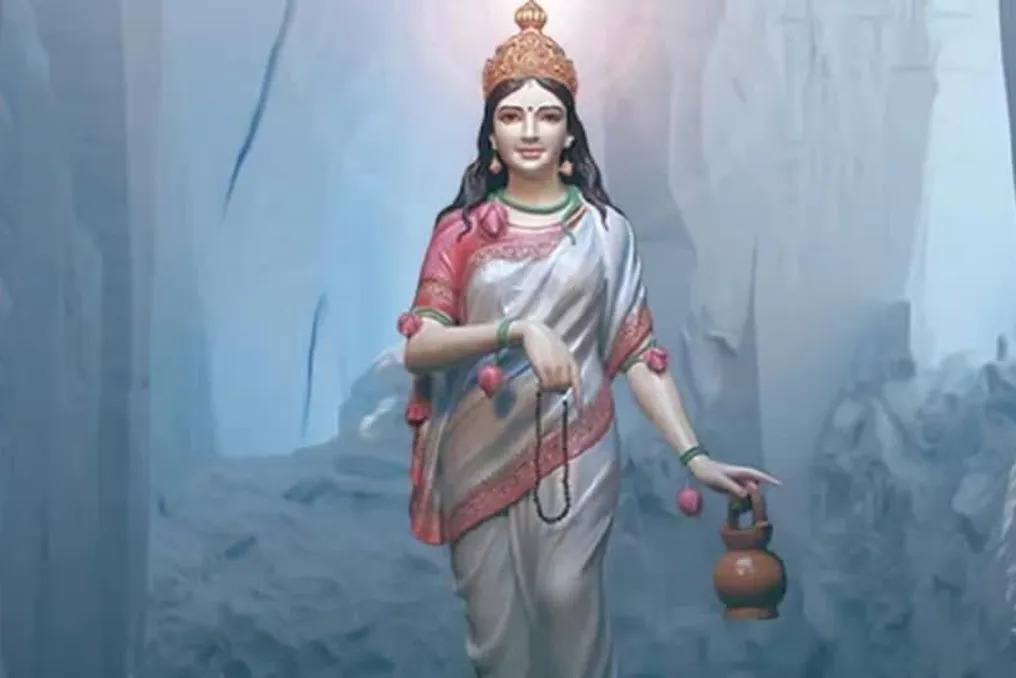
On the second day of Navratri 2026, worship will be performed to the form of Maa Durga—Brahmacharini. According to religious beliefs, Maa Brahmacharini symbolizes asceticism, self-sacrifice, self-control, and firm resolve. She is called Brahmacharini due to her rigorous practices and state of meditation (Brahma).
Worshipping this goddess brings spiritual strength and patience to her followers. It is believed that honoring Devi is especially auspicious for students and individuals engaged in spiritual practices. It is also recommended that those whose Moon sign is weak perform worship to Maa Brahmacharini.
On the second day of Navratri, after taking a bath, one should wear yellow or white clothing and perform worship to Maa Brahmacharini. First, one must light a ghee lamp before the Devi. Then, offerings of turmeric, sandalwood, roli, akshat, turmeric, and fragrant perfume are made to the Mother. White flowers, honey, or Panchamrit can be offered to the Goddess. After this, the mantra 'Om Aim Namah' can be chanted. To strengthen the Moon, white flowers and white objects should be offered, and the mantra 'Om Shram Shreem Shraum Sah Chandramase Namah' should be recited at least three times.
To alleviate financial difficulties, it is recommended to take a coconut with water and hold it on one's lap. Subsequently, the mantra Om Dum Durgay Namah must be repeated 108 times. Following this, there is a ritual of throwing this coconut into running water. It is believed that this method helps rid poverty and promotes improvement in financial circumstances.
According to mythological history, Maa Brahmacharini was born in the home of Parvatraj of the Himalayas and the goddess Maina. Since she was the daughter of Parvatraj, she was named Parvati. In childhood, listening to stories of Lord Shiva from Rishi Narada, she decided to attain Shiva as her spouse. Mata Parvati undertook severe ascetic practices to appease Shiva. Initially, she restricted her diet, then relied on fruits and leaves, and later gave up both food and water. Recognizing her austere practice and unwavering devotion, Lord Shiva appeared to her and accepted her as his wife. It is because of this ascetic appearance that she is called Maa Brahmacharini.