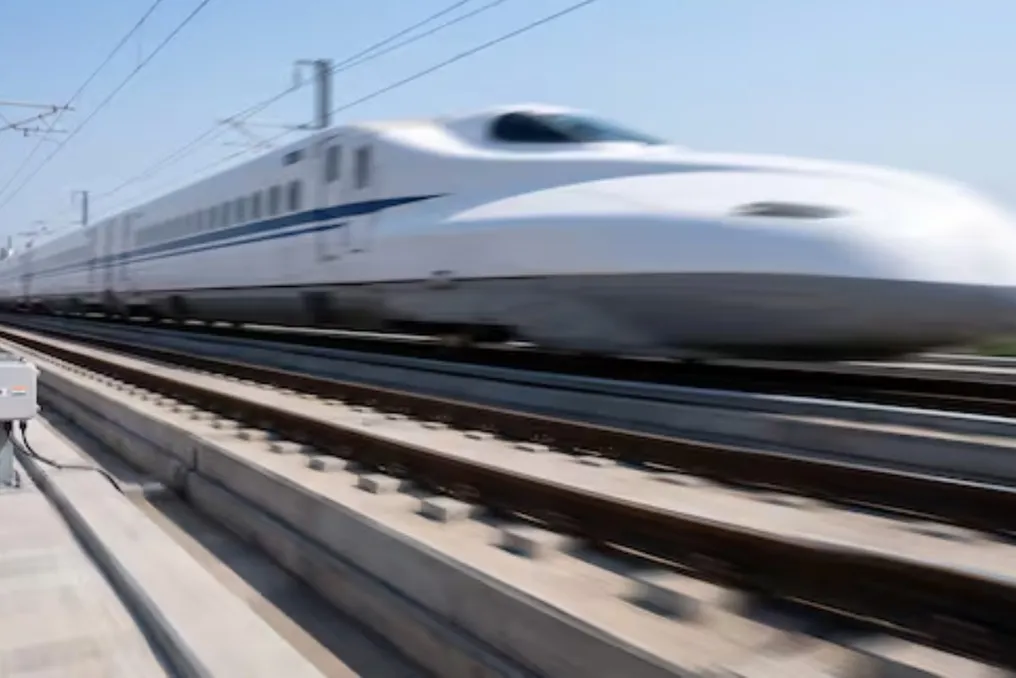
Indian Railways plans to expand its high-speed rail network by proposing seven corridors that will run between major cities across the country. This initiative aims to significantly reduce travel time and improve passenger convenience.
These new high-speed lines will operate on routes such as Delhi-Varanasi, Mumbai-Pune, and Chennai-Bengaluru. Forecasts indicate that travel on these routes will become much faster. These corridors were announced as part of the Central Budget for 2026-27 and are intended to facilitate passenger movement, strengthen connections between economic hubs, and stimulate regional development.
Finance Minister Nirmala Sitharaman announced these seven corridors while presenting the central budget. The proposed routes include Delhi-Varanasi, Mumbai-Pune, Pune-Hyderabad, Hyderabad-Bengaluru, Hyderabad-Chennai, Chennai-Bengaluru, and Varanasi-Siliguri. The goal of this program is to promote eco-friendly passenger transport and enhance connectivity between major settlements and surrounding areas.
It is expected that the travel time on the Delhi-Varanasi corridor will be reduced to approximately three hours and 50 minutes, connecting the national capital with the city in Uttar Pradesh. On the Mumbai-Pune route, travel time is anticipated to decrease to approximately 48 minutes. Faster rail connectivity should also help foster business travel and reduce the load on existing transport arteries, although this depends on the project design, stations, and operational system.
Travel Time on Pune-Hyderabad and Hyderabad-Bengaluru Routes
The proposed Pune-Hyderabad corridor is expected to reduce travel time to approximately one hour and 55 minutes, thereby accelerating the link between Maharashtra and Telangana. Regarding the Hyderabad-Bengaluru corridor, the journey is projected to take about two hours.
Time Reduction on Other Routes
On the Hyderabad-Chennai route, travel time is expected to be reduced to approximately two hours and 55 minutes, and on the Chennai-Bengaluru corridor—to one hour and 13 minutes. The seventh corridor, Varanasi-Siliguri via Patna, should also reduce travel time by approximately two hours and 55 minutes.
It is separately noted that the Mumbai-Ahmedabad high-speed train project is currently under implementation using diesel fuel, and its operation is planned to begin next year. The Mumbai-Ahmedabad high-speed rail corridor is designed for trains traveling at speeds of up to 320 kilometers per hour.