Inspired by three months of remote work experience in the mountains, a couple decided to abandon their city careers and build a mountain retreat featuring over two hundred trees.
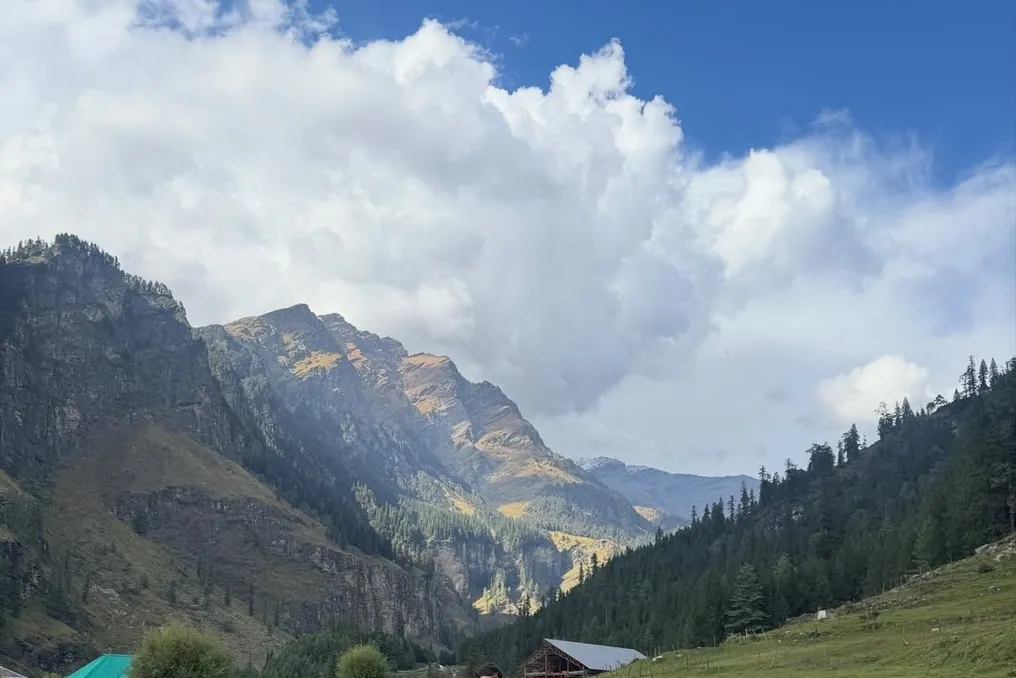
The location of this small, nature-focused retreat named Shoonya is in the village of Letibunga, near Mukteshwar, Uttarakhand. Here, amidst misty terraced farms and against the backdrop of gleaming Himalayan peaks, the sounds of birds replace the usual noise of traffic and notifications, immediately changing the pace of life for guests.
Spanning half an acre, Shoonya is designed for a small number of visitors at a time and encourages guests to forgo packed itineraries and sightseeing lists. Instead, they can spend time under the trees, watching the mountains change color throughout the day, listening to birds, having long conversations, or simply being in silence. This slower approach to travel resonates with people seeking a deeper connection with nature.
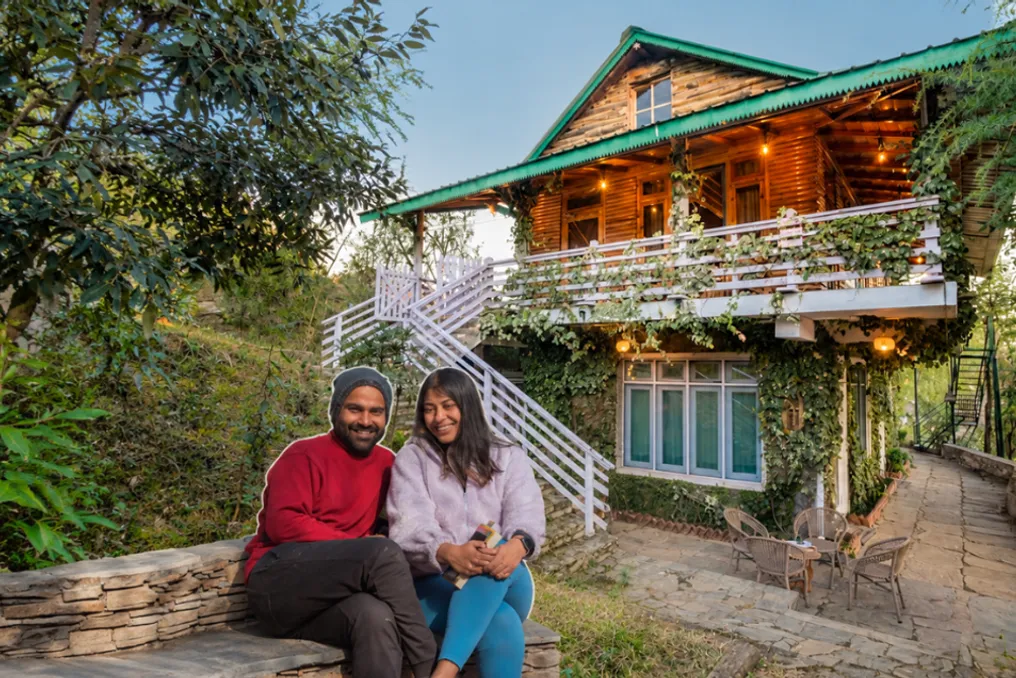
Behind this project are Mahima and Rashmikant (RK) Jha, NIFT graduates who left successful corporate careers to create a hospitality space defined not only by comfort but also by biodiversity and community. Their initial plan was to spend three months there, but they decided to stay.
In early 2023, shortly after getting married, Mahima and Rashmikant were looking for a temporary escape from city hustle. At the time, Mahima worked as a senior growth manager at a software company, while Rashmikant handled corporate sales at TELUS International. Initially, they planned to spend several months working remotely in the mountains before returning to life in Gurgaon and Noida.
Mahima recalls: 'We honestly wanted to move to South India first. But we ended up deciding to look somewhere in the north and stumbled upon this property in Mukteshwar.' At that time, the area only had one cottage, and the rest was open land surrounded by farms.
What started as a three-month experiment gradually changed the couple's lifestyle and views on the future. Mahima notes: 'Our life immediately slowed down. Instead of spending free time on phones or laptops, we started walking around the village, interacting with locals, and noticing the little things around us.' These walks and conversations gave them time to reflect on the life they had built in the city. 'We gained a lot of time to think about ourselves. About what we want from life, what we are doing, and why.'
For Rashmikant, the experience was transformative in another way. He says: 'The catalysts that nature provides through your senses are incredibly powerful. You become more aware of yourself and your surroundings. This awareness becomes a daily practice.'
By the end of 2023, the couple made a decision many considered risky: they quit their corporate jobs and decided to live in the mountains.
Why they chose communal spaces over more rooms
The first version of Shoonya was intentionally modest. Instead of buying land and building a large tourism enterprise from scratch, Mahima and Rashmikant proposed their idea to the landowner: rent the premises, experiment with hosting guests, and see if their idea would resonate.
The owner's response was encouraging. After testing the concept through Airbnb bookings, the couple resigned at the end of 2023 and began transforming the property. Shoonya officially opened in April 2024.
One of the most important decisions was how much to build. Instead of expanding living quarters, they preferred to provide guests with more space for communal time. Mahima explains: 'We intervened in the original plan. The owner wanted to build more rooms. We felt that common spaces were more important.'
This philosophy arose from their own experience living there. If the place helped them slow down and reconnect with themselves, they wanted guests to experience the same. They began creating zones where guests could gather, spend time outdoors, or simply be alone.
Glass room, fire, and conversation spots
At the heart of Shoonya is Kriti, a communal space with glass walls that frames expansive views of the mountains, providing warmth during the long winters of Mukteshwar. Nearby is Fire & Feast, inspired by the traditional Mithilani concept of 'dalaan'—an open public space where people gather around food and fire.
Rashmikant, who grew up in Bihar, explains: 'There is a culture of gathering around a common space in villages. We wanted to recreate that feeling.'
Other corners of the property facilitate more personal moments. These include a stargazing platform, listening areas where guests can simply enjoy the sounds of nature, reading nooks stocked with carefully selected books, and cozy spots where couples or friends can retreat for conversation.
Many of these spaces took shape as the couple worked on the property, rather than being pre-planned. Mahima shares: 'We were personally involved in everything. From working with carpenters to deciding on the placement of distribution boards. A lot happened spontaneously.'
Guests often note the attention to detail. Nikita Kalra, an entrepreneur from Noida who has visited Shoonya several times, says: 'They really thought of everything. Sometimes you think, 'I wish I had a cane for this hike,' and then you open the closet and find it.'
Creating a place for trees, water, and birds
The couple's attention to the spaces used by guests extends to the surrounding land. Biodiversity has become an important part of the development and care of Shoonya. Before the couple arrived, the property already possessed ecological advantages: an extensive rainwater harvesting system could collect between 80,000 and 90,000 liters of water, a significant advantage in a region where water scarcity remains a growing problem.
Over the last three years, Mahima and Rashmikant have developed this foundation. More than 200 additional trees have been planted. Greywater from kitchens, sinks, and showers is used for irrigation. Organic waste is composted and returned to the soil. Development decisions are often guided by the realities of mountain ecosystems, not convenience.
Mahima emphasizes: 'You have to submit to nature. If it's raining, you can't do certain things. If it's too cold, you have to wait. Nature dictates the pace.'
The couple also noticed an increase in bird activity around the property. Their approach is to restore habitat using local plants and water sources, rather than artificially attracting wildlife. Rashmikant says about the birds: 'They don't need us to create something special. They need trees, shelter, and water.'
Today, birdwatching has become an integral part of the Shoonya experience.
Since its opening, Shoonya has hosted over 1200 guests and registered nearly 3000 nights of stay. For some of these visitors, the most memorable moment was the time spent connecting with the place and the people around it. Nikita Kalra noted that the biggest difference was the combination of hospitality and intimacy. 'Most mountain Airbnbs offer you a house and a chef. Here, there was a genuine desire to help guests interact with the place and the community around it.'
For a guest from Gurugram, Nitish Kumar, Shoonya became a meeting place for six school friends after more than ten years. He shared: 'We didn't have anywhere to go, no peaks to conquer, and nothing to do but spend time together.'
One evening, while watching the stars, Kumar reflected on the retreat's name. 'Shoonya means zero. For our group, it became a kind of Zero Point—a place where we could reboot, reconnect, and return to what truly matters.'
Many guests speak of similar changes. Some leave with renewed appreciation for nature. Others start choosing slower vacations. Some simply rediscover the value of unhurried conversations. Kalra concludes: 'What stays with you is how honestly it was built. You never feel like you are being sold something.'
Why Mahima and RK are not rushing expansion
For Mahima and Rashmikant, Shoonya arose from a personal decision to rethink what they want from life. They hoped the retreat would give other people some of the space they found during their time in the mountains.
The very name is rooted in three values that guide every decision they make: self-awareness, compassion, and creation. These principles emerged from their own journey of letting go of conventional definitions of success and choosing a different path.
Today, the couple is exploring what comes next, though they are cautious about rapid growth. Rashmikant states: 'We are not rushing. Whatever we do next will happen in its own time.'
Currently, the focus remains on nurturing what already exists: a small hospitable space where people can reconnect with themselves, each other, and the natural world around them. As evening descends upon Letibunga, the mountains slowly fade into the fading light. Guests gather around the fire, linger in conversation, or watch the stars appear over the valley. For Mahima and RK, these are the moments they hoped to make possible by deciding to stay in the mountains: time to pause, spend time together, and look more closely at the world around them.