Uzbekistan is focusing the next stage of its industrial development on the deep processing of local raw materials, production with higher added value, technological innovations, cooperation between large enterprises and small businesses, and integration into global supply chains. These new growth drivers were outlined in an analytical report by the Ministry of Economy and Finance.
According to the ministry, industrial policy is entering a qualitatively new phase. While the main priority was previously simply increasing production, the main criteria will now be competitiveness, added value, labor productivity, energy intensity, and demand in external markets. The ministry believes that every investment must bring advanced technologies to the country, contribute to the development of new products, and create qualified jobs.
These priorities are confirmed by current results: from January to August 2026, industrial output reached 926.5 trillion sums, which is 8% more than the previous year. Industrial output per capita amounted to 24.1 million sums, and as of September 1, there were 65,300 industrial enterprises operating in the country. The ministry notes that in recent years, industry has outpaced GDP in terms of average gross added value and has become one of the key drivers of the economy.
Driver 1: Deep Raw Material Processing
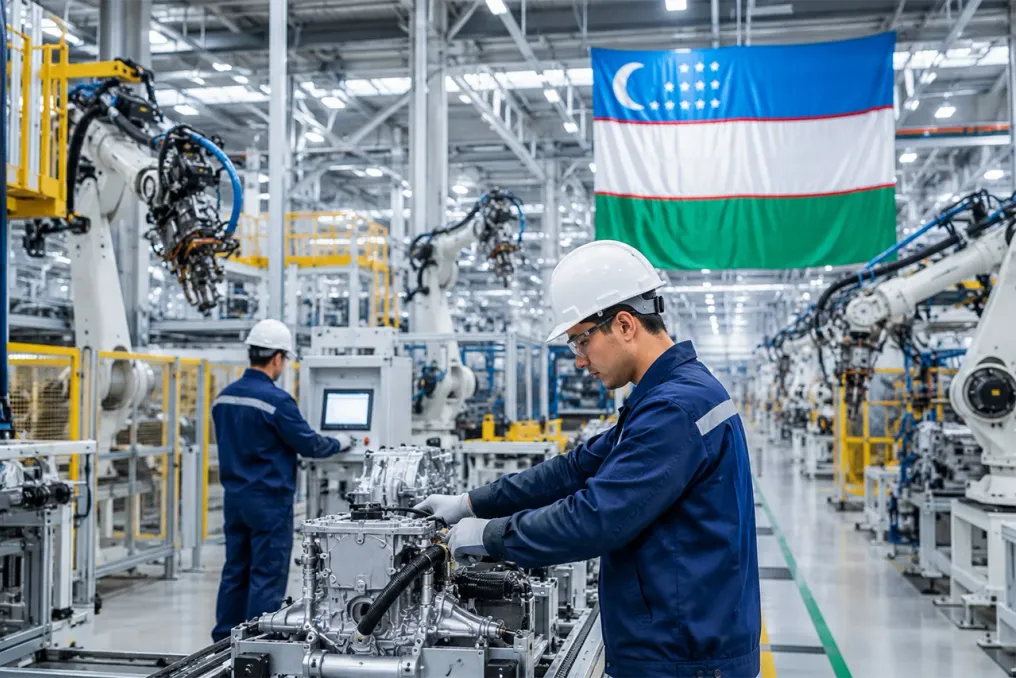
The ministry highlights the deep processing of local raw materials as a primary source of new growth opportunities. The approach being applied involves conducting the maximum number of processing stages domestically. Expanding copper processing opens prospects for the production of cables and electrical equipment, while cotton processing can support the output of finished clothing.
More valuable products can also be developed in agriculture by expanding processing, packaging, and storage technologies for agricultural products. According to the ministry, each additional processing stage generates additional income and jobs in the country.
Driver 2: Copper Value Chain from Ore to Cable
The copper industry serves as a clear example of this approach. In March 2026, the first phase of a $2.7 billion project was launched. This project has an annual capacity to process 60 million tons of ore and produce about 900,000 tons of copper concentrate.
The concentrate will be used as raw material for subsequent stages. Thanks to projects planned for the current year, it is expected that deep copper processing capacities will reach 240,000 tons. The production of copper cables, wires, and electrical equipment will allow this metal to be processed domestically in later stages.
The ministry describes this chain as consisting of four links: ore reserves with a processing capacity of 60 million tons per year; copper concentrate, about 900,000 tons; deep processing, 240,000 tons; and high-value products such as cables and electrical equipment.
Driver 3: New Products and Components
The ministry views the development of new products and the expansion of the production of components and materials in the electrical, mechanical engineering, chemical, pharmaceutical, and food industries as another area of growth.
Driver 4: Technology and Innovation
For the technological modernization of industry, the 'Center for Research and Innovation of the Fourth Industrial Revolution' is being established in Tashkent in accordance with Presidential Decree No. PP-325 dated September 12, 2026. It will function as a center for modern technologies for manufacturing enterprises. For the first three years, the center will be managed by a foreign company with advanced experience.
Manufacturing companies will be able to develop new products without the need to purchase expensive equipment by using digital design, prototyping, and testing, as well as laboratory tests. They will gain access to consultations on international standards, exports, and tenders, as well as energy audits aimed at reducing production costs. Investors will have access to ready-made engineering infrastructure, testing laboratories, and qualified specialists, which, according to the ministry, will reduce the time required for technology financing and production launch.
Young people and startups will be able to use the center's laboratories free of charge and receive specialized consultations, and the best projects will receive funding through the national venture fund. In the ministry's opinion, this should lead to increased availability of high-quality, safe, and affordable local products, the creation of new jobs, and the growth of exports under the brand 'Made in Uzbekistan.'
Driver 5: Cooperation Between Large and Small Businesses
The ministry also sees industrial cooperation as an important source of growth. Linking the demand of large enterprises for components, materials, and services with the capabilities of local small and medium-sized enterprises will extend production chains. According to the report, manufacturers that meet quality, price, and supply reliability requirements will be able to strengthen their positions in the domestic market and enter the supply chains of international companies.
Driver 6: Export and Global Value Chains
To expand exports, the ministry considers it necessary to produce goods according to international standards, obtain certification, improve logistics, and establish long-term cooperation with buyers. Integration into global value chains, according to the ministry, will allow local enterprises to adopt technologies and management practices, ensure stable orders, and enter new markets.
Driver 7: Productivity and Energy Efficiency
Labor productivity and energy efficiency will be especially important for further growth. Modern equipment, digital management, production automation, and staff training can help reduce production costs. Energy and water-saving technologies can reduce company expenses and, according to the ministry, allow them to increase production under limited resources.
Driver 8: Regional Growth Centers
New growth opportunities are also emerging at the regional level. Industrial development takes into account the resource base, human resources, infrastructure, and proximity to markets in each district and city. State industrial policy will focus on expanding cooperation around existing enterprises, attracting local entrepreneurs into production chains, and developing in-demand products. It also provides for stimulating private initiative and healthy competition, as well as ensuring the availability of qualified personnel for the sector.
To solidify the new course, the ministry is developing an industrial strategy until 2035. Within this strategy, sectoral development is expected to be linked to the current state of industries, demand in domestic and external markets, existing infrastructure, as well as investments, exports, energy, transport, workforce training, and innovation. For example, when creating a new enterprise, a comprehensive assessment of demand for its products, availability of electricity and water, transport costs, and staffing needs is proposed.
A draft law 'On Industry' is also being prepared. It aims to systematize the basic principles of state industrial policy, the responsibilities of relevant bodies, and approaches to supporting producers. According to the ministry, this will create a reliable basis for making investment decisions.
The report states that the practical results of reforms for the population should include modern professions, stable employment, higher incomes, and higher quality products.