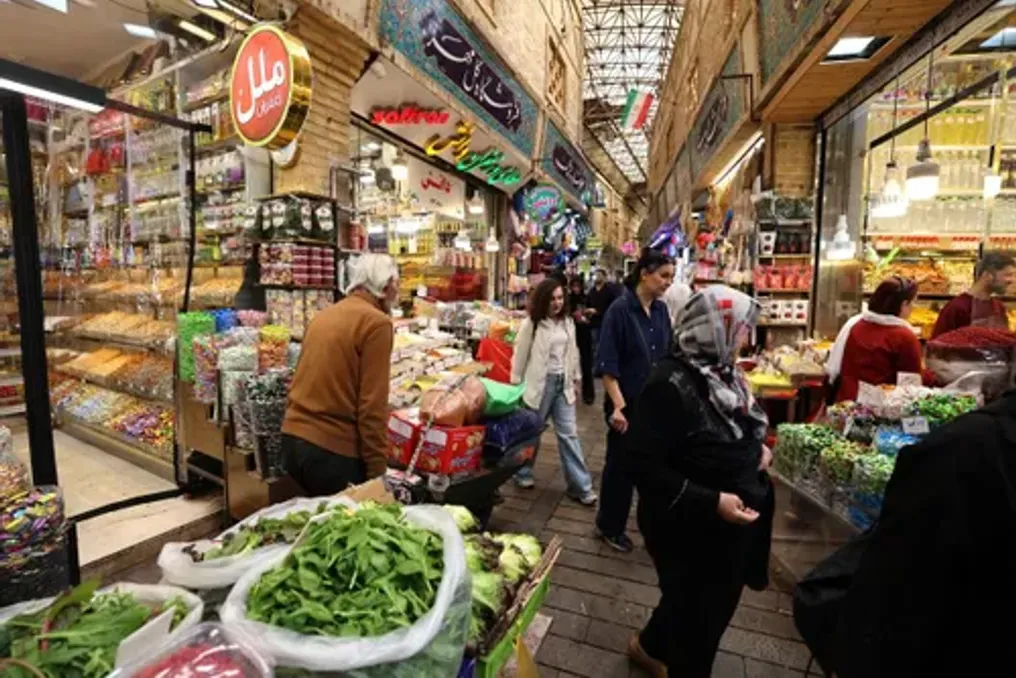
In the markets of Iran's northern capital, which are usually bustling with shoppers, there is currently a sharp decline in activity: stores stand almost empty, and vendors struggle to attract attention to their goods.
At the Tehran bazaar, where aromatic spices and herbs are sold, store owner Nasir noted that locals used to buy nuts by the kilogram, but the price increase caused by the war between the US and Iran has significantly reduced sales, forcing businesses to fight for survival.
61-year-old Nasir reported that buyers who previously purchased two to five kilograms now limit themselves to one or half a kilogram. He emphasized that prices are indeed high and called on the authorities to stabilize the currency so that businesses can plan their activities more easily. This fruit and nut seller stated that everything is in limbo and needs a stabilization of the dollar exchange rate.
Iran's economy has long suffered from sanctions, but the conflict, which began in February following attacks by the US and Israel and the American blockade of the country's ports, has added additional pressure to daily life. Official data shows that inflation has risen by nearly 90% year-on-year as of September, and exchange rate instability has led to an increase in the cost of essential goods; food prices have more than doubled over the past year.
At the historic covered market in the Tajrish district of Tehran, locals, surrounded by Iranian flags and Persian signs, are trying to cope with economic difficulties, looking at sweets, jewelry, traditional clothing, and meat before the weekend.
However, many in the commercial area see no future for their businesses. Ali Naouri, a 36-year-old owner of a sportswear store in the bazaar, described the situation as a desperate struggle. He reported that manufacturers are declaring bankruptcy, laying off staff, and closing stores, which negatively affects him. Currently, he orders only small quantities of goods for the display windows to avoid the appearance of an empty warehouse left unfilled due to lack of demand. He also mentioned rising rent and utility bills, saying: 'We have absolutely no plan for the future. When people stop buying... it essentially means bankruptcy for the business. We just need stability.'
Many customers whose purchasing power has decreased since the start of the war are leaving the bazaar without making any purchases. Azadeh, a 45-year-old woman who is currently unemployed, visits the market just to 'look at the shops.'
The pressure related to the war has caused Iran's GDP to contract by 10.1% year-on-year between late March and late June, according to official data. In the unofficial market, the rial traded at approximately 2.7 million to the dollar last week, compared to about 1.7 million before the war. The minimum monthly wage, which was about $120 a year ago, has fallen to $65.
The country's Minister of Economy rejected predictions of imminent economic collapse, accusing opponents of Iran of trying to incite public anxiety and raise exchange rates.
Prices Have 'Soared'
Azadeh demonstrated a comparison of the price of a kitchen towel bought several months ago for 22 cents. Now this item costs $1.10, which is five times more expensive. She noted: 'This shows that prices haven't just gone up—they have truly soared.' She stopped buying some fruits and said she can no longer afford a vacation. She wondered: 'We shouldn't just exist; we should truly live, right?'
Mechanic Mojtaba Rezaei said that his clients have 'shrunk to a tenth of the previous volume' because 'goods now cost two or three times more.' The 57-year-old mechanic told AFP at the bazaar: 'I am ashamed to tell customers about the prices. People just come, ask the price, and leave. So many things—buying clothes, vacations, dinners in restaurants—have disappeared from our lives.'