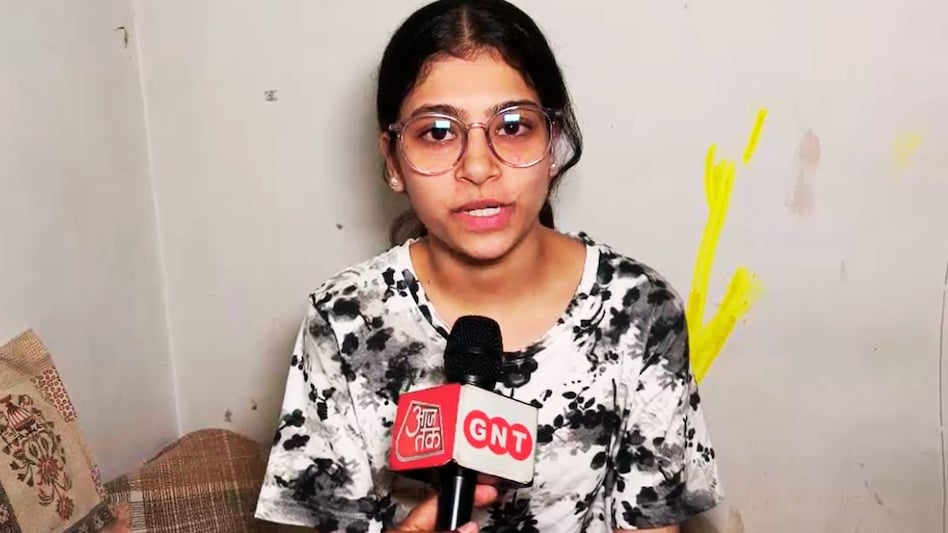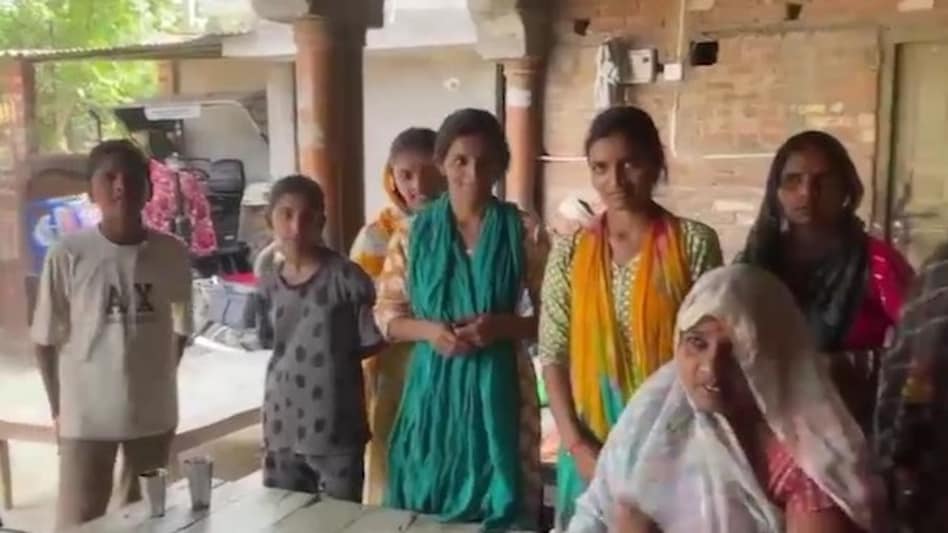
Women from Barabanki who received loans from self-help groups have become examples of self-sufficiency, owning cars and earning money.
Read more
Aaj Tak
www.aajtak.in

Women from Barabanki who received loans from self-help groups have become examples of self-sufficiency, owning cars and earning money.

In Barabanki, Uttar Pradesh, three women decided to change their lives instead of giving up in the face of difficult circumstances. One of them was kicked out by her husband along with three daughters, and another struggled with financial difficulties. However, a loan obtained through a self-help group opened the path to financial independence for them.

Sakina Bano, a resident of Nurur village in the Gram Panchayat Banki, Block Banki, Barabanki, started her journey in 2021 by taking a loan from the Khwaja self-help group. Initially, she purchased her first e-rickshaw. After starting to earn, she repaid the debt and bought a second e-rickshaw. Then, taking a loan of four hundred thousand rupees, with the help of her brothers and personal savings, she acquired a car and began working with Ola.

Today, Sakina Bano has two e-rickshaws and one car. According to her, these three vehicles generate a monthly income of 25–30 thousand rupees. She uses these funds to cover her family's expenses, as well as to ensure the education and upbringing of her three daughters. She expressed gratitude to the Prime Minister and Chief Minister for this opportunity.

Like Sakina Bano, Moni Vishwakarma from Barabanki started her activities by buying a harvesting machine, and Nisha Yadav installed a mill for grinding spices and flour. By joining the rural employment program and self-help groups, these women have not only improved their economic situation but have also set an example of self-reliance.

Moni Vishwakarma noted that thanks to the self-help group, she gained a new social identity. She said: 'We created a group, then took a loan of about one and a half lakh rupees for a harvesting machine. This was enough to get the loan from the group. Thanks to this, we earn 30–35 thousand rupees every harvest. Previously, our living conditions and financial situation were not good, but now everything is better.'

A woman named Nisha Yadav started her business by installing a mill. Nisha lives in Daudpura. She took a loan of 50 thousand rupees from the Shiv Swami self-help group. According to Nisha, this business brings her a monthly saving of 15–20 thousand rupees. She emphasized that this activity helps her support the household and pay for her children's education. She added: 'We took a loan of 50 thousand rupees from the group and installed a mill. Local residents come here to grind spices or flour, and now we save 15–20 thousand rupees a month.'

According to Sunil Kumar Kaushal, Deputy Commissioner of Barabanki, under the programs of the Prime Minister and Chief Minister, work is done annually to achieve the goal of making thousands of women prosperous. Women in villages register in self-help groups so they can participate in economic activities. He also reported that after Sakina purchased two e-rickshaws, she acquired a car and started working with Ola, and two other women from Daudpura also started businesses by joining the group.
Similar stories

The 'BC Sakhi' scheme enabled women in Uttar Pradesh villages to become self-reliant through doorstep banking services
Read more
www.aajtak.in

The 'BC Sakhi' scheme enabled women in Uttar Pradesh villages to become self-reliant through doorstep banking services

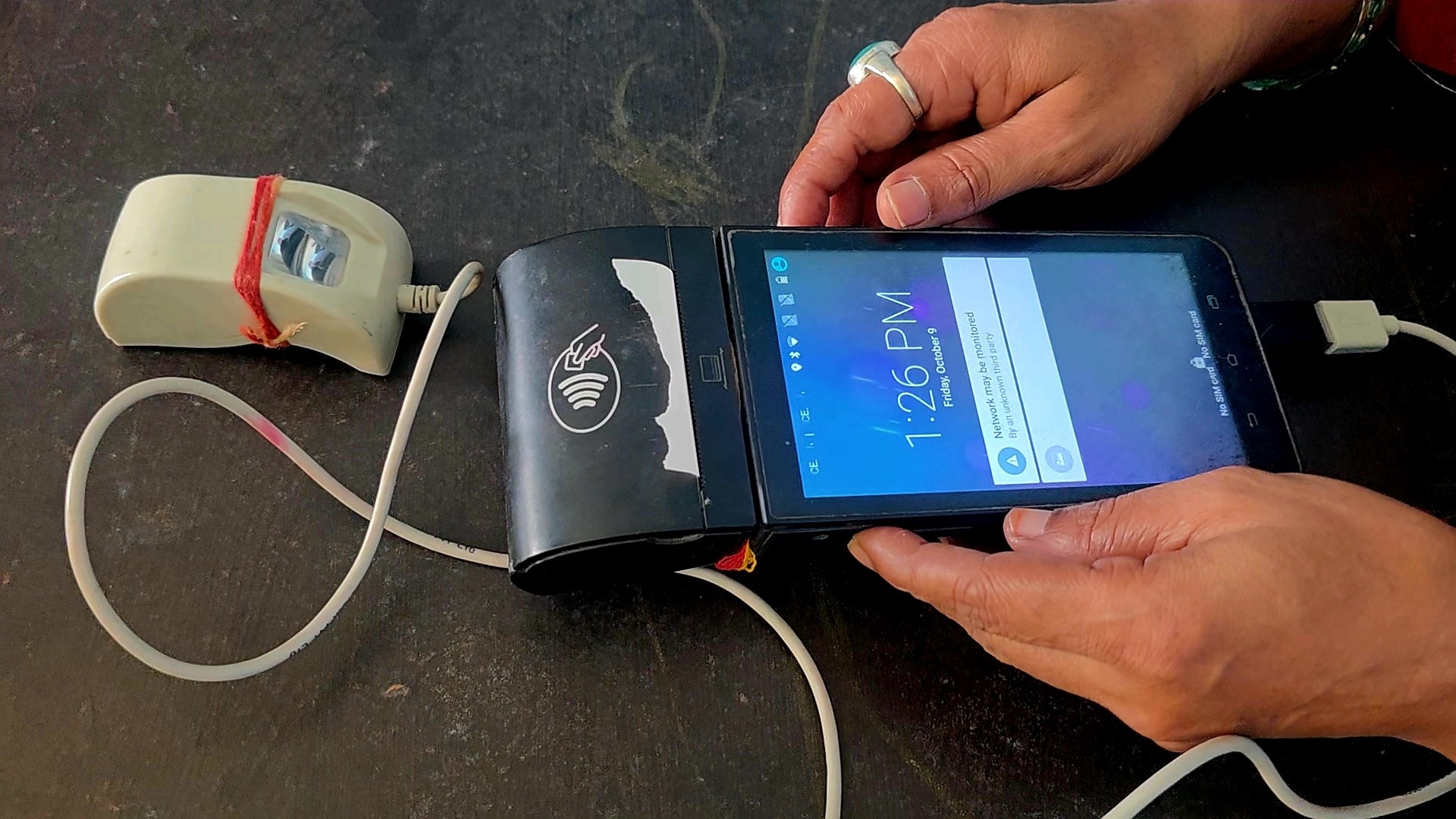
Under the National Rural Livelihood Mission in the state of Uttar Pradesh, a system was implemented that allows various services, including banking, to be provided directly to residents' homes. For this purpose, Banking Correspondents Sakhi, or BC Sakhi, were appointed at the Gram Panchayat level.

These BC Sakhi provide services either by working in an office located in the village council building or by visiting people at their homes. Thanks to this government initiative, rural residents gain access to financial services right at their doorstep. Furthermore, participation in this program has significantly improved the quality of life for women working as BC Sakhi, making them not only economically independent but also boosting their self-confidence.

Jyoti Vishwakarma, a resident of Navahi village in Chandawli, holds a master's degree. Approximately four years ago, in 2022, she joined this program. Initially, she joined a group that provided her with a loan of 75 thousand rupees. She used part of these funds to purchase equipment, and the rest was directed towards starting banking activities.

Speaking about her journey, Jyoti notes that before participating in the program, she was engaged in household chores and caring for her family. Despite having an education, she felt hesitant to leave home for work due to the characteristics of the rural environment. However, Jyoti now proudly states that since becoming a Banking Correspondent Sakhi, she has been called 'Didi'. Today, she is so self-sufficient that she can pay for her children's education and ensure the smooth functioning of her family.

Regarding her workflow, Jyoti reports that the village council building provided her with a chair and a table for work. When any woman or person unable to travel independently calls her requesting help with banking or other matters, she goes to their home to provide services. She handles cash withdrawals and also accepts deposits into accounts.

Like Jyoti Vishwakarma, Nasrin Bano is also succeeding as a Banking Correspondent Sakhi. Nasrin Bano resides in Negura village, in the Sadar block of Chandawli district. Her husband works as a welder, and the family includes her mother-in-law, father-in-law, son-in-law, daughter-in-law, and children.

Nasrin Bano joined this program four years ago and started working as a BC Sakhi. After fulfilling her household duties, she goes to the village council building where she provides banking services to the public. If necessary, she also visits people at home, offering them banking and other conveniences.

Speaking about her experience, Nasrin Bano emphasizes that she has been participating in the program for four years. After completing family responsibilities, she comes to the village council and helps people withdraw and deposit money. People approach her for these services, as well as for opportunities such as loans.

Nasrin shares that she previously lived at home and had no employment. First, she joined a group, and then became a Banking Correspondent Sakhi. After joining this scheme, she started working outside the home. As soon as she began earning income from it, she dedicated herself fully to this work. Now she supports her children's needs by buying them necessary items such as textbooks and medicine. Nasrin notes that her life has changed: she no longer has to depend on her husband for any expenses; she covers her own costs.

BC Sakhi provides banking services in villages, ensuring employment for women
Read more
www.aajtak.in

BC Sakhi provides banking services in villages, ensuring employment for women

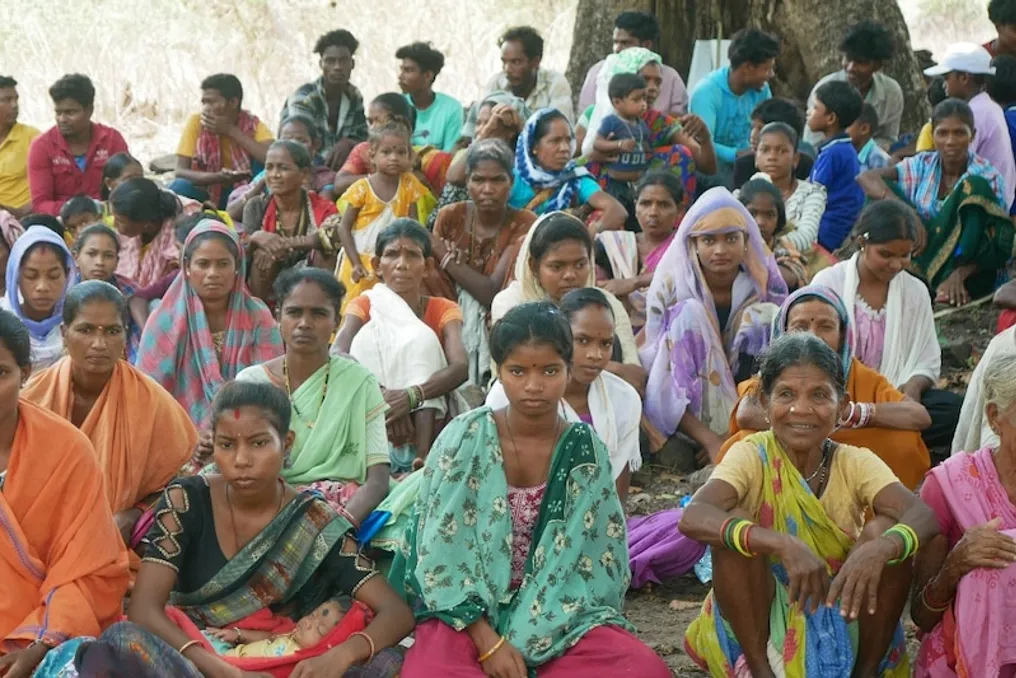
Residents of rural areas, who previously had to visit the nearest town or urban bank branch to perform standard financial operations, now have an alternative thanks to the BC Sakhi program implemented by the Uttar Pradesh government. The goal of this initiative is to bring banking and financial services closer to rural communities and create earning opportunities for women.

This project is carried out through the Rural Development Management (UPSRLM) of the Department of Rural Development of Uttar Pradesh. The working model is based on the principle of 'one Gram Panchayat, one BC Sakhi.' The program launched in Uttar Pradesh in May 2020, initially aiming to ensure the presence of BC Sakhi in 58,000 Gram Panchayats across the state.

BC Sakhi stands for Banking Correspondent Sakhi. Under this program, women, especially those associated with Self-Help Groups (SHGs), undergo training and certification to work as bank correspondents. The objective is to simplify access to banking and financial services for rural households, particularly in areas where the physical presence of a bank branch is limited. BC Sakhi provide banking services and conduct transactions using digital banking tools.

The BC Sakhi model functions at the Gram Panchayat level, ensuring the availability of a bank correspondent. Selected women receive training to work as bank correspondents, after which they must obtain a certificate from the Indian Institute of Banking and Finance (IIBF). According to UPSRLM, Rural Self Employment Training Institutes (RSETIs) and other approved centers are used for training. A six-day training course for bank correspondents is also conducted through RSETIs. The Government of Uttar Pradesh has issued several official notifications regarding the selection, training, certification, and deployment of BC Sakhi.

In the initial phase, BC Sakhi receive a monthly support of ₹4,000 for six months to stabilize their work providing banking services. After this, BC Sakhi can earn a commission based on the banking operations they conduct. According to UPSRLM, this commission typically ranges from 0.20% to 0.32% of the transaction amount, depending on the prevailing system. The state has also issued notifications providing for the allocation of ₹75,000 to each BC Sakhi for equipment support and overdraft.

After its launch in May 2020, the BC Sakhi program was expanded to the entire state. According to Uttar Pradesh budget documents for 2026–27, in the financial year 2025–26, 39,880 BC Sakhi in 58,000 Gram Panchayats conducted financial transactions worth over ₹39,000 crore and earned a profit of approximately ₹107 crore. Furthermore, the current UPSRLM BC Sakhi portal registers 50,125 certified IIBF BCs and 39,890 active BCs. The portal indicates that the total number of related banking transactions exceeded 16.9 crore, with the total value of these transactions surpassing ₹4.58 lakh crore.

The BC Sakhi model aims to mitigate issues related to distance and accessibility of banking services in rural areas. Instead of complete reliance on a physical bank branch, rural customers can receive banking services through a trained bank correspondent located within their community. Simultaneously, the women involved in the program gain the opportunity to provide banking services in their Gram Panchayat and earn income from it.

Two sisters from Saharanpur started a business with minimal investment using their skills at home
Read more
www.aajtak.in

Two sisters from Saharanpur started a business with minimal investment using their skills at home

Previously, threads and ribbons lying around the house served only as decoration or a hobby. However, two sisters from Saharanpur found a way to earn money from these items. They are Ayushi and Khushi Diman. Neither sister developed a large-scale business plan, invested millions, nor opened big shops; they started with what they already had at home.

Ayushi began her journey with just 250 rupees. She is educated: she holds diplomas in B.Com, M.Com, and B.Ed. For about two years, she worked as an assistant professor in a college, but health problems and daily commutes made the job difficult, so she resigned. Then the question of the future arose.

Ayushi has always been interested in handicrafts, and her mother knew how to crochet. Seeing her mother work with threads, Ayushi felt a desire to try this skill. Soon, she decided to turn her hobby into a business.

About a month ago, Ayushi made a crocheted flower ring for a college friend. The friend liked the small item so much that orders started coming in afterward. First rings, then cosmetic bags, then phone keychains, and the list of works gradually grew. Now, Ayushi creates bouquets, jackets, sweaters, and soft toys using crochet. Thus, the thread that started it all opened a path to entrepreneurship for her.

Ayushi says that she initially spent about 250 rupees. Currently, sales have reached approximately 4500–5000 rupees, and her net profit has reportedly reached 2500–3000 rupees. But there is more to this story than just earning money. For Ayushi, working with crochet is a kind of solace. She believes that creating something with your hands helps reduce stress. In an era where machines and artificial intelligence perform many tasks, Ayushi believes that handmade items have a special value.

Meanwhile, her sister Khushi saw a video on social media about ribbon products. She had ribbons at home and decided to try making something herself. It worked on the first attempt. That's when Khushi realized that she also had a talent that could be monetized. After that, ribbon flowers, then bouquets, rings, and individually decorated gift baskets started being created.

Khushi's work is characterized by the fact that she uses cardboard boxes that are usually thrown away after consuming chips and snacks, turning them into boxes for gift sets. She then decorates them with chocolate, snacks, jewelry, and other items according to the client's wishes. That is, Khushi prepares the basket exactly as the customer requests. Her products are delivered to clients via Instagram and WhatsApp. However, for Khushi, this is not just a business; there is an old family history behind it.

In 2015, her father passed away. After that, her mother took responsibility for the family, working and raising the children. Being the eldest in the family, Khushi now wants to stand on her own feet independently. Her goal is simple: never to reach a point where she has to ask anyone for help. She wants to earn on her own and become a support for her mother.

Khushi also works employed, continuing to develop her own business in parallel. Her mother never insisted that she focus only on work or only on business. But now, seeing her daughter trying to succeed on her own, her mother feels proud. The business of both sisters is still small: on one hand, it is crochet work started with 250 rupees, and on the other, gift baskets made from household ribbons and old boxes. But their dreams are big.

The story of Ayushi and Khushi perhaps suggests that self-sufficiency does not always begin with large investments or offices. Sometimes it starts in a corner of the house among threads, sometimes from a piece of ribbon, and sometimes from just 250 rupees.

Popular