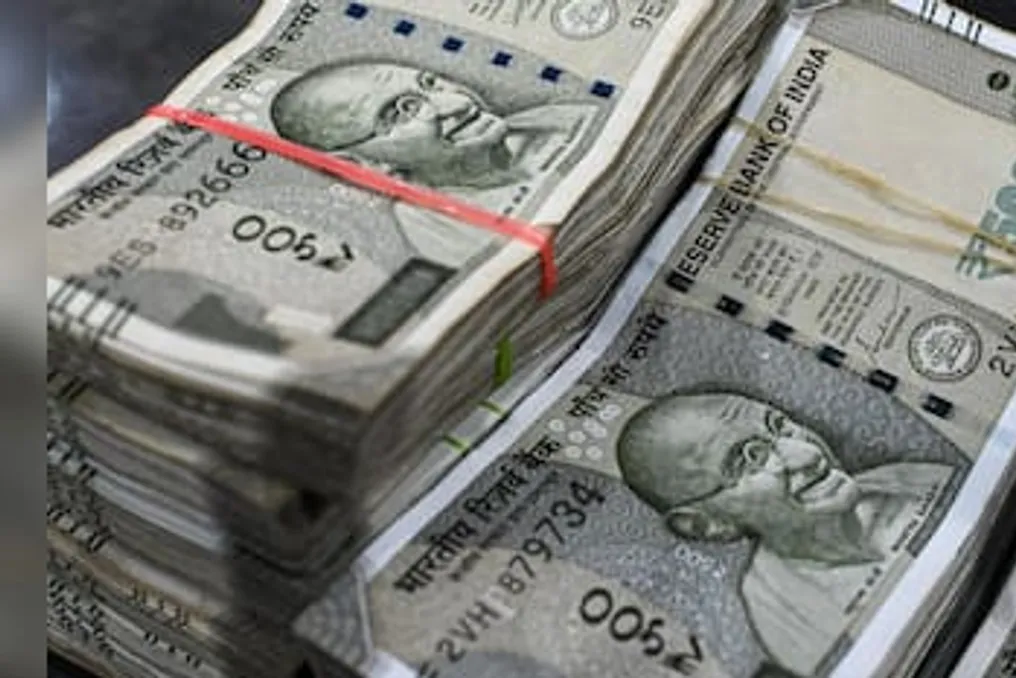
The Reserve Bank of India (RBI) is expanding its defensive measures to stabilize the rupee, implementing some of its strongest steps since the 2013 financial turmoil. These actions may give the currency an impetus as trading resumes on Monday, but the extent of the central bank's readiness to counter increasing external pressure remains an open question.
The RBI took these steps on Saturday when the rupee approached a historic low again. Measures include opening a dollar window for state-owned oil refineries and introducing a margin requirement for foreign exchange derivatives, similar to what China's central bank uses. These changes came shortly after the RBI raised interest rates on Wednesday and signaled its readiness for further monetary policy tightening.
Analysts expect the rupee to strengthen on Monday, forecasting that the RBI will defend the level at 97 per dollar. However, maintaining this growth may prove difficult due to persistently high oil prices and the fact that foreign funds have withdrawn over $30 billion from Indian stocks this year.
Expert Commentary on Defensive Measures
G. Mahalingam, a former executive director of the RBI who participated in the 2019 task force studying rupee trade abroad, noted: 'It is not easy to constantly act as a shield when the pressure continues to rise.' He added that the adopted measures are among the most powerful since the 2013 crisis, as the central bank builds layers of defense amidst the escalation of the Middle East war and declining capital inflows.
Previously, the RBI had already taken several steps to bolster its foreign exchange reserves. The diaspora deposit scheme attracted a record $133 billion, increasing foreign exchange reserves to nearly $800 billion at the beginning of September. However, over the last four weeks, currency pressure has depleted reserves by $51 billion.
The rupee has weakened by 7% this year, the worst performance in Asia. RBI Governor Sanjay Malhotra stated that the currency is undervalued by some indicators, and markets may be exhibiting short-term irrationality. On Friday, the currency closed slightly above its record low of 96.9650 per dollar.
Abhishek Upadhyay, an economist at ICICI Securities Primary Dealership Ltd., emphasized: 'It is now absolutely clear that 97 per dollar is the RBI's red line for the rupee.' According to him, the RBI's message is that the rupee's decline was too sharp, and the central bank is prepared to take all necessary actions to prevent a new historic low.
Additional Currency Support Measures
These new measures complement a series of actions by the RBI to support the rupee. Previously, the regulator limited banks' daily net open positions to $100 million and prohibited lenders from offering clients non-deliverable contracts on rupee contracts, a restriction that was later lifted. In June, the body introduced the diaspora deposit scheme shortly after New Delhi removed taxes on investments in global bond funds.
The latest steps aim to regulate demand in the foreign exchange derivatives market. For the first time, the RBI introduced a currency risk reserve, requiring lenders to hold in the central bank the rupee equivalent of 20% of the notional value of every derivative transaction exceeding $2 million. The Chinese central bank has a similar tool to manage pressure on the yuan by adjusting reserve requirements for forward contracts.
The RBI also announced that cancelled forward contracts cannot be rebooked. It lowered the limit on transactions in currency derivatives without confirmation of the underlying asset from $100 million to $5 million. While these steps may help stabilize the rupee, traders note that restrictions on the derivatives market could increase hedging costs for companies seeking to manage currency risks.
Samir Lodha, founder and managing director of QuantArt Market Solutions Pvt., stated: 'The concern is that ordinary importers wishing to reasonably manage their currency risks may now find hedging more complex and expensive.'
The cost of hedging dollars for one year has risen by more than 100 basis points in the last two months as the central bank conducted buy-sell swaps to absorb excess liquidity.
The measures may curb some demand for dollars, but according to Diraj Nima, a currency strategist at Australia & New Zealand Banking Group in Mumbai, they do not alleviate the pressure from energy prices and foreign fund outflows. He concluded: 'This buys time, but it does not change the picture: the rupee's direction will still be determined by oil prices and capital flows.' He added that data on reserves and rupee movements next week will show how successfully these measures are being implemented.