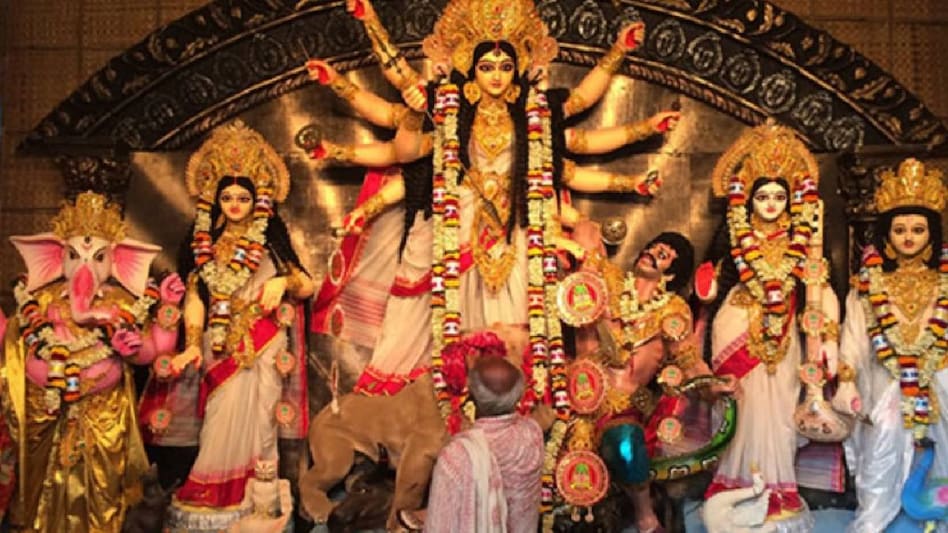
The Special Aarti of Mother Durga: How Performing This Prayer Brings the Fruits of Five Aartis During Navaratri
Read more
Aaj Tak
www.aajtak.in

The Special Aarti of Mother Durga: How Performing This Prayer Brings the Fruits of Five Aartis During Navaratri

The beginning of Sharadiya Navaratri marked the start of the celebration. The first day is dedicated to worshipping Goddess Shailaputri. Navaratri begins on the first day of the Ashwin lunar month according to Hindu tradition. This period holds special significance in Hindu culture.

During the nine days, rituals are performed to worship various aspects of Mother Durga. Devotees observe fasts, recite the Durga Saptashati, and perform morning and evening aartis, striving to appease the Goddess.

According to religious beliefs, performing the aarti of Mother Durga brings prosperity into the home and removes life's difficulties. There is a special, widely recited aarti that praises many of her forms.

Significance of Mother Durga's Aarti

During Navaratri, worshiping Mother Durga is considered incomplete without performing the aarti. In religious traditions, the aarti is viewed as the concluding and most important stage of worship. It is believed that through the aarti, devotees express their devotion and reverence to the Goddess.

This well-known aarti describes the Mother in her Kali form as a goddess of mercy. She is portrayed not only as a fierce figure but also as a source of tenderness for her followers. Titles mentioned include Ambe, Kali, Sinhvahini, Ma, Ashtabhuja, Lakshmi, Sati, and Khapparavali. Furthermore, the text mentions Shivaji, Vishnuji, and Bhairav.

Therefore, there is a belief that performing this aarti brings fruits equivalent to five aartis.

Below is the aarti itself, which can be included in your rituals:

Ambe tu haiyagadambe Kali, jai Durge khapparavali
Tere hi gun gave bharthi, o maiya ham sab utore teri aarti
Tere bhakt jono pe mata bhid padi haiya bhid padi haiya
Danav dal par tut pado maa karke sing savari karke sing savari
Sau-sau sihon se bhi balshali, haiya ashtabhujaon vali
Dushto ko tu hi lalkarati
O maiya ham sab utore teri aarti
Ambe tu haiyagadambe Kali, jai Durge khapparavali
Tere hi gun gave bharthi, o maiya ham sab utore teri aarti

This prayer emphasizes the pure bond between mother and child. Even if children behave improperly, the mother always shows compassion. She is a source of grace, pouring out nectar, and relieves the suffering from sorrow.

The plea is repeated: 'O Maiya, we all offer your aarti...'

The prayer also contains a request not for wealth, gold, or silver, but merely for a small corner at her feet. It is described as one that corrects what is flawed and protects honor, as well as adorning the virtues of holy women.

In the final parts of the aarti, help is sought to overcome difficulties, asking her to place a hand of blessing on the head. They ask for the cup to be filled with spiritual joy, as well as for her to assist in the affairs of her followers.

At the end of the aarti, scenes are mentioned where Shiva-Shankar rides a chariot, Garuda rides an elephant, and the Mother herself rides a lion, arriving to fulfill wishes. She continues to be a source of mercy and deliverance from grief.

Similar stories

10 Famous Durga Temples in India: A Review of Major Sanctuaries for Navratri Celebrations
Read more
www.aajtak.in

10 Famous Durga Temples in India: A Review of Major Sanctuaries for Navratri Celebrations

Ahead of the start of Sharadiya Navratri, scheduled for October 11th, devotees will worship nine different aspects of the Mother during these nine days. If you plan to visit a Mother Durga temple, there are ten famous places in India where pilgrims can go. Among these renowned temples, from Vaishno Devi to Sharda Mata in Maihar, large numbers of devotees from various parts of the country gather to see the deity during the sacred Navratri days.

These temples are distinguished by unique traditions, historical legends, and special beliefs, making them truly special. Below is a review of ten famous Durga temples whose visit is recommended at least once in a lifetime.

Durga Temples in India

Vaishno Devi, Jammu and Kashmir

Vaishno Devi, located in Katra, Jammu and Kashmir, is one of the most famous pilgrimage centers. To reach the shrine, pilgrims have to undertake an ascent of about 12 kilometers. In the sacred cave, there are three natural lingams considered symbols of Mahakali, Mahalakshmi, and Mahasaraswati.

Kamakhya, Assam

The Kamakhya Temple, situated on Nilachal Hill in Guwahati, is among the 51 Siddhipetas. It is known for its beliefs related to feminine power and fertility. The Ambubachi Mela is held here annually, attracting pilgrims from all over the country. Special religious rituals are also conducted at the temple during Navratri.

Dakshineswar Kali, West Bengal

The Dakshineswar Kali Temple, located on the banks of the Hooghly River near Kolkata, is dedicated to Goddess Bhavatarini. This temple was built in the 19th century by Princess Rasamini. The place is also associated with Ramkrishna Paramahansa. The temple's architecture with nine spires and its serene atmosphere attract visitors.

Ambaji, Gujarat

The Ambaji Temple, located in Gujarat, near the border with Rajasthan, is a major Siddhipeta. There is a belief that a part of Mother Sati's heart fell here. Instead of an image of the goddess, the sacred Shri Yantra is worshipped in the temple. A special fair is held here during the full moon in Bhadrapada, which involves a large number of devotees.

Maihar Vali Sharda Mata, Madhya Pradesh

The Temple of Mother Sharda in Maihar, Madhya Pradesh, is famous across the country. This temple, built on the Trikut hill, is accessible to pilgrims via stairs. Here, Mother Sharda is revered as the goddess of knowledge and power. A huge number of visitors gather at the temple during Navratri.

Baglamahi, Himachal Pradesh

The Temple of Mother Baglamahi, located in the Kangra district, Himachal Pradesh, is known for its religious beliefs. Mother Baglamahi is considered one of the ten Mahavidyas. Pilgrims come here for special worship and offerings. This temple, situated in a mountainous region, is one of the main centers of faith.

Bhramaramba Mallikarjun, Andhra Pradesh

This temple, located in Srisailam, Andhra Pradesh, is included among the 12 Jyotirlingas of Lord Shiva and the principal Siddhipetas of the Goddess. Here, Mother Bhramaramba is worshipped along with Lord Mallikarjun. This temple, dedicated to Shiva and Shakti, holds both religious and historical significance.

Bansankri, Karnataka

The Bansankri Temple, located in the Badami region of Karnataka, is dedicated to Mother Shakambhari. According to legend, the goddess protects her followers and grants them well-being and prosperity. The tradition of conducting special worship during Rahukala is also known. The Bansankri fair held at the temple attracts many pilgrims.

Naina Devi, Uttarakhand

The Temple of Mother Naina Devi, located on the banks of Nainital Lake, is very popular among devotees. According to legend, it was here that the eye of Mother Sati fell. In the sanctuary, Mother Naina Devi, as well as Mother Kali and Lord Ganesha, are worshipped. This temple, situated near mountains and a lake, allows one to experience both faith and natural beauty.

Durga Kund, Varanasi

The Durga Kund Temple, located in Varanasi, Uttar Pradesh, is an ancient temple dedicated to Mother Durga. Its distinctive feature is the reddish color of the structure and the pond located next to the temple. Special rituals are conducted here during Navratri, and a large number of pilgrims come to see the goddess. For pilgrims visiting Kashi, this temple represents an important religious site.

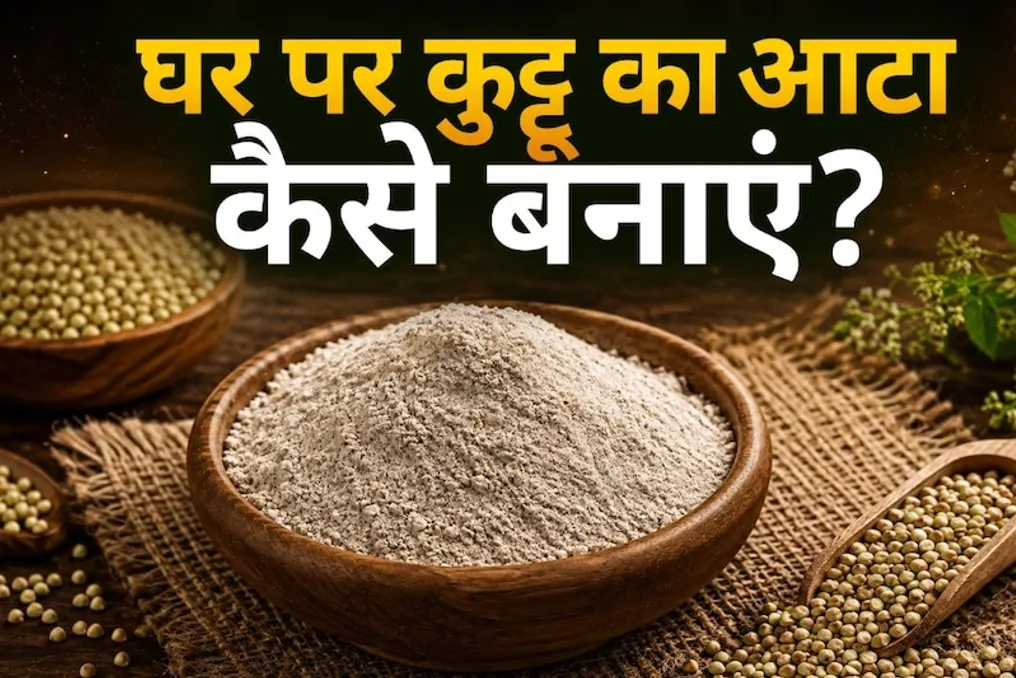
How to make Kuttu Atta at home for the Navratri fast: a simple recipe
Read more
www.aajtak.in

How to make Kuttu Atta at home for the Navratri fast: a simple recipe

During the Navratri fast, various dishes are made from Kuttu flour. If you prefer to make fresh Kuttu flour at home instead of buying it in the store, you can easily prepare it from whole grains. This article presents a simple way to make Kuttu flour at home.

During the Navratri fast, people enjoy consuming bread, puri, paratha, and pakora made from Kuttu flour along with vegetarian food. Most people buy Kuttu flour from stores. However, sometimes the quality of the flour is low, or there is suspicion of impurities. In such cases, you can make fresh flour using whole Kuttu grains at home. Dishes made from it turn out tastier, and this process does not require many ingredients. Below is a simple method for making Kuttu flour for the Navratri fast.

What is needed to make Kuttu flour?

To make Kuttu flour, you will need 1 cup of whole Kuttu grains (bulgur), or you can increase the amount as needed. First, you must thoroughly clean the whole Kuttu grains of any stones or other impurities. If the grains need washing, wash them in a small amount of water, and then dry them completely. It is important that no moisture remains in the grains, otherwise, it can cause problems during grinding and storage of the flour.

Next, place them on a dry pan and heat the Kuttu grains lightly over medium heat for 3–5 minutes, stirring constantly so they do not burn. Over-roasting can negatively affect the taste of the flour. If you want to make flour from unroasted Kuttu grains, you can skip this step. The main thing is that the grains are completely dry.

After this, let the grains cool down. Then, grind them in a blender or meat grinder until they reach a fine powder consistency. The finished powder must be sifted through a fine sieve. If large particles remain in the sieve, they should be ground and sifted again. Thus, your fresh Kuttu flour will be ready.

Kuttu flour should be stored in a clean, completely dry, airtight container in a cool and dry place. When preparing Kuttu flour, several points should be considered:

  • Before grinding the grains, they must be thoroughly cleaned and completely dried.
  • Do not put too many grains into the grinder at once.
  • When roasting the grains, maintain medium heat and do not overheat them.
  • The flour should only be used after thorough sifting.
  • The flour should be protected from moisture and its freshness checked before long-term storage.

Thanks to this method, you can easily make Kuttu flour for the Navratri fast, using it to prepare bread, puri, paratha, and pakora to your liking.

Popular