
Cost and Use of a Spray Painting Machine for Walls: Painting a Room Yourself in 4 Hours
Read more
Aaj Tak
www.aajtak.in

Cost and Use of a Spray Painting Machine for Walls: Painting a Room Yourself in 4 Hours

If you need to paint a house, you usually have to look for a painter, pay for their labor, the cost of paint, and deal with inconveniences over several days. However, there is now a machine that allows you to paint the walls of your house yourself. This machine is called a paint spray machine. It distributes paint on the walls by spraying, which can simplify the painting process. If you want to give your room a new look and save money on painting, this machine can help you. Nevertheless, before starting to use it, it is important to understand its price, operating principle, and several important points.

What is a paint spray machine? Paint is poured into such a machine, which is then sprayed onto the walls. It is equipped with an engine and a spray gun. The machine distributes paint on the wall in fine droplets, which reduces the need to repeatedly use a brush or roller. This machine can be used not only for walls but also for doors, furniture, and other surfaces. However, not every type of paint can be used in every machine, so before purchasing, you must check what type of paint is suitable for the given machine.

How much does a paint spray machine cost? The price of such a machine depends on its size, power, and method of operation. On online markets, small electric sprayers are sold for approximately 1800–2100 rupees. The cost of larger machines designed for painting large areas can be significantly higher. If you plan to paint only one room in your house, a small machine may suffice. But before buying, be sure to clarify the machine's power, tank capacity, and the completeness of the provided accessories.

Can you paint an entire room in 4 hours? Using the machine can save time compared to a brush or roller. However, the speed of painting each room heavily depends on the size of the room, the condition of the walls, the number of paint layers, and the experience of the person doing the work. If the walls already have paint and are in good condition, the job can go quickly. But if there are cracks, peeling paint, or if plastering and sanding are required, it will take more time. Furthermore, you need to allow time for each layer of paint to dry.

You need to cover the floor and furniture: small paint droplets can land on surrounding objects. Therefore, furniture, windows, and the floor should be carefully covered. You need to clean the wall: if there is dust, dirt, or old peeling paint on the wall, these problems must first be eliminated. You should familiarize yourself with the paint information: use only the paint for which the machine is intended. You should also determine how much the paint needs to be diluted, according to the instructions. Observe safety measures: wear goggles and an appropriate mask while painting. Ensure ventilation in the room and carefully read the machine's instructions for use.

Is it worth buying the machine? If you frequently paint your home or want to do small jobs yourself, a spray machine can be useful. However, for painting just one room, buying a machine is not always the cheapest option. In addition to the cost of the machine itself, you must consider the costs of paint, wall preparation, and other materials. Therefore, before buying a machine, compare its price with the cost of hiring a painter to determine how cost-effective DIY painting will be for you.
Similar stories

How to make a small kitchen look bigger using five wall color solutions
Read more
www.aajtak.in

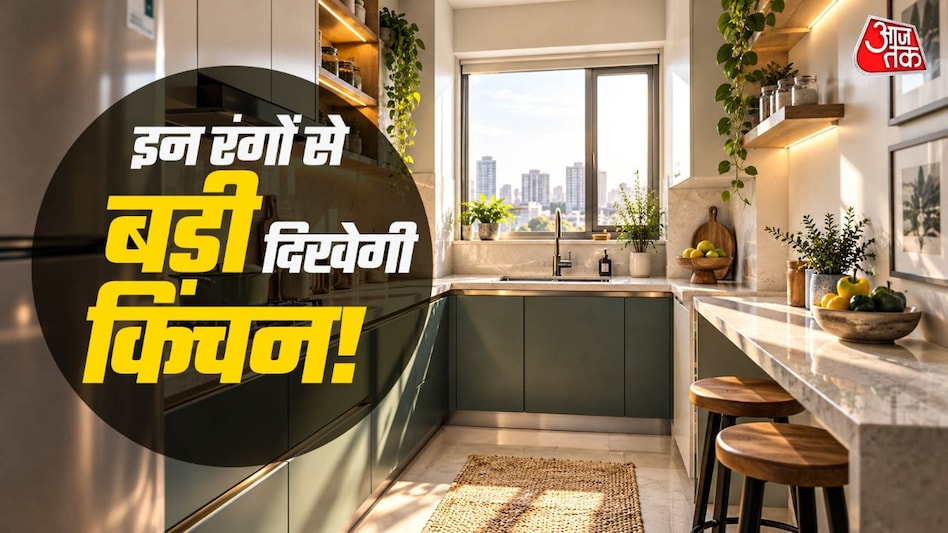
How to make a small kitchen look bigger using five wall color solutions

In urban apartments where space is limited, the dimensions of many rooms, including kitchens, are often small. When a stove, countertop, and cabinets are installed in the kitchen, the space seems even more cramped. If there is little natural light, the entire area can look gloomy and closed off.

If your kitchen seems too small and cluttered, and you are considering a major renovation to increase its area, it is worth stopping. To make a small kitchen spacious and bright, it is not always necessary to increase its size or undergo expensive renovations. The right choice of color for walls, cabinets, and countertops can completely change the appearance of a small kitchen, making it brighter, cleaner, and more open.

Tips for painting a small kitchen:

Warm white gives the kitchen an open and bright look

White is considered a good choice for a small kitchen. However, instead of using overly bright or cold white, it is better to choose shades like warm white, ivory, or cream. These tones give the kitchen a softer and more beautiful appearance. Light and white colors reflect more light, which helps a small kitchen look bigger and more spacious, especially if the window is small or there is little sunlight. If the cabinets are also painted in light tones, similar shades should be used on the walls. This ensures a harmonious combination between the walls and cabinets, making the entire kitchen tidier and more unified.

Light sage green adds freshness to a small kitchen

If you do not want the entire kitchen to be white, soft sage green is an excellent option. This color does not look too harsh and gives the kitchen a natural, fresh feeling. Instead of using it on all walls, it can be applied to the cabinets. A combination of sage green with white walls or light cream backsplashes can give a small kitchen a beautiful and open look. Designers also consider soft sage green one of the preferred options for small kitchens.

Light gray is an excellent solution for a small and modern kitchen

People often consider gray a dark and boring color, but soft light gray or greige can look great in a small kitchen. This color pairs particularly well with stainless steel appliances, a silver refrigerator, or gray tiles. It easily harmonizes with all these elements, and the whole kitchen looks aesthetic. This prevents a strong contrast between the walls, cabinets, and other items, making the kitchen less chaotic.

Light blue makes the kitchen feel more spacious

Pastel blue or light grayish-blue is also recommended for small kitchens. These light shades create the feeling that the walls are further away, visually expanding the kitchen space. If your kitchen is long but very narrow, light blue can be combined with light cabinets and countertops. This will help the kitchen look more open and clean.

Cream or ivory

For those who do not want to paint their kitchen white, cream, ivory, or light linen shade will be the best choice. These colors easily match wooden cabinets, granite countertops, and tiles in Indian homes. Furthermore, these tones make the kitchen light and open without being too loud. Warm neutral shades are a long-term choice for small kitchens.

Dark green or dark blue—use on cabinets, not on walls

If you think that only light colors can be used in a small kitchen, this is not true. Dark colors, such as deep green or dark blue, can also be used, but their application requires careful planning. Instead of painting all the walls dark, use dark blue or forest green on the cabinets, and keep the rest of the walls, tiles, and countertops light. This allows you to add color to the interior without making the space excessively heavy.

What to avoid when painting

When painting a small kitchen, it is not enough just to choose the right color; using many different colors can also make the space even smaller. Try to ensure that the walls, cabinets, countertops, and tiles do not differ significantly from each other. A simple way is to not use more than two or three colors in the kitchen. If the cabinets are dark, make the walls and countertops light. If the cabinets and walls are light, you can add small accents in the form of green, blue, or wooden elements.

Best combinations for compact kitchens

Popular