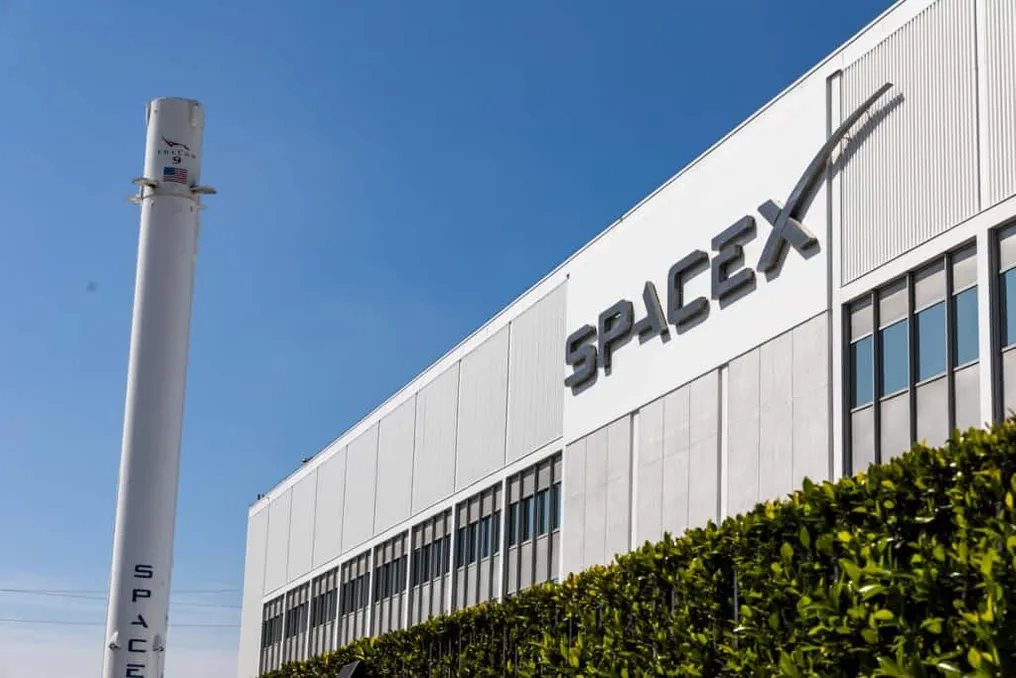
Elon Musk expressed the belief that SpaceX has the potential to reach a market value exceeding $12 quadrillion, which is equivalent to about R$ 59.76 quadrillion. This amount exceeds more than one hundred times the global economic output forecast for 2026.
In a post on the X platform, the businessman indicated that there is a path to reach such a level, although he stressed that this outcome is not guaranteed. This projection diverges from the company's current valuations and raises questions about the financial feasibility of space expansion.
According to Business Insider, at the close of Thursday, SpaceX was valued at $2.2 trillion (equivalent to R$ 10.96 trillion). For the company to reach the value estimated by Musk, its shares would need to multiply by approximately 5,500, keeping all other circumstances unchanged.
The magnitude of this goal becomes more evident when compared to the International Monetary Fund's (IMF) forecast, which estimates world production at $126 trillion (R$ 627.48 trillion) for the year 2026.
Commenting on the possibility of appreciation, Musk made a caveat, writing on X: 'It just means I believe there is this path and that the probability of reaching it is not zero.'
In this hypothetical scenario, an investment of $1,000 (R$ 4,980) in the company would turn into $5.5 million (R$ 27.39 million).
SpaceX is responsible for manufacturing satellites, spacecraft, and rockets. In the second quarter, the company generated revenue of $7.8 billion (R$ 38.84 billion), representing a 92% increase compared to the same period last year. Despite this growth, it recorded a net loss of $541 million (R$ 2.69 billion), which was less than the loss of $1 billion (R$ 4.98 billion) recorded a year earlier.
Future projections and expert analysis
Musk informed Wall Street analysts that the company plans to generate $1 trillion (R$ 4.98 trillion) by 2030. He mentioned that there is a non-zero chance of this goal being reached as early as 2029.
Even if annual revenue reached $100 trillion (R$ 498 trillion), this amount would still be below 1% of the minimum valuation suggested by Musk, if a multiple of 100 times the revenue is considered. This comparison serves to illustrate the large disparity between revenue targets and speculated market value.
Russ Mould, Investment Director at AJ Bell, associates Musk's vision with human expansion beyond Earth. He points out that space colonies could increase access to minerals, energy, and new economic opportunities, but turning this vision into an undertaking requires substantial investments and intricate operations.
Ipek Ozkardeskaya, an analyst at Swissquote Bank, also raised doubts about the inherent costs of the project, stating: 'What he doesn't say is how much it will cost to get there.'
The main obstacles highlighted by analysts include: Mould advises investors to use a very high discount rate for the company's potential future cash flows due to the risks involved. Meanwhile, Neil Wilson, Investment Strategist at Saxo UK, views the shares as a risk bet on the future of humanity. Although he believes Musk is exaggerating, he agrees that even a small fraction of the projected value would make SpaceX extremely valuable.
The $12 quadrillion valuation remains a possibility defended by the businessman, not a guaranteed outcome. The size of this figure underscores the challenge of converting space expansion into a business capable of supporting such high expectations.