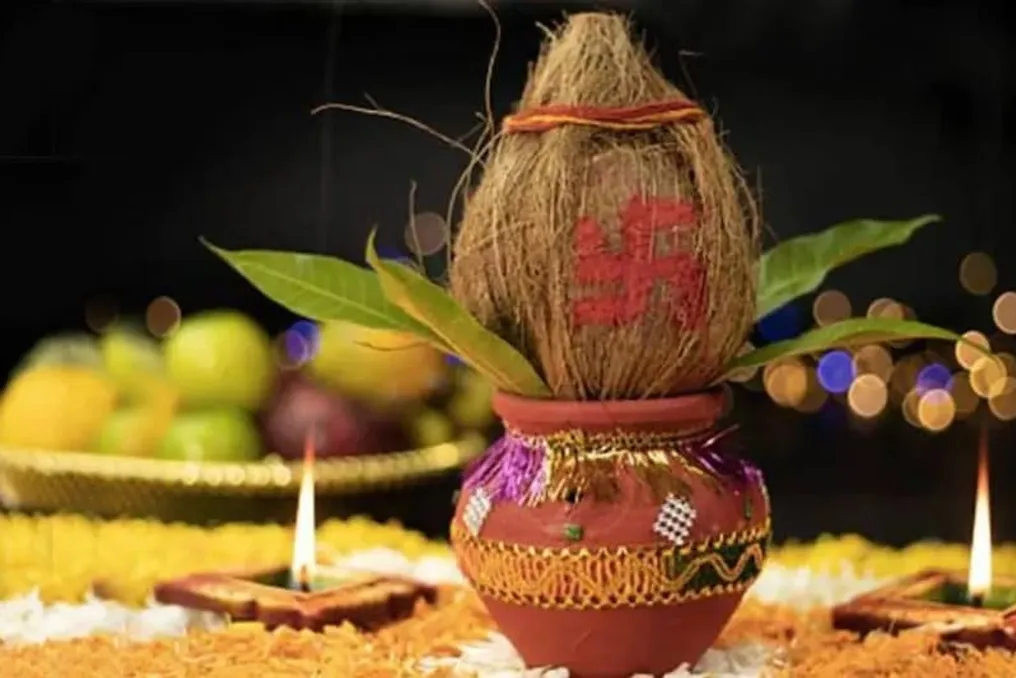
Sharadiya Navratri begins the following day, and according to tradition, Ghatasthapana, or the installation of the Kalash, is performed on the first date. If you plan to set up an altar to worship Goddess Durga, who destroys demons and monsters, the South-East direction (South-East), associated with the fire element, is considered most suitable. However, for conducting worship rituals, the North-East corner (North-East), which belongs to the water elements, is considered the most auspicious place. Worshipping Goddess Durga in this direction brings favorable results for protecting devotees from demons and villains.
In the study of Vastu Shastra, the South-East direction is associated with fire, which is a symbol of strength, energy, enthusiasm, and activity. The image of Goddess Durga is also linked to power and valor, so this direction is considered particularly suitable for her veneration. The main reason for this is the use of red garments during worship, as well as the presence of the continuous fire (Akhand Jyot), trident, and sword in the goddess's hands, which are instruments of destruction. The color red itself symbolizes the fire element, and traditionally, red shawls, red flowers, and other items are used for rituals when worshipping Goddess Durga. Furthermore, the constantly burning fire at the place of worship represents the fire element. Thus, when the goddess's altar is installed in the fire corner, harmony is achieved between the direction and the objects of worship.
Before choosing another direction, the following measures should be taken. The presence of any items related to the fire element in the water element direction can disrupt the home's energy balance. Therefore, if you wish to worship Goddess Durga in the water direction Ishan Kon, you must observe certain special rules. Instead of red fabric on the goddess's altar, light blue, green, or yellow fabric should be used. The use of the color red should be minimized, except for the flame and the red garments of Goddess Durga. In Vastu Shastra, Ishan Kon is considered the area of water, knowledge, and spiritual energy, so maintaining balance, rather than amplifying the fire element, is important when conducting rituals in this place.
However, in the South-East direction, which belongs to the fire element, red color can be used. Since the fire element is present here, the problem of elemental imbalance does not arise. Red fabric can be spread on the goddess's altar, and red flowers, red shawls, and other red ritual items can be used. During Navratri, when the nine forms of Goddess Durga are revered, choosing this direction for installing the altar is considered a way to connect the place of worship with strength and energy.
The beginning of Sharadiya Navratri occurs with Ghatasthapana on the first date. This time, the auspicious time for Ghatasthapana will be from 6:19 AM to 10:12 AM on October 11, which is about 3 hours and 53 minutes. Those who cannot perform Ghatasthapana during this auspicious time can do so during Abhijit Muhurta, from 11:44 AM to 12:30 PM.