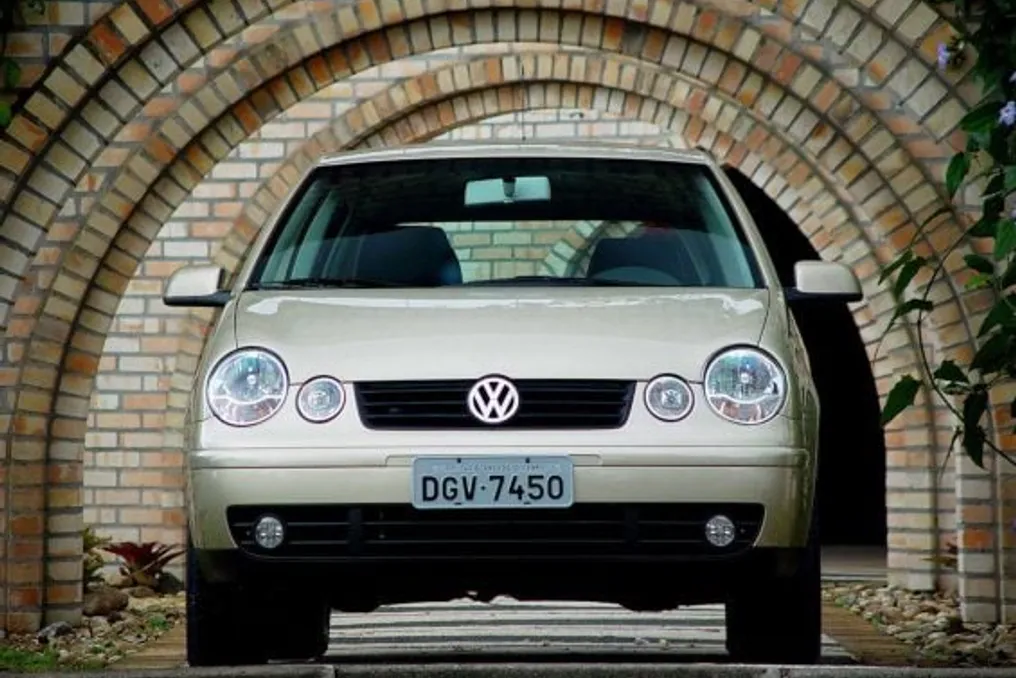
In the early 21st century, specifically in August 2002, Volkswagen introduced the Polo Hatch model to the Brazilian market, which was already successful in Europe. Although the Gol dominated sales in its segment, the German manufacturer identified an opportunity to offer a more refined product, targeting a consumer looking for something beyond the standard of national hatches.
Volkswagen accelerated the production and commercialization of this small and sophisticated European hatch. The new Polo featured a significant technical advancement for Brazilian standards of the time, being built on the PQ24 platform, which would later serve as the basis for the Fox and the Gol (G5). It incorporated modern construction methods, such as variable thickness steel longitudinal beams and laser-welded bodywork.
This process resulted in a highly rigid structure, resistant to collisions, and compliant with the rigorous safety standards of Euro NCAP. In terms of build quality and occupant protection, the Polo surpassed many of its local rivals. However, the Brazilian consumer showed little regard for such features, tending to believe that accidents affected other people, not themselves.
This lack of appreciation for safety and construction technology was a recurring pattern, as several brands attempted to promote vehicles with these attributes without achieving great acceptance in the national market. Furthermore, Volkswagen equipped the Polo with the EA111 1.0 16V engine, which featured dual overhead camshafts. This engine generated 79 hp and approximately 9 kgfm of torque, values aligned with the more current 1.0 engines of the time.
The manufacturer believed that combining an advanced body with a technologically modern engine would be enough to win over customers. However, this premise failed in practice, as the Brazilian consumer was more pragmatic. For the price of the Polo 1.0 16V, one could acquire a Gol 1.6, which offered much superior performance and more attractive acceleration for those who enjoyed driving.
This factor created the main obstacle for the new Polo. Volkswagen technicians struggled to understand why someone would opt for an older platform with a less powerful engine instead of a modern, safer, and technically superior design. The answer came from dealerships: the Brazilian consumer valued performance more than structural sophistication.
The impact was immediate, as most buyers maintained their preference for the familiar Gol 1.6, disregarding the technical advantages of the new Polo. The European hatch did not reach projected sales volumes, and its production in this configuration was quickly halted. Launched in August 2002, the Polo Hatch 1.0 16V stopped being manufactured in September 2003.
This episode illustrates a notable case of a high-quality vehicle failing due to market factors. The Polo offered greater safety, better construction, and a more updated design, but it encountered a market that prioritized other aspects. Gradually, Volkswagen realized that in Brazil, power and performance often weighed more heavily on the purchasing decision than structural advancements or safety-focused technologies. These are distinct characteristics of different markets; while the European consumer historically values protection and build quality, the Brazilian tends to place greater value on strong acceleration, quick recovery, and more powerful engines.