Intel explains the change in hardware selection criteria for gaming PCs, going beyond FPS
Read more
Olhar Digital
olhardigital.com.br

Intel explains the change in hardware selection criteria for gaming PCs, going beyond FPS

Although performance remains a crucial factor in selecting a gaming PC, it is no longer the only criterion. Due to the increasing use of computers for gaming, work, studies, and content creation, consumers have also come to value the efficiency, versatility, and durability of the equipment.

In a conversation with Olhar Digital, Intel detailed how these transformations are shaping the development of its processors and altering player behavior, with a special focus on Brazil and Latin America.

Previously, frames per second (FPS) was the main indicator of a gaming computer's performance. Today, factors such as stability, the ability to manage multiple simultaneous tasks, and energy efficiency are also considered relevant.

Intel itself emphasized that while FPS remains important, it does not tell the whole story. This shift reflects the multifunctional use of computers, where users stream live, interact via Discord, record gameplay, and edit videos on the same device.

In this scenario, hybrid architectures, which blend different types of processing cores, help distribute tasks according to system demand. Intel also presented the evolution of its line with the Core Ultra family, which integrates specific features for artificial intelligence.

This technology employs various processing units—such as CPU, GPU, and NPU—to execute functions according to their specificities. Practical applications include background removal in videos, audio enhancements, image editing, and content creation assistance tools.

The company stated that the Intel Core Ultra family aims to go beyond raw performance, expanding the PC's capabilities to keep up with an increasingly varied routine. Additionally, the 14th generation Intel Core is still offered as an option for various player profiles, thanks to broad component compatibility and configuration options.

With the constant arrival of new generations of hardware to the market, Intel advises consumers to weigh their needs before making any investment in components. The decision, according to the manufacturer, should be based on the user's real experience, and not merely on the launch of a new generation.

It is recommended to identify any limitations in the computer and check whether the bottleneck lies in the processor, graphics card, memory, or another component. Intel also suggests that buyers consult independent tests and compare performance in scenarios similar to daily use.

This caution is particularly relevant in Brazil and Latin America, regions where consumers, according to Intel, tend to keep their devices for longer and prioritize configurations with good cost-benefit.

For Intel, the next big change in the PC gaming segment will be linked to the more organic integration of artificial intelligence into the system. It is expected that AI features will stop being seen as isolated functionalities and will begin operating in various activities, from optimizing the computer itself to personalizing experiences and creating content.

The company also believes that cooperation between different processing units will become increasingly important. Thus, the evolution of the gaming PC will encompass not only speed gains but also the ability to perform more tasks with greater efficiency.

Between October 1st and 11th, Intel will promote another edition of Intel Gamer Days, its annual festival focused on offers, discounts, and experiences directed at the gaming public. This event takes place at a time when consumers are attentive to cost-benefit, versatility, and device longevity. As highlighted by Intel, choosing a new component or computer must take into account all activities performed on the PC, and not just gaming performance.
Similar stories

AI-based upscaling technologies (DLSS, FSR, XeSS): an explanation without technical jargon
Read more
olhardigital.com.br

AI-based upscaling technologies (DLSS, FSR, XeSS): an explanation without technical jargon

As games become increasingly demanding and often poorly optimized, hardware is not always capable of delivering ideal performance. To solve this problem, upscaling technologies exist that allow for a higher frame rate (FPS) with minimal loss in quality. Currently, three major graphics card manufacturers offer their solutions: DLSS, FSR, and XeSS. Despite the multitude of options, each of these technologies has its specific goals.

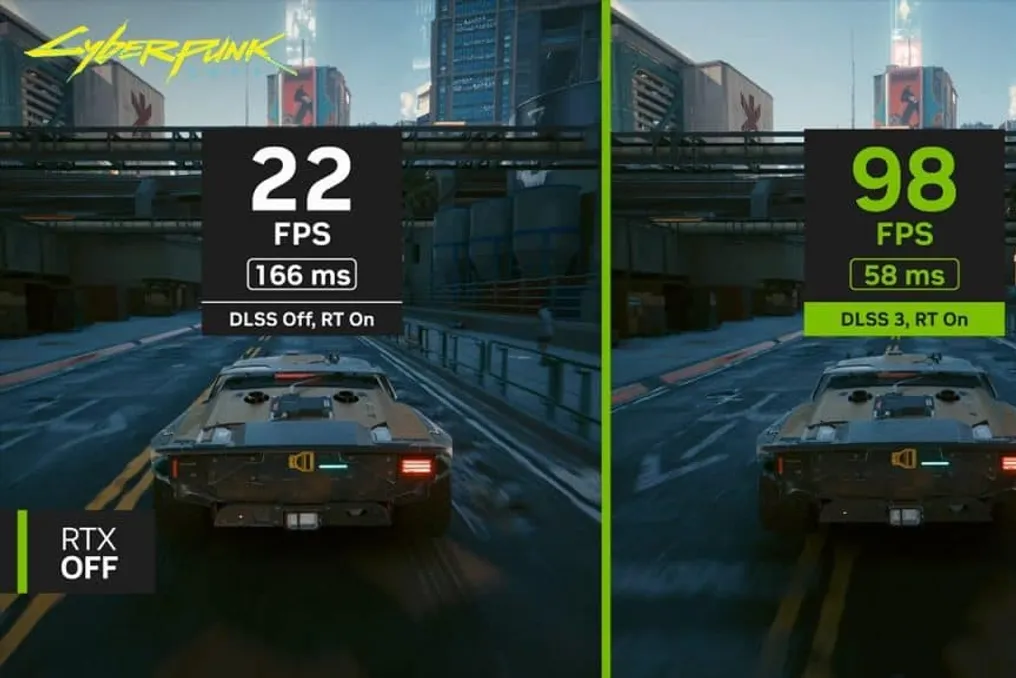
DLSS (Deep Learning Super Sampling) is an artificial intelligence-based technology from NVIDIA designed for upscaling and frame generation. The process is carried out using specialized tensor cores, motion data, and AI models that restore frames from a lower resolution to a higher one while simultaneously reducing the load on the graphics processor. Simply put, DLSS is designed to increase frame rates without significant damage to image quality.

The main advantage of DLSS is image quality. Its performance is particularly noticeable at 1440p and 4K resolutions, especially when ray tracing is enabled in supported games. This feature is constantly improving with new versions, including additions like Ray Reconstruction, which makes lighting and reflections in ray tracing cleaner. Furthermore, DLSS 4.5 Super Resolution uses five times more computational power to reduce the effect of phantom images (Monitor Ghosting) and improve motion stability.

DLSS compatibility is limited to NVIDIA graphics cards, specifically starting from the RTX 20 series. However, DLSS Frame Generation requires an RTX 40, and features such as DLSS Multi-Frame Generation and DLSS 4.5 Dynamic Multi Frame Generation require an RTX 50; information on which series will support DLSS 5 has not yet been disclosed.

FSR (FidelityFX Super Resolution) is an upscaling and frame generation technology from AMD, and its operating principle is very similar to NVIDIA's technology. However, its key difference is that it does not restrict players to one brand, even if the image quality is not as sharp as DLSS in complex scenes.

The main advantage of FSR is its compatibility. Depending on the version and game, this technology works on AMD, NVIDIA, and Intel graphics cards, making it a practical choice, especially for users who do not have an RTX graphics card. Moreover, its performance is higher when aiming for more FPS on AMD Radeon systems, older GPUs, or in hybrid hardware configurations. Even with lower quality on RTX cards, FSR is the better choice for those who do not own these cards or use outdated equipment without RTX support.

FSR compatibility depends on the brand and version of FSR being used. Although support for NVIDIA and Intel graphics cards is absent, there are unofficial community solutions that allow forcing FSR 4 files into games supporting FSR 3.1 on NVIDIA cards. Nevertheless, because this is an unofficial method, it lacks proper optimization and carries a risk of hardware incompatibility.

XeSS (Xe Super Sampling) is an AI-based upscaling technology from Intel. The company developed XeSS for optimal operation with Intel Arc graphics cards, and its functioning is analogous to previous technologies: it renders games at an internal, lower resolution and then restores the image to achieve a sharper final output. However, unlike DLSS, some of its functions may work on compatible GPUs that are not Intel products, depending on the game itself.

A major advantage of XeSS is its use on Intel hardware. It provides impressive performance on Intel Arc systems. On these GPUs, the use of dedicated AI instructions (XMX) ensures superior image quality and optimized performance, which can compete with DLSS on the same GPUs. On Intel's own GPUs, XeSS utilizes dedicated AI cores called XMX (Xe Matrix Extensions). Thus, it provides better image quality and a greater frame rate boost, but this is limited to Intel Arc graphics cards and Intel Core Ultra integrated graphics. For other hardware, XeSS uses DP4a. This function provides lower performance but still offers a significant boost in game smoothness. Additionally, its compatibility is very broad.

Despite high hardware compatibility, XeSS is heavily limited by game support. This technology is not as established as DLSS or FSR, especially in the most popular PC games released. Although growth is currently observed, availability remains a key factor to consider.

In conclusion, the choice of technology depends on the available hardware. For an RTX-compatible NVIDIA system, DLSS is preferable. For older cards or those seeking support across various hardware types, FSR is better suited. Finally, for Intel Arc and integrated graphics, XeSS will be the best option. The article on AI-based upscaling was first published in Olhar Digital.

Popular