A Deep Lesson of Navaratri: Devotion Must Lead to Personal Transformation
Read more
IOL
iol.co.za

A Deep Lesson of Navaratri: Devotion Must Lead to Personal Transformation

The festival of Navaratri poses a fundamental question to people: what must change within us on the tenth day after nine nights of fasting and devotion? It is easy to observe the festival, but much harder to achieve inner transformation. Performing the ritual, offering prayers, and participating in traditions passed down through generations are simple. The true test of devotion manifests later: in our interactions, the decisions we make, our patience, our ability to overcome mistakes, and the compassion we show others.

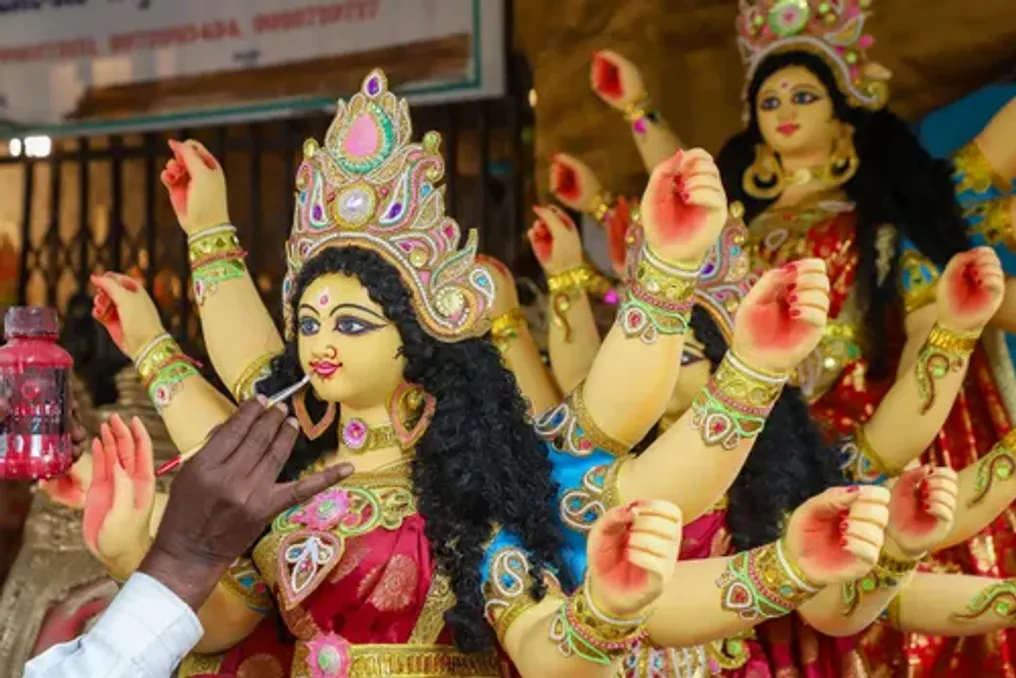
For this reason, Navaratri goes far beyond the nine nights of religious rites; its core is a call for inner transformation. From October 11th to 19th, millions of Hindus will worship various manifestations of the Divine Mother. During this time, homes will be purified, altars decorated, temples filled, and communities gathered for celebration. However, beneath all the colors, music, dances, and rituals lies a deeper purpose—to awaken the qualities embodied by this festival within ourselves.

The nine nights can be seen as a journey from weakness to strength, from ignorance to wisdom, from fear to courage, and from selfishness to compassion. The divine forms we worship embody qualities that expect not just admiration from us, but active cultivation. Their battle against evil prompts us to confront our own internal enemies—anger, arrogance, envy, greed, especially selfishness, impatience, and indifference. This is where the meaning of Navaratri becomes personal.

One can perform all the rituals while remaining unchanged. One can pray for hours while continuing to speak rudely to loved ones. One can fast for purification while harboring resentment. One can revere Shakti, the divine feminine power, yet fail to show respect and dignity to women in one's own life. If devotion does not affect behavior, something important has been lost.

Thus, Navaratri calls for taking spirituality beyond the temple. Fasting can teach self-control. Prayer can foster humility. Stories can inspire courage. Worship reminds us that power carries responsibility. And the presence of family and community reminds us that our spiritual life ultimately reflects how we treat other people. Above all, Navaratri must deepen compassion.

What good is worshipping the Divine in a certain form if we cannot recognize dignity in the person standing before us? What does devotion mean if it does not make us more patient with children, more caring towards the elderly, more generous to the vulnerable, and more respectful to those who think or worship differently?

Our traditions have provided us with powerful stories and enduring symbols. But their purpose is not merely to preserve the past; they are intended to shape the present. Otherwise, religion risks becoming a ritual without reflection, and celebration—a transformation without change.

Perhaps this Navaratri we should ask ourselves some simple yet uncomfortable questions: Am I becoming more truthful? More disciplined? Less angry? More compassionate? Less judgmental? Bolder in defending what is right? More willing to serve? And ultimately, am I becoming a better person?

These questions are important because our children watch us. They learn about Hinduism far more from our lifestyle than from the number of rituals we perform. They absorb dharma from our choices when no one is watching. They understand compassion when they see it practiced. This is the legacy worth passing on—not just the ability to perform a ritual, but the ability to live its meaning.

When the ninth night ends, the lamps will be extinguished, decorations removed, and ordinary life will resume. But the festival's purpose should not end with it. Discipline must remain. Courage must remain. Compassion must remain. The resolve to overcome our lower selves must persist.

The greatest tribute we can pay to the Divine Mother is not simply bowing before her, but becoming worthy of what she represents. May Navaratri become not just nine nights of worship, but nine nights that change our way of life for the remaining 356 days. Because the highest victory celebrated during Navaratri is not only the triumph of the Divine over evil in ancient history, but also the triumph of good within us over our inner weaknesses. And this victory must be renewed every day.
Similar stories

During Sharadiya Navratri 2026, it is recommended to install the Kalash in a specific direction; the auspicious time will be tomorrow morning.
Read more
www.aajtak.in

During Sharadiya Navratri 2026, it is recommended to install the Kalash in a specific direction; the auspicious time will be tomorrow morning.

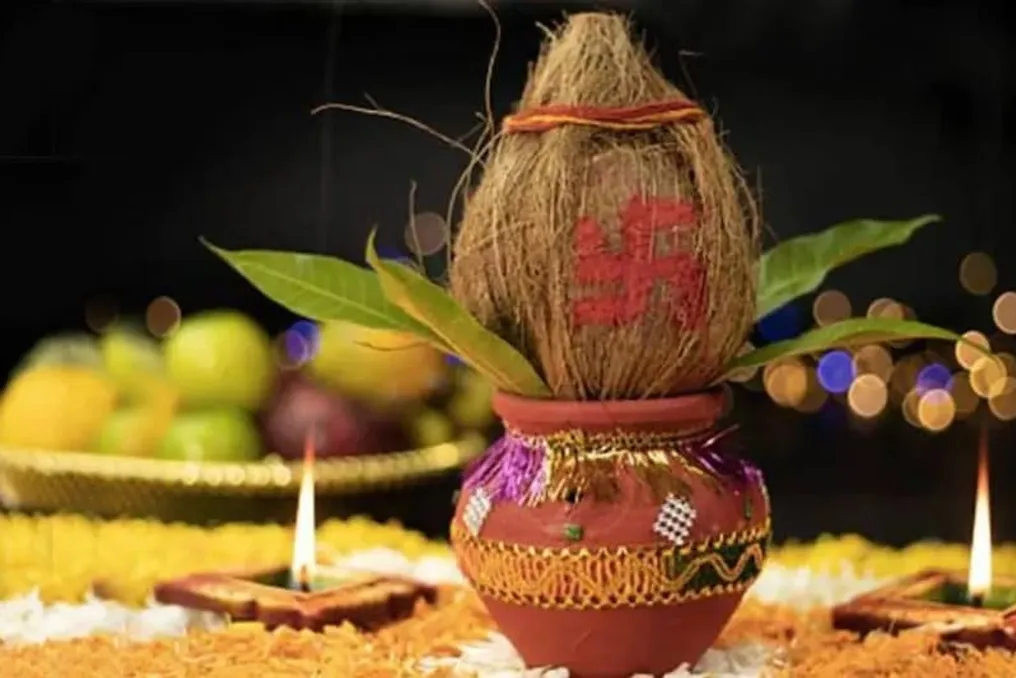
Sharadiya Navratri begins the following day, and according to tradition, Ghatasthapana, or the installation of the Kalash, is performed on the first date. If you plan to set up an altar to worship Goddess Durga, who destroys demons and monsters, the South-East direction (South-East), associated with the fire element, is considered most suitable. However, for conducting worship rituals, the North-East corner (North-East), which belongs to the water elements, is considered the most auspicious place. Worshipping Goddess Durga in this direction brings favorable results for protecting devotees from demons and villains.

In the study of Vastu Shastra, the South-East direction is associated with fire, which is a symbol of strength, energy, enthusiasm, and activity. The image of Goddess Durga is also linked to power and valor, so this direction is considered particularly suitable for her veneration. The main reason for this is the use of red garments during worship, as well as the presence of the continuous fire (Akhand Jyot), trident, and sword in the goddess's hands, which are instruments of destruction. The color red itself symbolizes the fire element, and traditionally, red shawls, red flowers, and other items are used for rituals when worshipping Goddess Durga. Furthermore, the constantly burning fire at the place of worship represents the fire element. Thus, when the goddess's altar is installed in the fire corner, harmony is achieved between the direction and the objects of worship.

Before choosing another direction, the following measures should be taken. The presence of any items related to the fire element in the water element direction can disrupt the home's energy balance. Therefore, if you wish to worship Goddess Durga in the water direction Ishan Kon, you must observe certain special rules. Instead of red fabric on the goddess's altar, light blue, green, or yellow fabric should be used. The use of the color red should be minimized, except for the flame and the red garments of Goddess Durga. In Vastu Shastra, Ishan Kon is considered the area of water, knowledge, and spiritual energy, so maintaining balance, rather than amplifying the fire element, is important when conducting rituals in this place.

However, in the South-East direction, which belongs to the fire element, red color can be used. Since the fire element is present here, the problem of elemental imbalance does not arise. Red fabric can be spread on the goddess's altar, and red flowers, red shawls, and other red ritual items can be used. During Navratri, when the nine forms of Goddess Durga are revered, choosing this direction for installing the altar is considered a way to connect the place of worship with strength and energy.

The beginning of Sharadiya Navratri occurs with Ghatasthapana on the first date. This time, the auspicious time for Ghatasthapana will be from 6:19 AM to 10:12 AM on October 11, which is about 3 hours and 53 minutes. Those who cannot perform Ghatasthapana during this auspicious time can do so during Abhijit Muhurta, from 11:44 AM to 12:30 PM.

10 Famous Durga Temples in India: A Review of Major Sanctuaries for Navratri Celebrations
Read more
www.aajtak.in

10 Famous Durga Temples in India: A Review of Major Sanctuaries for Navratri Celebrations

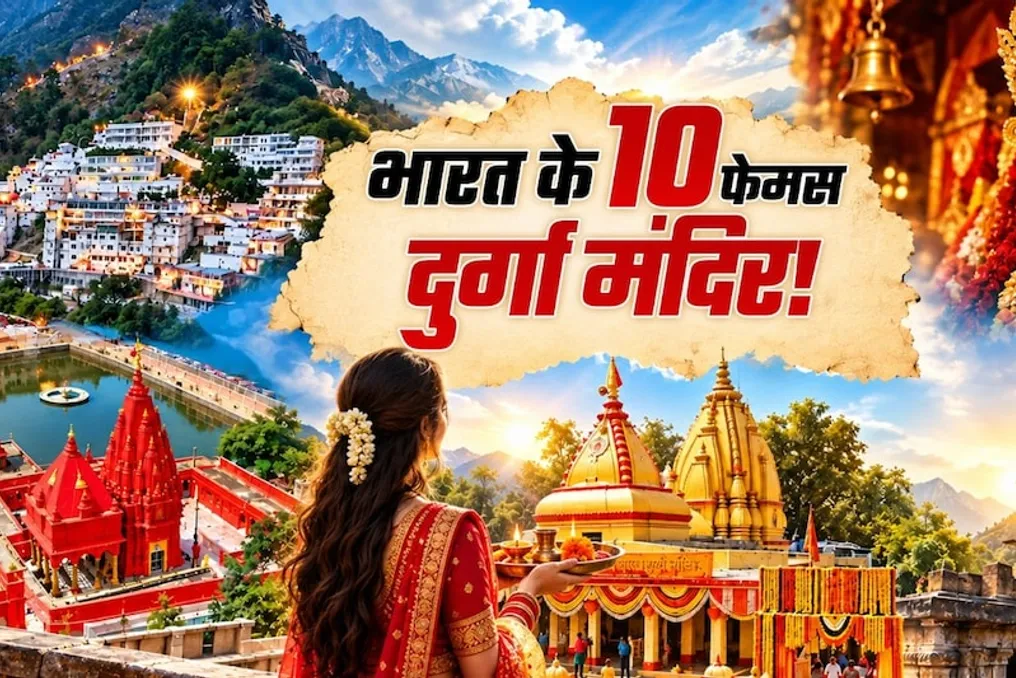
Ahead of the start of Sharadiya Navratri, scheduled for October 11th, devotees will worship nine different aspects of the Mother during these nine days. If you plan to visit a Mother Durga temple, there are ten famous places in India where pilgrims can go. Among these renowned temples, from Vaishno Devi to Sharda Mata in Maihar, large numbers of devotees from various parts of the country gather to see the deity during the sacred Navratri days.

These temples are distinguished by unique traditions, historical legends, and special beliefs, making them truly special. Below is a review of ten famous Durga temples whose visit is recommended at least once in a lifetime.

Durga Temples in India

Vaishno Devi, Jammu and Kashmir

Vaishno Devi, located in Katra, Jammu and Kashmir, is one of the most famous pilgrimage centers. To reach the shrine, pilgrims have to undertake an ascent of about 12 kilometers. In the sacred cave, there are three natural lingams considered symbols of Mahakali, Mahalakshmi, and Mahasaraswati.

Kamakhya, Assam

The Kamakhya Temple, situated on Nilachal Hill in Guwahati, is among the 51 Siddhipetas. It is known for its beliefs related to feminine power and fertility. The Ambubachi Mela is held here annually, attracting pilgrims from all over the country. Special religious rituals are also conducted at the temple during Navratri.

Dakshineswar Kali, West Bengal

The Dakshineswar Kali Temple, located on the banks of the Hooghly River near Kolkata, is dedicated to Goddess Bhavatarini. This temple was built in the 19th century by Princess Rasamini. The place is also associated with Ramkrishna Paramahansa. The temple's architecture with nine spires and its serene atmosphere attract visitors.

Ambaji, Gujarat

The Ambaji Temple, located in Gujarat, near the border with Rajasthan, is a major Siddhipeta. There is a belief that a part of Mother Sati's heart fell here. Instead of an image of the goddess, the sacred Shri Yantra is worshipped in the temple. A special fair is held here during the full moon in Bhadrapada, which involves a large number of devotees.

Maihar Vali Sharda Mata, Madhya Pradesh

The Temple of Mother Sharda in Maihar, Madhya Pradesh, is famous across the country. This temple, built on the Trikut hill, is accessible to pilgrims via stairs. Here, Mother Sharda is revered as the goddess of knowledge and power. A huge number of visitors gather at the temple during Navratri.

Baglamahi, Himachal Pradesh

The Temple of Mother Baglamahi, located in the Kangra district, Himachal Pradesh, is known for its religious beliefs. Mother Baglamahi is considered one of the ten Mahavidyas. Pilgrims come here for special worship and offerings. This temple, situated in a mountainous region, is one of the main centers of faith.

Bhramaramba Mallikarjun, Andhra Pradesh

This temple, located in Srisailam, Andhra Pradesh, is included among the 12 Jyotirlingas of Lord Shiva and the principal Siddhipetas of the Goddess. Here, Mother Bhramaramba is worshipped along with Lord Mallikarjun. This temple, dedicated to Shiva and Shakti, holds both religious and historical significance.

Bansankri, Karnataka

The Bansankri Temple, located in the Badami region of Karnataka, is dedicated to Mother Shakambhari. According to legend, the goddess protects her followers and grants them well-being and prosperity. The tradition of conducting special worship during Rahukala is also known. The Bansankri fair held at the temple attracts many pilgrims.

Naina Devi, Uttarakhand

The Temple of Mother Naina Devi, located on the banks of Nainital Lake, is very popular among devotees. According to legend, it was here that the eye of Mother Sati fell. In the sanctuary, Mother Naina Devi, as well as Mother Kali and Lord Ganesha, are worshipped. This temple, situated near mountains and a lake, allows one to experience both faith and natural beauty.

Durga Kund, Varanasi

The Durga Kund Temple, located in Varanasi, Uttar Pradesh, is an ancient temple dedicated to Mother Durga. Its distinctive feature is the reddish color of the structure and the pond located next to the temple. Special rituals are conducted here during Navratri, and a large number of pilgrims come to see the goddess. For pilgrims visiting Kashi, this temple represents an important religious site.

Is it necessary to mourn after the thirteenth day of death? Three mistakes that hinder liberation
Read more
www.aajtak.in

Is it necessary to mourn after the thirteenth day of death? Three mistakes that hinder liberation

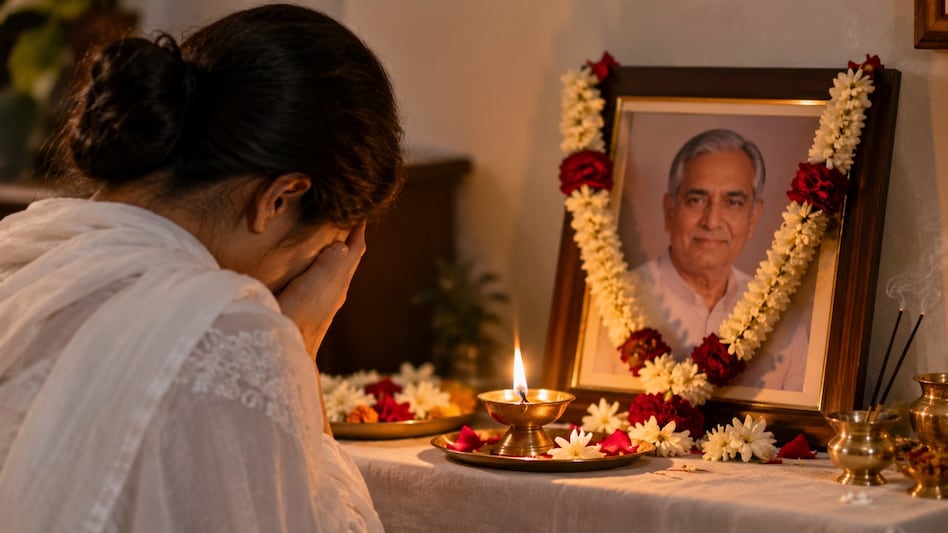
Death is a physical process; the soul is immortal. The death of the body is not the end of life, but merely a transition from one state to another. The body dies, but the soul's journey continues uninterrupted. It is considered appropriate to mourn the deceased with family members and relatives up to the thirteenth day. However, constantly mourning the deceased for many years, continuously lighting candles in front of their photograph, etc., only creates obstacles on the soul's further path. Thus, the deceased's loved ones themselves can unconsciously become an obstacle on the path of their soul.

After a person's death, various religious rituals are held in the family over several days. The purpose of these rituals is to ensure the successful journey of the soul. From a religious perspective, lighting candles in the home for 13 days is seen not just as an act of illumination. Fire and light symbolize purity, knowledge, and guidance. Therefore, a candle lit in memory of the deceased expresses the wish that the departed's further journey will be prosperous, and the family, while showing respect to him, prays to God for his blessed transition.

The future movement of the being (in the form of a body) depends on its karma. The significance of rituals such as pindadanas, conducted within 13 days after death, becomes evident. Although the methods of conducting these rituals may vary depending on different regions and traditions, everyone should observe certain rules during this period.

During this period, respect should be shown to the deceased, but one should not allow oneself to become excessively attached. Crying after the loss of a loved one is natural, and remembering them in front of their photograph is emotionally comforting. However, repeatedly calling out for the deceased, refusing to accept their passing, and constantly mourning them does not serve the interests of that soul. Instead, it is better to perform virtuous deeds, such as prayer, tarpan, sharaddha, giving, and service in their honor.

This 13-day period also gives the family the opportunity to gradually accept the reality of death. From a religious point of view, the goal of the rituals performed during this time is to fulfill the duty to the departed and to wish them a blessed transition. Simultaneously, the family must begin preparing for a return to their own lives.

Therefore, constantly lighting candles even after the thirteenth day after death can be viewed not just as a tradition, but as a symbol of striving for light, hope, and a blessed transition. One should remember the deceased with respect, pray for them, and perform good deeds in their name. Grief is a natural reaction. However, it is more appropriate to give grief a form that expresses respect for the deceased while simultaneously giving the family the strength to move forward in life.

Popular