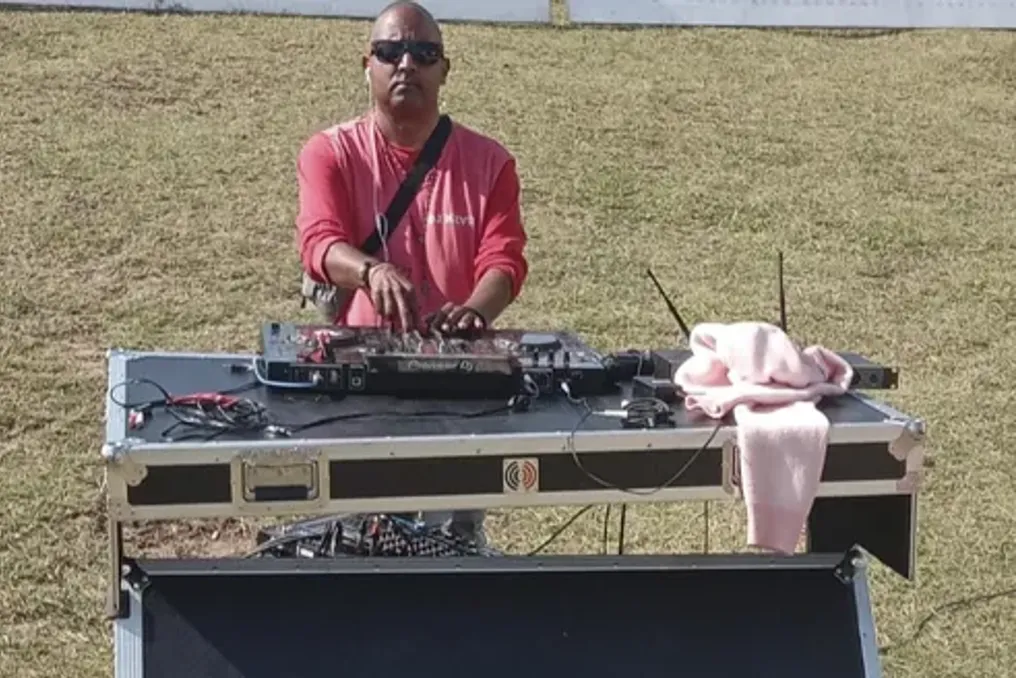
Kevin Lazarus lost his sight three years ago due to diabetic complications. Despite not being able to see a boiling kettle, he can hear the sound of boiling, recognize the texture of a tea bag, and determine the fill level of a cup by the sound of pouring water, allowing him to brew tea independently.
The 49-year-old Pietermaritzburg resident lost his vision after developing diabetic retinopathy—a complication of diabetes that damages the small blood vessels in the retina and can lead to blindness. His story coincides with Sight Day, which is held to raise awareness about vision problems and the importance of eye health.
Before losing his sight, Lazarus worked in Johannesburg for over ten years, supporting business and developing skills. He collaborated with the Department of Trade and Industry, the National Youth Development Agency, and Tshwane University of Technology, helping young people in Shosongwe start small businesses and create jobs. Additionally, he was a DJ and owned an event organizing company, releasing his mixes on the national radio station under the pseudonym DJ Kevin SA.
His vision gradually deteriorated. Lazarus admitted that he never checked his blood sugar or blood pressure because diabetes is often called a 'silent killer,' and he did not experience symptoms that could warn of problems. Today, he cannot drive, use a computer, or recognize faces; during the day, he sometimes notices shadows or movement, but at night, his vision is completely black.
Adapting to blindness was not instantaneous; he went through a period of anger and depression, questioning the reasons for what happened. However, with the support of his mother, Selvi Lazarus, his uncle, and extended family, he began accepting the new reality, deciding to 'adapt to it and become capable, instead of constantly telling myself I am disabled.'
His other senses began to play an increasingly significant role: his hearing improved, his sense of touch intensified, and his body started adapting to the absence of sight. Lazarus uses his previous skills, adapting them to new conditions, including DJing. At the 'Eye Can Walk' event, organized by the KwaZulu-Natal Blind and Deaf Society (KZNBDS), he was back behind the decks. He now aims to transition into broadcasting.
Lazarus's ambitions extend beyond personal achievements: he wants to create more opportunities for blind and visually impaired people so they can develop skills and find employment. He believes there are opportunities in call centers, operating stations, basic computer work, radio, and entrepreneurship, but emphasizes the need to adapt training programs and workplaces for people with visual impairments.
The President of KZNBDS, Vita Sevukuran, told the publication POST that millions of people across South Africa live with some degree of visual impairment, and many face obstacles in education, employment, mobility, technology, and full participation in society. She noted that the problem is not only the lack of jobs but also the combination of limited access to education and skill development, unavailable jobs and technologies, transport barriers, and employer misconceptions about the abilities of blind or visually impaired people. Sevukuran added that this is particularly relevant in a country with high unemployment, making skills training, assistive technology, rehabilitation, employment, and creating pathways to a sustainable lifestyle extremely important for organizations like KZNBDS so that people with visual impairments can participate in society independently and meaningfully.