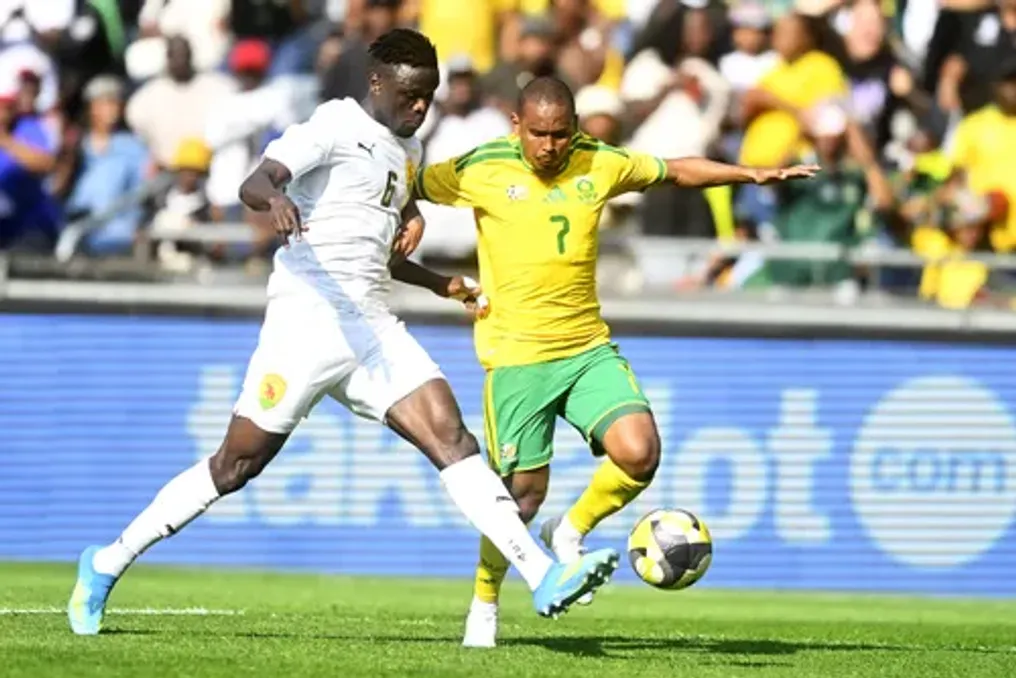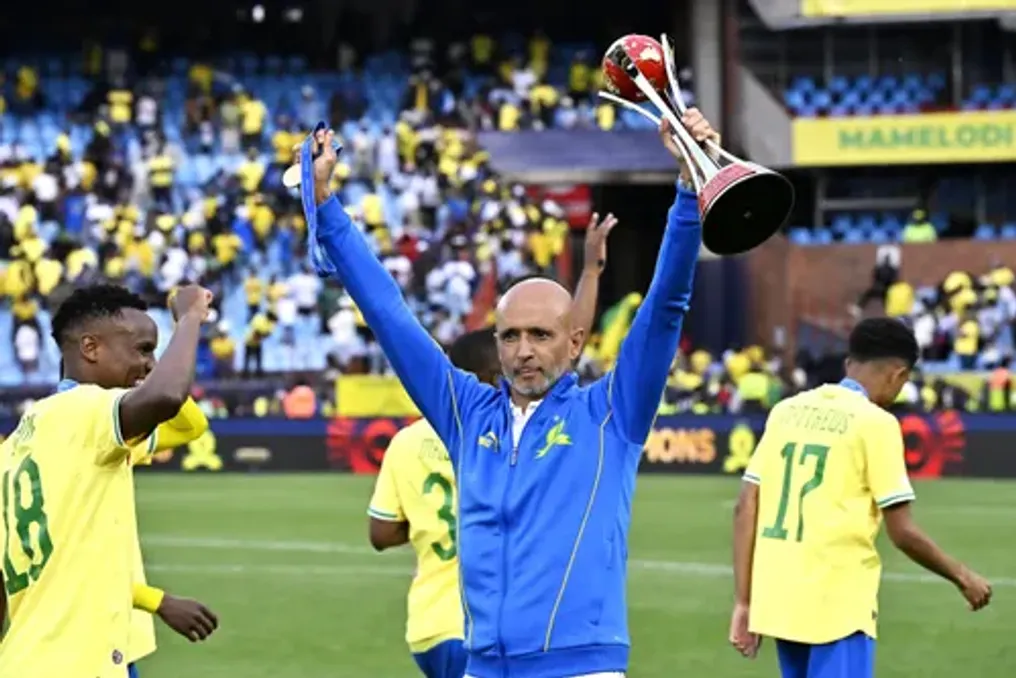
The new long-term agreement between Miguel Cardoso and Mamelodi Sundowns demonstrates that he is precisely the specialist the club needs to reach a global level. Although it was difficult to imagine that the 'honeymoon phase' would last so long, after two years of cooperation, Mamelodi Sundowns and Miguel Cardoso continue to show excellent results, confirming that they are a perfect match.
Cardoso confirmed that he signed a new long-term contract after evaluating their relationship and achievements. Among the club's successes are victories in the Betway Premiership, CAF Champions League, and FIFA African-Asian-Pacific Cup. There is a possibility of another success by Saturday evening, especially if Cardoso helps Sundowns overcome the setback in domestic cup tournaments by winning the MTN8 final against rivals Orlando Pirates at the Moses Mabhida stadium in Durban.
Regardless of whether they win this trophy, Sundowns and Cardoso deserve further time together. They have demonstrated a wonderful complement to each other, finding harmony through success and becoming a serious obstacle for opponents.
Final Whistle
Cardoso's arrival was quite unexpected, even for the article's author. Initially, he seemed like a temporary solution brought in after Sundowns failed to win the title in the previous season. As a South African, the author was also disappointed by the thought that compatriots such as Rulani Mokwena and Mangoba Ngkiti were deemed incapable when the project seemed close to completion, despite all their work in laying foundations and building the team.
However, the author admits they were wrong. Sundowns showed that while the pair was good at building the foundation and structure, the club needed a different approach to complete the task. That is when Cardoso appeared. The Portuguese coach became what the club needed. He not only brought things to a conclusion by winning the CAF Champions League after a ten-year hiatus but also helped prepare the team for competition on the world stage.
Sundowns' recent victory in the African-Asian-Pacific Cup was no accident. Although their performances in the FIFA Club World Cup did not yield the desired results, they demonstrated that in terms of competitiveness and ambition, the team is capable of competing with some of the best global teams. Cardoso continued the foundation laid by his predecessors, especially regarding the squad. It is noteworthy how easily new players, such as Bryan Leon, who has become the main scorer, and Cassius Mailula, who looks like he has never left the club, integrated into the team.
The author admits that Cardoso sometimes seems capricious, constantly complaining. However, upon careful listening to these complaints, one can hear a person who cares not only about Sundowns but also about the development of South African football. The author notes that although predecessors might have raised similar issues, you get used to them over time, especially if it's all you've ever known.
Mokwena and Ngkiti, having succeeded in the PSL, got used to the conditions of the South African field. Perhaps they would prefer higher quality pitches, but it is difficult to compare what you always knew with what you have never experienced. Cardoso, on the other hand, brought a different perspective, having experience working in his native Portugal and North Africa.
It was also impressive how Cardoso handled the situation concerning the Bafana Bafana national team. When three of his players—Obri Modiba, Tebogo Mokokena, and Batusi Aubaas—returned to the team injured before the MTN8 final, he maintained his position: at that time, they were national team players, and their situation would be assessed upon their return. This did not mean he was pleased about their absence; on the contrary, he understands that clubs are obliged, according to FIFA rules, to release suitable players for international matches, although what happens during their absence is not always under the club's control.
Once again, the MTN8 final may end in disappointment for Cardoso and Sundowns in Durban. But one thing the author has begun to appreciate is that this partnership deserves continuation. They bring out the best in each other, and their relationship shows that sometimes the right person comes along to take a project to the next level. Regardless of whether they lift the trophy on Saturday evening, Sundowns and Cardoso have given enough reason to believe that this union is worth preserving.