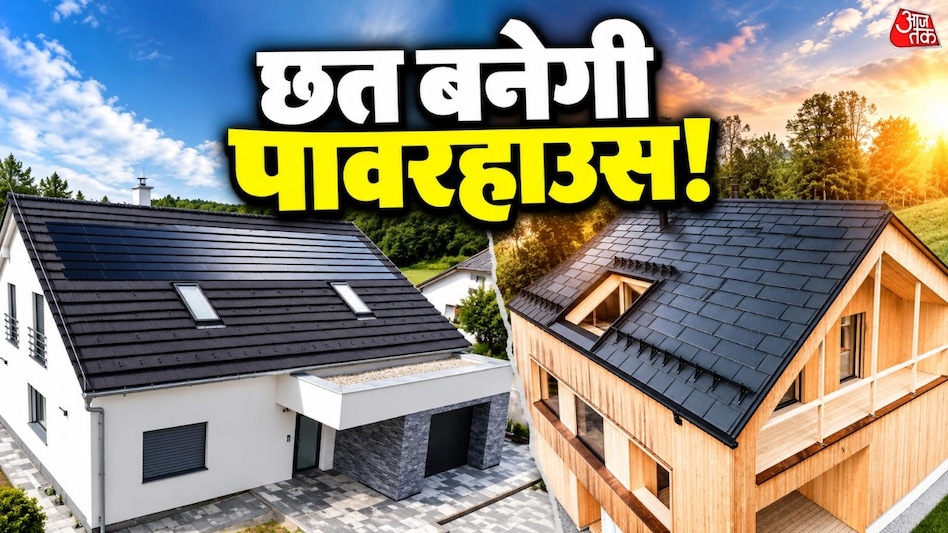
Solar Tile Technology for Roofs: Advantages, Disadvantages, and Usage Prospects
Read more
Aaj Tak
www.aajtak.in

Solar Tile Technology for Roofs: Advantages, Disadvantages, and Usage Prospects

Currently, installing solar panels on residential roofs is becoming a common practice as it allows for electricity generation from sunlight and reduces electricity bills. However, there is an alternative technology that generates energy directly using tiles, eliminating the need to install separate solar panels.

This technology is called Solar Roof Tiles. Although they may resemble ordinary roofing tiles externally, they integrate elements capable of converting sunlight into electricity. Despite this technology's existence, its application in most homes remains limited.

Unlike standard solar panels, which are mounted on top of the roof, solar roof tiles are part of the roofing material itself. These tiles contain special cells that convert sunlight into electrical energy. The advantage of this approach is maintaining the aesthetic appearance of the roof while simultaneously generating electricity. This is particularly relevant for people who do not wish to install large solar panels, as well as for old and historic buildings where changes to the external appearance are restricted.

The main barrier to the popularity of solar roof tiles is their high cost. According to a BBC report, building a roof with such tiles can cost almost twice as much as installing standard solar panels, and this does not account for repair costs. Furthermore, because the size and design of each roof is unique, additional work is required for designing and fitting the tiles before installation, as well as hiring qualified craftsmen, installers, and electricians, which increases the time, effort, and financial costs compared to installing standard panels.

Another disadvantage relates to lower energy generation efficiency compared to traditional panels. This is due to their smaller size and their proximity to the roof surface, which limits air circulation. Increased temperature can negatively affect the ability of solar cells to produce energy. Moreover, colored tiles may have reduced efficiency, as darker surfaces usually absorb sunlight better.

The repair procedure is also complex. When a standard solar panel breaks, it is relatively easy to identify the damaged element, whereas with solar tiles, detecting and fixing a fault can be much more difficult. Removing a damaged tile in the center of the roof may require access to adjacent elements, creating a risk of micro-cracks when walking on the roof, which could cause further problems later. Therefore, when building, one must consider not only the initial price but also future maintenance costs.

Several large global companies, including Elon Musk's company Tesla, have attempted to implement solar roof tile technology. However, according to BBC data, Tesla removed the solar roof option from its website in August 2026. The reason cited was declining sales and ongoing lawsuits related to sharp price increases. This case demonstrates that product success depends not only on innovation and attractive design but also on its cost, performance, and ease of installation.

Work to improve solar tile technology continues. Companies such as Swiss Freesuns are striving to perfect this system. One method under development is matrix shingling, where solar cells are cut into thin strips and layered on top of each other like shingles. This construction aims to minimize the impact of shading on the power flow. Work is also underway to simplify the design process using software, which could potentially reduce the time and cost of manufacturing tiles for a specific roof. Nevertheless, how quickly and widely this technology becomes available depends on further development.

If the priority is achieving maximum energy output at minimum cost, standard solar panels remain the more suitable choice at present. However, if new construction or roof replacement is planned, and an integrated solar design is desired, solar tiles are worth considering. Overall, the main challenge for solar tiles is not so much energy generation as achieving a low price point with high performance and simplified maintenance. Until these issues are resolved, the use of solar tiles will likely remain limited compared to conventional solar panels.
Similar stories

New type of solar panels may increase energy output by 25%
Read more
olhardigital.com.br

New type of solar panels may increase energy output by 25%

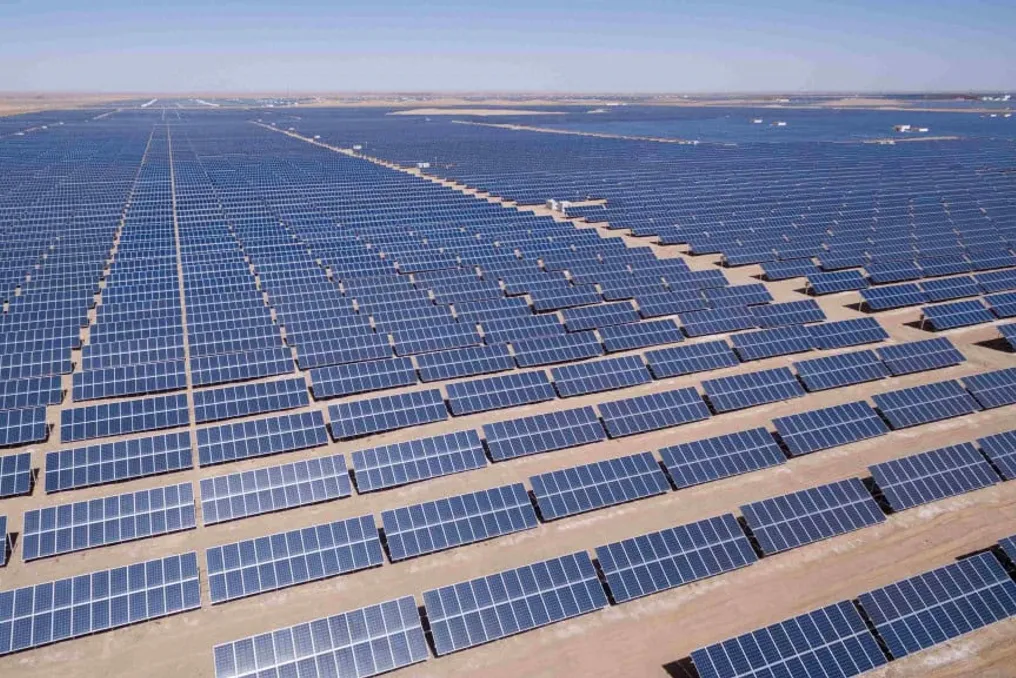
Solar panel manufacturers in the United States are developing a new technology capable of boosting the energy generation of existing devices by up to 25%. This technology, called solar tandem, combines two or three layers of materials for more efficient utilization of solar radiation and is approaching commercialization.

Companies such as Tandem PV, First Solar, and Hanwha Qcells report being close to launching initial models after technical testing and certification. This progress occurs in a sector where China controls about 80% of the global solar panel market, both directly and through its components. This information was obtained by The New York Times.

The tandem technology involves adding extra layers of materials to traditional solar cells, which typically use only a single layer of silicon. This structure allows different materials to capture different parts of the solar radiation, thereby increasing the amount of electricity produced.

Qcells, a South Korean company that acquired the German manufacturer Qcells in 2012, is testing its panels in laboratories in Germany, as well as in open fields in the US, Australia, Cyprus, and South Korea. These devices are subjected to various conditions to verify their durability, including exposure to LED lamps and tests using pieces of ice dropped onto the panels, simulating hail. The goal of these tests is to ensure that the devices maintain their performance over the expected service life of 20–30 years.

Fabian Fertig, who is responsible for R&D of tandem panels at Qcells, explained to the NYT that stability is one of the key factors that must convince energy companies, investors, and financial institutions to invest in this technology.

Despite the potential for higher generation, tandem panels still face a serious obstacle—cost. Some estimates suggest they could cost three to three and a half times more than standard panels. According to a report by the Solar Energy Industries Association, the purchase and installation cost of standard panels for solar power plants in the United States ranges from $0.93 to $1.06 per watt. The price difference could be a decisive factor in adopting the new technology, especially considering the prices set by Chinese manufacturers.

Andres Glusky, CEO of the energy company AES, told the newspaper that cost will be crucial in determining the success of tandem panels. China's production capacity also poses a challenge for manufacturers from other countries.

Another point requiring attention is the degradation of panels over time. Energy companies tend to be cautious when implementing new technologies, especially when equipment is expected to function for decades. Tandem PV from California claims that it tested its panels under various conditions in the United States over the past year and recorded an annual degradation of less than 1%, according to its CEO Scott Wharton.

Qcells became the first manufacturer to independently certify a tandem panel according to standards set by Underwriters Laboratories and the International Electrotechnical Commission.

In addition to increasing electricity generation, tandem panels can allow solar power plants to generate the same amount of energy using less area and fewer materials. Industry experts suggest that the equipment could reach a power coefficient above 31%, while the average figure for solar power plants in the United States is around 24%.

This progress is happening during a period of growing electricity demand in the country. According to the Energy Information Administration, in 2025, solar energy provided nearly 9% of the electricity generated in the United States, compared to 3% in 2020. For manufacturers from the North American country, developing this technology before Chinese companies reach a similar level could help restore their position in the industry. However, widespread adoption will depend on costs and independent tests confirming the reliability and longevity of the new panels.

Design agency Filament developed modular solar collector Solaris Kit for hot water access
Read more
designindaba.com

Design agency Filament developed modular solar collector Solaris Kit for hot water access

Filament, a design agency based in Glasgow, has created a modular solar thermal collector system in a flat-pack format. The goal of the development was to increase the accessibility of hot water in communities with limited resources.

The system, named Solaris Kit, is designed to be easily transported, assembled with basic tools, and installed both on roofs and in open areas. After installation, the prism-shaped device silently converts solar energy into hot water, eliminating the need to burn fossil fuels.

Solaris Kit enables shared access to hot water. A prototype of the system was tested under conditions simulating dust, wind, UV exposure, and rough handling, and was also used in rural clinics in Rwanda.

The low profile of the device allows it to blend harmoniously with the local architectural landscape, and the flat-pack design enables communities themselves to participate in the installation and maintenance process. The ambition of Solaris Kit is to make sustainable technologies more meaningful through environmentally responsible design that considers real-world operating, installation, and maintenance conditions by people.

By transforming solar thermal collectors into a modular, repairable, and locally manageable system, this project transforms them into infrastructure for local communities.

Eskom extends grace period for solar panel owners to register without paying fees
Read more
iol.co.za

Eskom extends grace period for solar panel owners to register without paying fees

The power utility Eskom has extended the waiver of registration fees for eligible solar battery installations connected directly to its grid. This grants customers directly connected to the grid additional time to register their systems without incurring any charges.

The company announced this on Wednesday, clarifying that the waiver applies to customer-owned generation systems with a capacity of up to 50 kVA connected to the distribution network. Eskom emphasized that while the waiver removes registration costs, it does not change the fundamental requirement to register qualified generation facilities connected to the grid.

Junayd Munshi, Executive Head of Eskom's Distribution Group, stated that 'Eskom supports the ongoing growth of the residential solar sector and the more active participation of customers in the energy transition, which Eskom has revised in line with best international practices. Registration is a standard feature of modern electrical systems as countries integrate more and more customer-owned generation into their grids.'

He added that 'this process allows for the safe and efficient integration of customer-owned generation into the overall network serving all consumers, while laying the groundwork for bidirectional smart meters, tariff and credit compliance, and future flexibility services.'

Who is eligible for the concession?

The concession provides eligible residential customers with extra time to complete the process without having to pay Eskom's registration fees. It is important to note that this only applies to customers who receive electricity directly from Eskom; customers served by municipalities must check the requirements and fees with their local electricity distributor.

Eskom reported that similar requirements are used in global electricity markets. An analysis of 20 international markets showed that customers with grid-connected solar systems are often required to notify, register, or obtain approval from utilities, municipalities, regulators, or grid operators.

These measures aim to assist utilities in managing issues such as grid safety, power quality, and system planning as more households begin generating their own electricity. In South Africa, Eskom indicated that this requirement is based on the Electricity Regulation Act of 2006, as well as the applicable Exemption and Registration Notice.

Installations of 100 kW or less connected to the grid must be registered with the relevant licensed distributor, while systems exceeding 100 kW require direct registration with the National Energy Regulator of South Africa (NERSA). Systems operating autonomously and not connected to the grid are exempt from this requirement.

Eskom also clarified that registration differs from a Certificate of Compliance (CoC). While CoC relates to electrical safety, registration provides the distributor with information about the generation system, including its location, technology, and capacity.

Popular