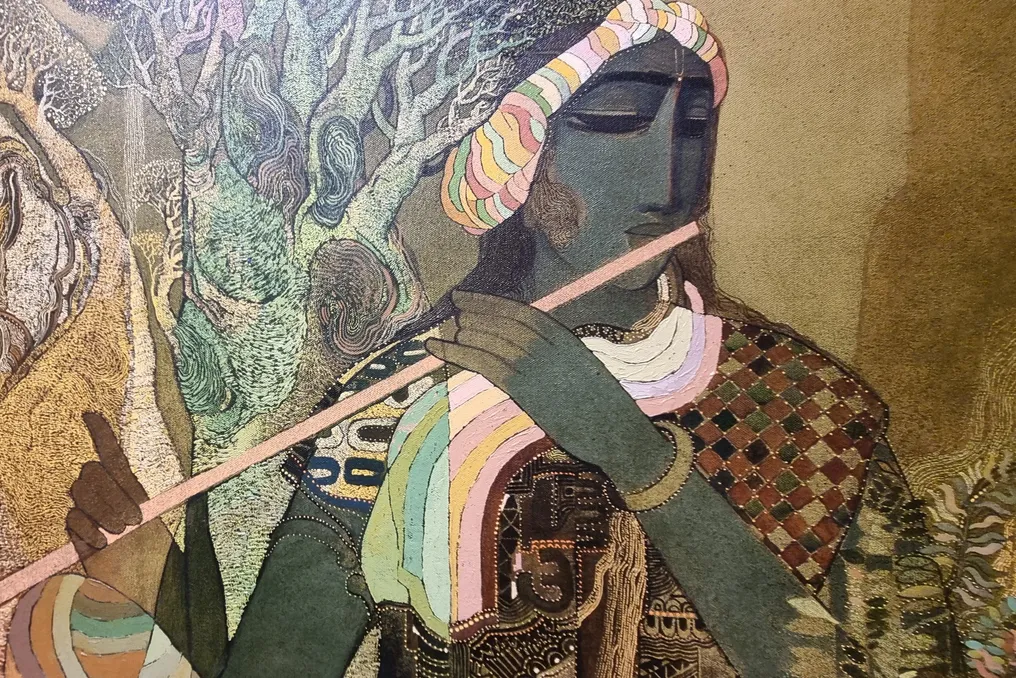
The Lalit Kala Akademi (LKA) in New Delhi is hosting its 65th National Art Exhibition, featuring over 270 artworks from various parts of the country. This exhibition has served as a platform to showcase contemporary artistic expression in India for over six decades.
The exhibition reflects the creative excellence of Indian artists and demonstrates an evolving visual culture that blends traditional Indian practices with modern approaches. It showcases creativity from diverse regions, utilizing varied materials, techniques, themes, and styles.
Cultural diversity is evident in core concepts such as spirituality, nature, society, memory, and open interpretation. Artists explore the connections between the personal and the collective, as well as between the traditional and the contemporary.
This exhibition is more than just an annual show; it serves as a reminder of the importance of unity and diversity within the nation. Visitors from both India and abroad draw inspiration from the shared values and cultural imagination of this ancient civilization.
Organizers reported receiving 6,175 submissions from 2,495 artists representing 27 states and territories. After careful selection, 270 works were chosen for the main exhibition.
Additionally, a separate jury selected 20 works from 20 artists to receive Lalit Kala Akademi Awards. Among the winners were Chandra Shekhar Singh, Gopal Chandra Naskar, Kishor Kumar Narkhadiwala, Mirinal Dey, Nidhi Chopra, Nimai Singh Sarungambam, and Pankaj Kumar Sharma.
Some of the exhibited pieces are available for purchase, creating a direct economic channel between artists, collectors, and the public.
The Lalit Kala Akademi was established on August 5, 1954, by then Education Minister Maulana Abul Kalam Azad. The Academy's activities include documenting Indian art and creating platforms for exhibitions, research, and artistic exchange.
In addition to the central office in Delhi, there are regional branches in Chennai, Kolkata, Bhubaneswar, Agartala, Shimla, Patna, and Ahmedabad. These offices provide various scholarships, studios, and programs for artists.
LKA maintains a significant permanent collection that documents the diversity of modern, contemporary, folk, and tribal art in India. Examples include Bengali scroll traditions, southern sculptural practices, and the unique artistic traditions of the Northeast.
For the artists themselves, participation in the exhibition provides national recognition and institutional acknowledgment. For the public, it offers a broad overview of current artistic practice, spanning geographical and stylistic boundaries.
The photo essay displays outstanding works in painting, sculpture, photography, and mixed media. Other exhibits are crafted from bronze, terracotta, ceramics, wood, stone, and marble.
Collectively, the 270 pieces illustrate the significance of the annual national exhibition, as it stands at the intersection of artist recognition, national cultural policy, and the contemporary ecosystem of Indian art.